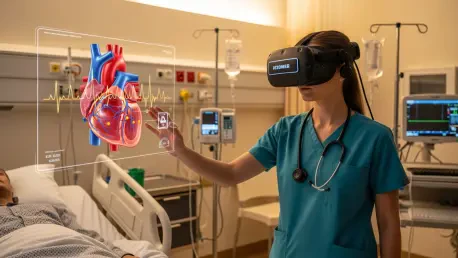

The growing demand for highly skilled healthcare professionals has pushed academic institutions to seek innovative solutions that bridge the gap between theoretical classroom learning and high-stakes clinical practice. As nursing programs face unprecedented pressure to produce competent graduates in a rapidly evolving medical landscape, Elsevier has introduced a significant advancement with the launch of its Shadow Health VR platform. This state-of-the-art virtual reality tool is designed to provide nursing students with immersive, risk-free environments where they can refine their clinical reasoning and communication skills. By transitioning traditional digital clinical experiences into a fully realized three-dimensional space, the platform allows learners to engage with digital patients in a manner that closely mimics real-world hospital settings. This evolution in educational technology signifies a broader shift toward immersive learning, ensuring that the next generation of caregivers is better prepared for the complexities of modern patient care.
Clinical Competency: Immersive Environments for Skill Development
Virtual Assessment: Enhancing Diagnostic Reasoning
At the heart of this technological integration is the objective of cultivating critical thinking through active engagement rather than passive observation. Within the Shadow Health VR environment, students are required to perform comprehensive physical assessments and make real-time decisions that directly impact patient outcomes. The platform utilizes advanced natural language processing to facilitate realistic dialogues, allowing students to practice the nuances of patient-centered communication and empathetic interviewing. Unlike traditional screen-based simulations, the virtual reality component adds a layer of spatial awareness and environmental pressure that is essential for developing clinical intuition. Students must navigate the patient’s room, select the appropriate tools, and prioritize interventions while managing various sensory inputs. This level of immersion helps to solidify the connection between textbook knowledge and bedside application, reducing the anxiety often associated with the first physical clinical rotation.
Patient Interaction: Mastering Clinical Dialogue
Furthermore, the specific integration of haptic feedback and spatial audio within the platform enhances the realism of diagnostic procedures, such as auscultation and palpation. Learners can use virtual stethoscopes to listen for subtle heart murmurs or lung sounds, with the audio quality dynamically changing based on the placement of the device on the digital patient’s chest. This granularity in simulation ensures that students are not merely clicking buttons but are developing the fine motor skills and sensory recognition necessary for accurate diagnosis. The platform also includes detailed feedback loops, providing students with immediate insights into their performance after each session. By reviewing their decisions and the patient’s physiological responses, students can identify gaps in their knowledge and repeat scenarios until they achieve mastery. This iterative process is crucial for building the confidence required to handle the high-pressure situations found in emergency departments globally.
Strategic Implementation: Solving Modern Healthcare Challenges
Clinical Scarcity: Standardizing Educational Experiences
The implementation of such advanced technology also addresses the systemic challenge of limited clinical placement opportunities, which has long been a bottleneck for expanding nursing school enrollments. Many educational institutions struggle to secure enough hours in local hospitals for their students, leading to delays in graduation and a shortfall in the workforce. Shadow Health VR offers a scalable alternative that can be utilized on-campus or remotely, providing consistent and standardized training for every student regardless of their physical location. This consistency is vital for maintaining high educational standards across diverse programs, as every learner interacts with the same complex cases and evidence-based protocols. By reducing the reliance on external clinical sites for initial skill acquisition, nursing schools can optimize their resources and focus their in-person clinical hours on more specialized and high-acuity experiences. This strategic shift not only increases throughput but also ensures that every graduate has a uniform foundation.
Future Workforce: Building Digital Resilience in Nursing
To fully capitalize on these advancements, academic leaders and faculty members prioritized the seamless integration of virtual simulations into existing curricula. They moved beyond viewing VR as a supplemental novelty and instead treated it as a core pedagogical tool that complemented traditional instruction. Faculty spent significant time mapping virtual patient scenarios to specific course objectives, ensuring that the technology directly supported the mastery of essential competencies. This proactive approach allowed for a more data-driven assessment of student progress, as instructors utilized the platform’s analytics to identify common areas of struggle across entire cohorts. Moving forward, the focus shifted toward developing more diverse patient profiles and expanding the library of specialized cases to include pediatrics, mental health, and geriatric care. By establishing a robust digital infrastructure, institutions successfully built a resilient training model that prepared nurses to adapt to the ever-changing demands of the medical environment.