
The global healthcare landscape is currently witnessing a transformative shift as artificial intelligence moves from a theoretical promise to a critical clinical necessity in the fight against vision loss. DIAGNOS Inc. stands at the center of this evolution, successfully transitioning from a specialized Canadian technology developer into a formidable participant in the international health-tech arena. By utilizing its Computer Assisted Retinal Analysis (CARA) platform, the company is actively addressing the global crisis of preventable blindness through sophisticated machine learning algorithms. As of mid-2026, the organization is navigating a decisive commercialization phase characterized by extensive clinical validation and a calculated focus on high-growth international markets. This expansion reflects a broader trend where automated diagnostic tools are becoming indispensable in managing chronic conditions. The platform serves as a vital bridge between standard primary care and advanced ophthalmology, ensuring that early signs of pathology do not go unnoticed in high-risk patient populations.
Navigating Global Regulatory Standards
The organization is currently executing a sophisticated “Regulatory Triad” strategy designed to secure necessary clearances in several key jurisdictions, including Canada, the United States, and Saudi Arabia. This effort involves meticulous adaptation to modern oversight frameworks that specifically govern medical devices enabled by machine learning. By maintaining deep engagement with major agencies like Health Canada and the FDA, the company ensures that its software architecture meets the most stringent safety standards while retaining the flexibility required to learn from incoming clinical data. This regulatory journey is not merely about compliance but is a foundational component of global trust. Securing these approvals allows the platform to be recognized as a legitimate medical tool rather than a supplementary software application. As healthcare systems globally tighten their requirements for data transparency and algorithmic accountability, this proactive approach positions the technology as a gold standard in the burgeoning field of digital diagnostics.
In the Canadian market, the recent submission for an updated iteration of the CARA system highlights the strategic use of Predetermined Change Control Plans. This innovative regulatory tool enables the company to pre-define the scope of future algorithm updates, which ensures that continuous improvements can be implemented without compromising patient safety or requiring entirely new submissions for every minor tweak. Simultaneously, the pursuit of the 510(k) pathway in the United States demonstrates a firm commitment to establishing substantial equivalence to existing diagnostic tools while meeting updated transparency requirements. This dual-pathway approach significantly reduces the time required to bring new features to the market. By navigating these complex legal landscapes successfully, the firm establishes a clear precedent for how AI-driven health solutions can be integrated into national healthcare frameworks. These milestones are essential for convincing conservative medical institutions that machine learning is a safe and reliable partner in patient care.
Enhancing Clinical Diagnostics and Patient Outcomes
The clinical utility of the CARA platform is currently supported by an extensive track record, having successfully analyzed over 400,000 patients across 16 different countries. This massive dataset provides robust evidence of the tool’s readiness for deep integration into frontline medical environments where speed and accuracy are paramount. By acting as a diagnostic force multiplier, the AI software empowers primary care physicians and optometrists to identify vision-threatening conditions much earlier in the screening process than was previously possible. This early detection is critical because many retinal diseases are asymptomatic until irreversible damage has already occurred. The ability to process retinal images with high sensitivity and specificity means that fewer patients fall through the cracks of a fragmented healthcare system. Furthermore, the global reach of these clinical trials proves that the algorithm remains effective across diverse demographic groups, making it a versatile tool for international health organizations looking to standardize eye care.
The global healthcare sector is presently struggling with a severe shortage of specialists and a concurrent rise in chronic conditions such as diabetes. CARA serves as a critical triage tool that optimizes the workflow of overworked ophthalmologists by effectively filtering out low-risk cases and prioritizing patients who require immediate surgical or medical intervention. This approach significantly reduces wait times for those at the highest risk, helping to prevent permanent vision loss in underserved populations where specialist access is limited. By automating the initial screening phase, the system allows human experts to focus their time and energy on complex treatments rather than routine examinations. This optimization of human capital is essential for the sustainability of modern healthcare systems facing aging populations and budget constraints. As more clinical data flows through the system, the accuracy of these triage decisions continues to improve, creating a virtuous cycle where technology and human expertise work in tandem to improve health outcomes.
Strategic Partnerships and Market Growth
The economic outlook for AI-powered retinal imaging remains exceptionally strong, with internal estimates placing the potential market opportunity in the billions of dollars. Industry projections support this upward trend as the demand for non-invasive and rapid screening tools continues to climb in both developed and emerging markets. The organization is currently positioned to capture a significant share of this growth as healthcare providers seek out cost-effective ways to manage the increasing prevalence of chronic diseases. This financial viability is a key driver for continued investment in the platform’s infrastructure and global outreach. By demonstrating a clear return on investment through reduced long-term care costs associated with blindness, the company makes a compelling case for widespread adoption by both private and public insurance providers. This commercial momentum is further bolstered by the increasing acceptance of digital health tools by the general public, who now expect faster and more accessible diagnostic services.
To ensure rapid commercial adoption, the company has established high-level partnerships with recognized industry leaders such as EssilorLuxottica and IRIS. These strategic alliances provide a “plug-and-play” distribution network, allowing the CARA platform to be deployed across thousands of retail and clinical locations immediately following the receipt of regulatory approval. This strategy effectively removes traditional barriers to entry, such as the need for a massive direct sales force, and significantly accelerates the company’s global reach. These partners benefit by offering a value-added service that differentiates them from competitors, while the technology provider gains access to a massive and ready-made patient base. This collaborative model is essential for scaling the technology quickly enough to meet the urgent needs of the market. By leveraging the existing trust and infrastructure of established optical and medical brands, the platform can move from a technological innovation to a standard part of the consumer eye exam experience within a very short timeframe.
Future Innovation and Systemic Health Monitoring
Beyond its current capabilities in detecting ocular diseases, the company is investing heavily in long-term technological advancement through significant federal research and development funding. A strategic partnership with Montreal’s École de Technologie Supérieure is currently focused on developing next-generation algorithms that push the boundaries of what is possible in retinal analysis. These efforts aim to keep the organization at the forefront of medical innovation by exploring the profound connection between the microvasculature of the eye and the overall health of the body. This research is uncovering new ways to utilize retinal images as a non-invasive window into a patient’s systemic well-being. By focusing on the intersection of engineering and medicine, the company is creating a roadmap for a new era of diagnostic medicine. The goal is to move beyond simple detection and toward a predictive model where eye scans can provide early warnings for conditions that were previously thought to be unrelated to ophthalmology.
The future of the CARA platform includes expanding its diagnostic scope to detect systemic health issues, such as cardiovascular disease and stroke risk, through simple and painless retinal scans. By transforming a routine eye exam into a holistic health assessment, the organization is redefining the fundamental role of preventative diagnostics in modern society. This evolution could turn the platform into a vital tool for general health monitoring well beyond the traditional field of ophthalmology. The ability to monitor vascular health through the eye offers a unique opportunity to identify risks of heart attack or stroke before traditional symptoms even appear. This shift toward “oculomics” represents a major frontier in healthcare, where the eye serves as a primary indicator for the health of the entire circulatory system. As these capabilities are refined and validated, the platform will likely become an essential component of annual physical exams, providing a comprehensive view of a patient’s health in a matter of seconds without the need for blood work.
Industry Trends and the Path Ahead
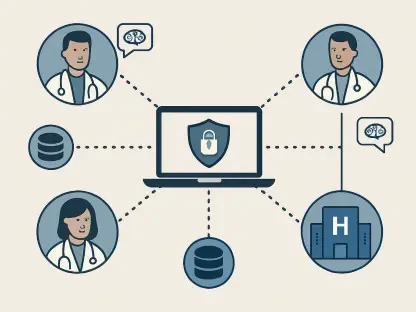
The rise of decentralized diagnostics represents a major shift in how healthcare services are delivered globally, moving away from centralized hospital models. DIAGNOS led this movement by facilitating high-level screenings in local pharmacies and community clinics, thereby increasing accessibility for rural and elderly populations. As the company cleared its final regulatory hurdles, the focus shifted toward ensuring that the software could be easily operated by non-specialist staff. This usability was essential for the technology to thrive in high-traffic retail environments where efficiency is as important as accuracy. The successful deployment of these tools proved that AI could handle the heavy lifting of data interpretation, leaving clinicians free to manage patient relationships and treatment plans. This transition also highlighted the importance of robust data security and cloud infrastructure, which allowed for the seamless sharing of results between different levels of the healthcare hierarchy, ensuring that no patient data was lost.
The shift toward integrated machine learning systems necessitated a fundamental change in how clinicians viewed the relationship between technology and patient care. As the CARA platform moved beyond early implementation, it demonstrated that the future of diagnostic medicine was no longer confined to specialized hospital wards but had arrived in neighborhood pharmacies and primary care suites. Successful integration into these localized environments proved that the barriers to universal screening were largely logistical rather than technological. Industry stakeholders recognized that the next logical step involved broader adoption of these tools by public health agencies to establish baseline eye health metrics for entire populations. By moving high-level screenings into decentralized settings, the healthcare industry effectively democratized access to early detection. This evolution encouraged a proactive stance toward chronic disease management, where the focus finally shifted from reactive treatment to permanent prevention strategies.