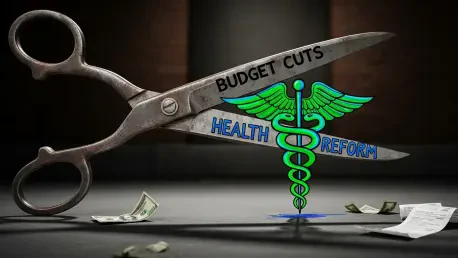

The sight of a high-ranking government official defending a sixteen billion dollar budget cut while simultaneously promising to end a national health crisis is a paradox that has captured the attention of every major player in American medicine. As Secretary Robert F. Kennedy Jr. faced a marathon of questioning from House committees, the central tension of his tenure became clear: can a department do more for the American body while spending significantly less of the American taxpayer’s dollar? This isn’t just a debate over spreadsheets; it is a fundamental test of whether a radical shift in agency culture can compensate for a 12.5% reduction in discretionary spending.
The current political atmosphere suggests that the department is at a crossroads where fiscal conservatism meets a revolutionary approach to wellness. The Secretary argues that the historical reliance on massive capital outlays has failed to stem the tide of chronic illness, necessitating a move toward a leaner, more agile administrative structure. This strategy hinges on the belief that the Department of Health and Human Services (HHS) must stop functioning as a passive payor and start acting as an active disruptor of the status quo in food and environmental safety.
The High-Stakes Tightrope of Modern Public Health
Standing before lawmakers, the Secretary articulated a vision that challenges the traditional logic of public health administration. He maintained that the massive scale of the HHS has historically led to a dilution of focus, where the sheer volume of bureaucratic processes obscures the primary goal of improving patient outcomes. By proposing a reduction in discretionary spending, the administration is signaling a departure from the “spend-to-solve” mentality that has dominated Washington for decades. This approach requires a delicate balance, as any misstep in funding could potentially destabilize critical services that millions of citizens rely on daily.
Moreover, the transition toward this new model involves a profound psychological shift for both the agency and the public. The Secretary’s defense of these fiscal measures centers on the idea that financial discipline is not an obstacle to health but a prerequisite for sustainable reform. Critics, however, remain wary, suggesting that such a significant withdrawal of resources could leave the nation vulnerable to unforeseen health emergencies. The stakes are undeniably high, as the success of this tightrope walk will likely define the future of federal involvement in personal and public wellness.
Deciphering the Shift Toward Fiscal Austerity and Wellness
The proposed fiscal year 2027 budget arrives at a time when the United States is grappling with a dual crisis of mounting national debt and a relentless epidemic of chronic disease. Kennedy’s defense of these “painful” cuts hinges on the belief that the HHS has become a bloated vessel that prioritizes bureaucratic momentum over actual health outcomes. By targeting historically protected areas—such as the National Institutes of Health (NIH) and various energy assistance programs—the administration is betting that the nation’s long-term economic security is a prerequisite for public health.
This ideological pivot connects directly to a growing skepticism regarding federal health spending efficiency and the influence of industrial food and chemical interests on American wellness. The Secretary has consistently argued that the root causes of the nation’s health decline are not a lack of funding, but rather a lack of oversight regarding environmental toxins and nutritional standards. Consequently, the budget shift represents a strategic move to starve the old bureaucratic systems while nourishing new, more targeted initiatives that focus on the “Make America Healthy Again” priorities.
Navigating the Proposed Cuts and Agency Restructuring
The administration’s strategy involves a deep pruning of existing structures to make room for a new type of health oversight. A significant $5 billion reduction in NIH funding signals a retreat from traditional biomedical research models, sparking fears that the U.S. could lose its competitive edge in biotechnology to global rivals like China. This move is intended to force a more efficient use of research dollars, directing them toward environmental and lifestyle causes of illness rather than just pharmaceutical interventions. The transition is abrupt, causing significant concern within the scientific community regarding the continuity of long-term studies.
Simultaneously, the Agency for Healthcare Research and Quality (AHRQ) has seen its workforce slashed by half, even as the Secretary announces the hiring of 12,000 new employees designed to “realign” the agency’s mission. This massive internal reorganization aims to transition the HHS away from administrative upkeep and toward a laser-focus on nutrition, food dyes, and environmental toxins. This workforce churn is perhaps the most visible sign of the restructuring, replacing legacy staff with a new cadre of specialists tasked with enforcing the Secretary’s specific vision for a modernized health infrastructure.
Conflicting Visions: Expert Perspectives and Political Pushback
The path to reform is fraught with bipartisan friction and accusations of contradictory logic. While some Republicans applaud the focus on food safety, others, including Subcommittee Chairman Robert Aderholt, have voiced concerns that extreme funding swings could destabilize vital research and infrastructure. The fear is that the zeal for budget cutting might inadvertently dismantle the very tools necessary for monitoring and responding to health threats. This internal party tension highlights the difficulty of reconciling traditional conservative fiscal goals with the complex requirements of a modern health system.
On the other side of the aisle, Democratic lawmakers point to a glaring disconnect: they argue that cutting Medicaid and allowing Affordable Care Act subsidies to expire will strip the healthcare safety net away from millions, effectively undermining the goal of fighting chronic disease. Furthermore, the administration’s “fraud-fighter” persona has come under fire, with critics highlighting the reinstatement of suspended insurance brokers and the pardoning of individuals convicted of Medicare fraud as evidence of selective accountability. These conflicting narratives create a polarized environment where the Secretary’s reforms are viewed either as a necessary correction or a dangerous demolition.
Frameworks for Managing a Leaner Health Infrastructure
To execute this transition successfully, the HHS is moving toward a specialized operational model that prioritizes targeted intervention over broad-spectrum spending. The strategy involves a rigorous “tightening of the belt” that seeks to eliminate waste and fraud in state-led Medicaid programs through aggressive auditing and withheld funding. This framework relies on the assumption that a leaner, mission-driven agency can achieve better health outcomes through regulatory shifts and cultural realignment than through the massive capital outlays of the past. It represents a bet on efficiency over volume, aiming to prove that quality of governance matters more than quantity of spending.
To maintain functionality during these cuts, the agency is leveraging its new 12,000-strong workforce to bypass traditional bureaucratic hurdles and focus on high-impact areas like food safety and environmental health standards. This structural change shifted the burden of proof from the consumer to the manufacturer, as the agency sought to implement stricter guidelines on additives and chemical exposure. By reallocating human resources to these specific domains, the administration hoped to create a more responsive regulatory environment. This approach emphasized a future where the federal government functioned as a rigorous watchdog rather than just a financier of the healthcare industry. As the transition progressed, the agency prioritized the development of data-driven oversight tools to monitor public health trends in real-time with reduced overhead. These actionable steps toward digital modernization aimed to provide a blueprint for other federal departments seeking to reduce their fiscal footprint while maintaining operational efficacy. Final assessments indicated that the sustainability of this model required ongoing collaboration between state regulators and federal auditors to ensure that the reduction in funding did not translate into a reduction in the quality of care for vulnerable populations.