
The Walter Reed Army Institute of Research developed the protein-detection technology that now enables the i-STAT Alinity to function at the tactical edge of combat. This milestone in medical engineering addresses a long-standing vulnerability in military trauma care where the invisible nature of concussions often led to delayed or incorrect diagnoses. Historically, medical officers relied on the Military Acute Concussion Evaluation, which, while useful, was susceptible to human error and the patient’s desire to remain in the fight. By transitioning to a method that analyzes blood for specific protein concentrations, the military has established a concrete, undeniable standard for brain health assessment. This capability is vital because traumatic brain injuries are not merely medical issues; they are significant threats to the cohesion and effectiveness of small units operating in high-stress environments. The implementation of this technology ensures that the health of the individual is prioritized through rigorous scientific data rather than field-level guesswork.
The Modern Crisis: Meeting the Evolution of Battlefield Hazards
Traumatic brain injury has emerged as one of the most persistent challenges for the Department of Defense, with hundreds of thousands of documented cases over the past two decades. While the signature threat of earlier conflicts was the improvised explosive device, the current threat landscape involves a much broader array of kinetic dangers. Modern service members face exposure to blast overpressure from drone-delivered munitions, precision-guided missile strikes, and even the repetitive shockwaves generated by high-caliber friendly weapon systems. These exposures often result in mild traumatic brain injuries that do not present with obvious physical wounds like lacerations or fractures. Without a reliable way to measure the internal impact of these forces, commanders frequently struggled to determine which personnel remained combat-effective. The introduction of portable blood testing allows for a rapid screening process that can be conducted anywhere from a remote patrol base to a naval vessel, ensuring that head trauma is addressed with the same urgency as a bleeding limb.
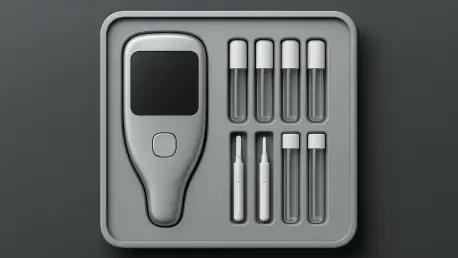
The scientific breakthrough behind these handheld devices lies in their ability to identify two specific proteins: Glial Fibrillary Acidic Protein and Ubiquitin C-terminal Hydrolase L1. When the brain sustains a significant impact, these proteins leak through the blood-brain barrier and into the circulatory system, serving as biological indicators of distress. The current diagnostic system can produce results in roughly fifteen minutes, a timeframe that fits perfectly within the chaotic tempo of frontline operations. This speed is crucial because the first 24 hours following an injury are the most critical for preventing secondary damage caused by inflammation or subsequent impacts. By providing a definitive red light or green light based on objective laboratory data, the technology removes the burden of decision-making from soldiers who might otherwise feel pressured to minimize their symptoms. This approach creates a safer operational environment where the data-driven reality of a soldier’s physical condition dictates their level of participation in ongoing missions.
Logistical Innovation: Adapting Care for Contested Environments
As military doctrine shifts toward large-scale combat operations against sophisticated adversaries, the luxury of rapid medical evacuation is increasingly at risk. In many scenarios, the concept of the golden hour—the window during which a patient must reach a surgical facility—may be extended due to contested airspace or the loss of local air superiority. This reality necessitates a robust capability for prolonged field care, where medics must manage complex injuries for days rather than hours. Handheld blood analyzers empower decentralized units to act as mobile laboratories, providing high-level diagnostic insights without the need for massive, power-hungry equipment like CT scanners or MRI machines. This portability is especially critical for maritime operations and dispersed ground units where space and weight are at a premium. By equipping these small teams with laboratory-grade tools, the military ensures that the quality of care remains high even when a service member is thousands of miles away from a major medical center.
Beyond the physical logistics, these tools address a pervasive cultural hurdle within the ranks: the stoicism that often leads personnel to conceal head injuries. In previous years, high-performing troops frequently attempted to beat cognitive exams by memorizing word lists or balance drills, fearing that a concussion diagnosis would result in being separated from their unit. This behavior, while intended to show dedication, often led to second-impact syndrome, a condition where a second minor head injury occurring before the first has healed can cause rapid and fatal brain swelling. A blood test cannot be gamed or manipulated by a motivated soldier; it provides an impartial assessment that protects individuals from their own impulses. This shift from a performance-based test to a biological one represents a fundamental change in how the military manages human capital. It fosters a culture where medical safety is integrated into the mission, ensuring that personnel return home with their long-term cognitive functions intact.
Strategic Management: Optimizing Resource Allocation and Triage
The implementation of rapid blood diagnostics serves as a significant force multiplier by streamlining the medical evacuation process and preserving valuable resources. Historical analysis of previous deployments revealed that a high percentage of personnel evacuated for specialized head scans were eventually found to have no significant injury, meaning they could have stayed with their units. These unnecessary evacuations not only placed an immense burden on transportation assets but also removed capable personnel from the battlefield at critical moments. By utilizing handheld testing, medics can now accurately triage patients on the spot, reserving limited evacuation slots for those who truly require neurosurgical intervention or advanced imaging. This data-driven approach to resource management ensures that helicopters and transport planes are utilized for the most life-threatening cases, thereby increasing the overall efficiency of the medical theater. It also prevents the depletion of unit strength by keeping healthy soldiers at their posts.
The transition toward standardized, handheld brain injury testing set a new benchmark for trauma care that extended into civilian emergency medicine. During the development phase, the collaboration between military researchers and private-sector engineers ensured that these devices were rugged enough to survive the dust, vibrations, and temperature extremes of a combat zone. This successful integration of biotechnology into the tactical edge proved that objective diagnostics were the key to managing the complexities of modern neurological trauma. Future implementations focused on expanding the library of detectable biomarkers to include indicators for chronic stress and long-term neurodegeneration. By maintaining a rigorous schedule of updates and personnel training, the military refined this system into a comprehensive health monitoring network. The ultimate goal remained the preservation of the warrior’s cognitive edge, ensuring that the data gathered from the initial deployment of these tools were used to build a more resilient force.