
The modern healthcare landscape is currently grappling with a significant administrative crisis where clinicians often find themselves spending significantly more time navigating digital interfaces than engaging in the diagnostic and interpersonal work that defines their profession. This phenomenon, colloquially known as “pajama time,” refers to the hours physicians spend at home catching up on electronic health records after a full day of seeing patients. Recent industry data indicates that administrative duties now consume nearly half of a practitioner’s workday, creating a bottleneck that threatens both the quality of care and the mental health of the workforce. To address this, the integration of artificial intelligence medical scribes has emerged as a primary solution, shifting the burden of documentation from the human hand to sophisticated algorithms that operate in the background. These systems represent a fundamental departure from traditional methods, offering a way to capture the complexities of a medical visit without requiring the physician to look away from the patient or touch a keyboard.
Streamlining Clinical Workflows and Data Integrity
Accelerated Record Generation through Natural Language Processing
The deployment of advanced natural language processing systems has enabled a revolutionary shift in how clinical notes are generated, allowing for the near-instantaneous conversion of spoken dialogue into formatted medical records. By 2026, these AI-driven assistants have become sophisticated enough to distinguish between casual conversation and medically relevant information, filtering out extraneous small talk while capturing every nuance of a patient’s symptoms and history. This capability allows a physician to conduct a physical examination or a detailed consultation while the scribe works invisibly to populate the subjective, objective, assessment, and plan sections of the medical note. Studies conducted throughout 2026 suggest that this automation can reduce the total time spent on documentation by as much as fifty percent, effectively returning several hours of productive time to the provider every week and ensuring that the documentation process is completed before the patient even leaves the office.
This increased speed does not come at the expense of depth; rather, it often results in more comprehensive records than those produced through manual entry alone. In a typical fast-paced clinical setting, a doctor might summarize a ten-minute conversation into three or four brief sentences due to time constraints, potentially omitting subtle details that could be relevant to future diagnoses. The AI scribe, however, maintains a persistent level of attention, ensuring that every identified medication change, patient concern, and lifestyle factor is systematically recorded. This meticulousness creates a richer data set for the electronic health record, which becomes invaluable during follow-up visits or when coordinating care with specialists. As the industry moves toward 2028, the expectation is that these systems will become standard infrastructure in nearly all high-volume practices, transforming the medical record from a static post-visit chore into a dynamic and living reflection of the clinical encounter.
Enhancing Clinical Accuracy and Regulatory Compliance
Accuracy remains the cornerstone of medical practice, and the integration of AI scribes has significantly minimized the frequency of transcription errors and omitted clinical data that often plague manual charting. Human scribes or physicians working under fatigue are prone to mishearing technical terms or forgetting specific dosages mentioned during a consultation, but AI algorithms are trained on vast datasets of medical terminology and pharmacological databases. These systems utilize contextual awareness to understand complex medical hierarchies, ensuring that a mention of a specific cardiac condition is correctly categorized within the patient’s history. This precision is not merely a matter of convenience; it is a critical safety measure that prevents the propagation of incorrect information throughout a patient’s medical journey. By maintaining a high standard of data integrity, healthcare facilities can provide safer care while simultaneously ensuring that their records are robust enough to withstand the scrutiny of rigorous clinical audits.
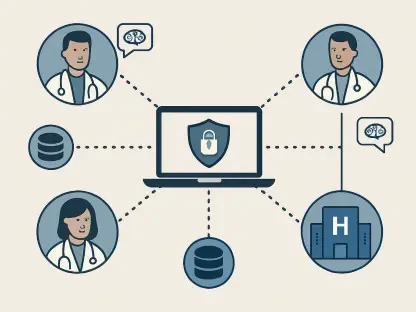
Furthermore, these digital assistants are designed with built-in compliance frameworks that automatically adhere to strict privacy regulations such as HIPAA. As data security becomes increasingly complex, the ability of AI scribes to encrypt information in real-time and manage access controls provides an additional layer of protection for sensitive patient information. Modern systems do not just record audio; they process it through secure, localized environments or encrypted cloud servers that prevent unauthorized data leakage. This focus on security allows healthcare organizations to adopt innovative technology without compromising the trust that patients place in their providers. By 2027, the evolution of these tools will likely include more advanced diagnostic support features, yet the primary focus remains on ensuring that the foundational data is accurate, secure, and compliant with the ever-changing regulatory environment of the American healthcare system.
Humanizing the Healthcare Experience through Technology
Improving the Patient-Physician Relationship
Perhaps the most visible benefit of implementing AI medical scribes is the immediate restoration of eye contact and personal connection between the doctor and the patient. For over a decade, the computer screen has acted as a physical and emotional barrier in the exam room, forcing physicians to divide their attention between the human being in front of them and the requirements of the electronic health record. When a doctor is liberated from the need to type or click through menus during a visit, they can practice active listening and pick up on non-verbal cues that are often the key to an accurate diagnosis. Patients report a much higher level of satisfaction when they feel they have the doctor’s undivided attention, as the interaction feels more like a partnership than a data-collection session. This shift fosters a stronger therapeutic alliance, which has been shown to improve patient adherence to treatment plans and overall health outcomes across various demographics.
The psychological impact of this technological intervention extends to the patient’s perception of the care they receive, making the clinical environment feel less industrial and more empathetic. When a physician is not preoccupied with documentation, they are better positioned to provide thorough explanations of complex medical concepts and engage in shared decision-making. This environment encourages patients to be more forthcoming about their symptoms and concerns, as they no longer feel they are competing with a keyboard for the doctor’s focus. By removing the administrative distractions, AI scribes allow the exam room to return to its original purpose: a space for healing and communication. This refocusing of the healthcare experience highlights how technology, when implemented thoughtfully, can actually serve to make medical practice more human rather than less so, bridging the gap between high-tech efficiency and high-touch personalized care.
Mitigating Professional Burnout and Operational Fatigue
The healthcare industry has long struggled with high rates of clinician burnout, much of which is directly attributable to the crushing weight of administrative tasks and the erosion of work-life balance. AI scribes offer a systemic solution to this problem by eliminating the need for clinicians to work after hours on documentation, thereby preventing the mental exhaustion that leads to professional turnover. When a physician can finish their notes by the end of the patient visit, the stress of a mounting backlog of charts is completely removed, allowing them to leave the clinic on time and recharge for the next day. This improvement in the quality of professional life is essential for maintaining a stable and effective medical workforce. Organizations that have integrated AI scribes report higher levels of job satisfaction and a renewed sense of purpose among their staff, as doctors are finally able to spend the majority of their time practicing the medicine they spent years training to perform.
Beyond the individual provider, the operational benefits for a healthcare facility are substantial, leading to improved throughput and reduced overhead costs associated with human scribing services. As the workforce moves toward 2028, the financial viability of medical practices will increasingly depend on their ability to manage resources efficiently while providing a high standard of care. AI scribes provide a scalable solution that can be deployed across various specialties with minimal training, making them a versatile tool for hospital administrators. To maximize these benefits, organizations must ensure that the transition includes a period of hands-on support to help staff acclimate to the new workflow. By treating the implementation of AI not just as a software upgrade but as a cultural shift in how care is delivered, the healthcare sector can build a more resilient system that prioritizes the well-being of its providers just as much as the health of its patients.
The transition to automated documentation through AI medical scribes represented a significant milestone in clinical management during 2026. This shift effectively addressed the long-standing friction between administrative requirements and the practical realities of patient-centered care. By implementing these digital assistants, medical facilities demonstrated a clear commitment to reducing physician burden while simultaneously improving the precision of health records. Healthcare administrators who moved toward full EHR integration during this period found that the investment paid off in both staff retention and patient satisfaction metrics. Moving forward, providers should focus on optimizing the interaction between these AI tools and specialized diagnostic software to further enhance the clinical decision-making process. The next phase of development involved training clinical staff to leverage the insights captured by these systems to create more personalized preventative care strategies. Ultimately, the successful adoption of this technology provided a blueprint for how automation can be utilized to strengthen the human elements of the medical profession.