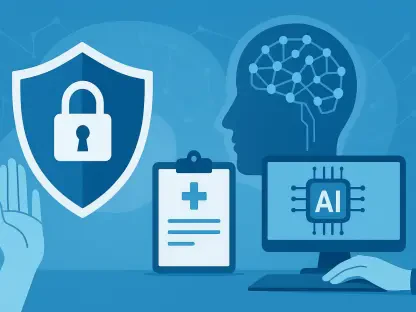

The transition of medical diagnostics from a purely human-led endeavor to a technologically augmented discipline represents the most significant shift in clinical methodology witnessed over the last century. In 2026, healthcare providers are no longer debating whether artificial intelligence has a place in the clinic; instead, the focus has shifted toward refining its integration into a system that is increasingly burdened by aging populations and complex chronic diseases. This evolution is driven by the necessity to process massive datasets, including genomic sequences, high-resolution imaging, and real-time biometric data, which far exceed the cognitive capacity of any individual clinician. By acting as a sophisticated analytical partner, these systems allow medical teams to identify subtle patterns in patient data that were previously invisible, leading to earlier interventions and more accurate outcomes. The current landscape is defined by a move away from reactive treatments toward a proactive model that emphasizes precision, speed, and the seamless harmonization of human intuition with computational power.
Advancing Accuracy and Speed in Diagnostics
Enhancing Specialty-Level Performance
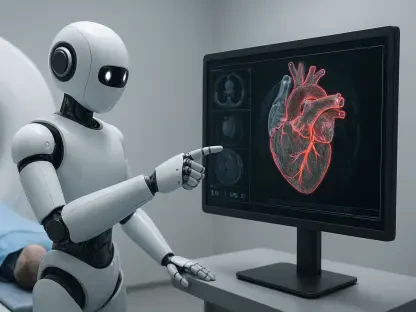
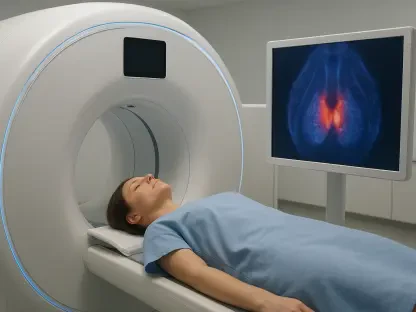
The impact of deep learning on medical specialties like radiology and pathology is profound, as these fields rely heavily on visual pattern recognition where algorithms excel. In 2026, artificial intelligence systems have reached a level of maturity where they consistently match the performance of senior specialists in identifying tumors, fractures, and vascular anomalies. These tools are particularly effective in standardizing the interpretation of mammograms and chest CT scans, which historically suffered from high variability among different readers. By implementing standardized AI filters, hospitals have significantly reduced the rate of false positives, which previously led to unnecessary biopsies and heightened patient anxiety. These algorithms do not just identify the presence of a lesion; they also provide automated measurements and volume calculations that are far more precise than manual estimations, allowing for a more accurate assessment of disease progression over time.
Beyond simple detection, the integration of AI into digital pathology is transforming how tissue samples are analyzed at the microscopic level. Historically, a pathologist would spend hours manually counting cells or grading the intensity of biomarker expressions, a task that is both tedious and prone to fatigue-induced errors. Modern AI-powered pathology platforms now automate these quantitative tasks, providing instant segmentation of tissue types and identifying necrotic areas within a tumor. This technological support allows pathologists to devote their specialized knowledge to the most ambiguous and difficult cases, while the machine handles the high-volume routine work. In breast and lung cancer screenings, this synergy has demonstrated the ability to reduce total radiologist workloads by nearly fifty percent, ensuring that specialists can provide higher quality attention to complex clinical presentations without the risk of burnout.
Prioritizing Urgent Cases through Triage
One of the most immediate benefits of artificial intelligence in a clinical setting is its role as a real-time triage assistant, particularly within high-pressure environments like emergency departments. AI software now runs in the background of hospital imaging systems, scanning every incoming scan for life-threatening conditions such as intracranial hemorrhages, large vessel occlusions, or pulmonary embolisms. When a critical finding is detected, the system immediately flags the case and moves it to the top of the specialist’s reading queue, often before the patient has even left the scanning suite. This shift from a sequential, “first-come, first-served” workflow to an urgency-based model has drastically shortened the “door-to-needle” time for stroke treatments, where every minute saved preserves millions of neurons. This capability transforms the diagnostic pipeline into a dynamic environment where the most critical patients are identified and treated with unprecedented speed.
Furthermore, the decentralization of expert-level diagnostics is becoming a reality through the deployment of AI-guided medical devices in community settings. Portable, handheld ultrasound systems equipped with real-time guidance software now enable nurses and primary care physicians to capture diagnostic-quality images without extensive specialized training. The software provides visual cues to help the operator position the probe correctly and automatically identifies key anatomical structures, such as heart valves or fetal development markers. This democratization of medical imaging means that high-quality diagnostic services are no longer confined to major metropolitan medical centers. By moving the diagnostic process closer to the patient’s home, healthcare systems can identify potential issues earlier in the disease cycle, reducing the overall burden on tertiary care facilities and making specialty-level insights accessible to underserved or rural populations.
Personalizing Treatment and Remote Care
Shifting Toward Precision-Based Therapeutics
The healthcare industry is rapidly moving away from the “one-size-fits-all” approach that characterized twentieth-century medicine, where treatments were often based on broad population averages. In 2026, AI is the primary engine behind precision medicine, allowing clinicians to tailor therapeutic interventions to the unique genetic, molecular, and lifestyle profile of each individual. By analyzing complex biomarkers and pharmacogenomic data, AI models can predict with high degrees of accuracy how a specific patient will respond to a particular medication. This is especially critical in oncology, where the selection of the correct immunotherapy or targeted drug can mean the difference between remission and progression. These systems cross-reference the patient’s tumor mutations with vast databases of clinical trial results and molecular research, suggesting the most effective treatment combinations while screening out drugs that would likely cause severe side effects without clinical benefit.
These precision models are not static; they evolve as the patient’s clinical journey progresses, creating a dynamic feedback loop between the patient and the therapy. AI platforms now utilize longitudinal digital biomarkers—data points collected over months or years—to monitor how a disease responds to treatment in real-time. If a patient’s laboratory results or symptom tracking indicates that a drug’s effectiveness is waning, the algorithm can alert the care team to adjust the dosage or switch to a secondary therapy before the patient experiences a significant clinical decline. This proactive approach ensures that the therapeutic plan remains optimized at every stage of the illness. By integrating data from electronic health records, genomic sequencing, and even environmental factors, AI is enabling a level of personalization that makes healthcare more efficient, reduces waste from ineffective treatments, and significantly improves the quality of life for patients with chronic conditions.
Preventing Escalation through Monitoring and Simulation
The integration of advanced wearable technology and predictive analytics has introduced a new era of “anticipatory care,” where the goal is to prevent hospitalizations before symptoms even manifest. Patients with chronic conditions like congestive heart failure or chronic obstructive pulmonary disease now use sensors that continuously monitor physiological markers such as heart rate variability, blood oxygenation, and fluid retention. AI algorithms analyze these streams of data to identify subtle deviations from the patient’s personal baseline that might indicate an impending flare-up. For example, a slight increase in nocturnal respiratory rate or a change in activity levels might be flagged three to four days before a patient feels short of breath. This early warning allows clinicians to intervene with simple medication adjustments or tele-health consultations, effectively keeping the patient stable and out of the emergency room.
In addition to real-time monitoring, the concept of the “Digital Twin” has emerged as a revolutionary tool for planning complex medical interventions. A Digital Twin is a sophisticated virtual simulation of a patient’s unique physiology, created by aggregating their medical history, imaging, and genomic data. Surgeons and oncologists can use these virtual models to test various treatment scenarios—such as different surgical approaches or radiation dosages—within a safe, digital environment to see which strategy yields the best possible outcome. This allows for a “trial and error” process that takes place on a computer rather than on the patient, minimizing the risks associated with invasive procedures. These simulations can also predict long-term health trajectories, helping patients and doctors make informed decisions about lifestyle changes or preventive measures based on a data-driven projection of their individual future health.
Navigating Barriers to Implementation
Solving the Issues of Data and Transparency
Despite the undeniable progress made in AI-driven healthcare, significant technical obstacles remain centered around the quality and accessibility of medical data. In 2026, many healthcare systems still struggle with data fragmentation, where vital patient information is trapped in siloed legacy systems that do not communicate with one another. For an AI model to provide a truly comprehensive diagnostic or treatment recommendation, it requires access to a unified view of the patient’s history across multiple providers and platforms. Achieving this level of interoperability requires a concerted industry-wide commitment to standardized data formats, such as the Fast Healthcare Interoperability Resources (FHIR). Without clean, well-structured, and accessible datasets, even the most advanced algorithms are limited in their effectiveness, making data integration a top priority for hospital administrators and technology developers who aim to maximize the utility of their digital assets.
Another critical hurdle is the “black box” problem, which refers to the difficulty humans have in understanding the internal logic used by complex algorithms to reach a specific conclusion. Clinicians are trained to make decisions based on evidence and physiological principles, and they are naturally hesitant to follow a machine’s recommendation if the reasoning is opaque. To address this, the field of “Explainable AI” (XAI) has become a major area of research and development. XAI techniques aim to make the AI’s decision-making process transparent by highlighting which specific features in an image or which variables in a medical record were the primary drivers of a particular diagnosis. When a system can explain that it identified a risk of sepsis based on a combination of rising heart rate and specific changes in white blood cell counts, it builds the trust necessary for widespread clinical adoption. Transparency is not just a technical requirement; it is a clinical necessity for maintaining the integrity of the patient-physician relationship.
Addressing Algorithmic Bias and Equity
As AI becomes more deeply embedded in the healthcare infrastructure, the medical community is increasingly focused on the ethical implications of algorithmic bias and the risk of widening health inequities. If an algorithm is trained primarily on data from specific demographic groups, its accuracy may significantly decline when applied to patients from different ethnic, socioeconomic, or geographic backgrounds. This discrepancy could lead to misdiagnoses or less effective treatment recommendations for marginalized populations, reinforcing existing disparities in healthcare outcomes. To mitigate this risk, developers are now required to demonstrate that their training datasets are diverse and representative of the global population. Regulatory bodies have also stepped in to mandate rigorous testing across different demographics, ensuring that the benefits of technological advancement are distributed equitably and that the tools do not inadvertently perpetuate historical biases.
Furthermore, the challenge of “algorithmic drift” requires a new framework for continuous monitoring and oversight of AI tools after they have been deployed. Unlike a traditional medical device that remains static, an AI algorithm can lose its effectiveness over time as clinical practices change, new medications are introduced, or the patient population shifts. Maintaining the safety and accuracy of these systems in 2026 involves a process of constant surveillance where the AI’s performance is regularly audited against real-world outcomes. Adaptive regulatory frameworks are being established to manage these updates, treating AI software as a living entity that requires ongoing validation. By addressing these ethical and technical risks through proactive governance, the healthcare industry ensures that the transition to an AI-augmented model is safe, fair, and capable of delivering high-quality care to all patients, regardless of their background or location.
The Future of the Medical Workforce
Redefining Roles and Medical Education
The integration of artificial intelligence into the clinical environment is not leading to the displacement of human doctors, but rather a profound redefinition of their professional roles and responsibilities. By automating high-volume administrative tasks, such as clinical documentation and routine pattern matching in lab results, AI is liberating clinicians from the “clerical burden” that has contributed to record-high levels of burnout. This shift allows physicians to return to the core of the medical profession: the human-centric aspects of care that require empathy, ethical judgment, and complex communication. In this new paradigm, the clinician acts as a high-level curator of information, interpreting the AI’s analytical outputs within the broader context of the patient’s personal values, lifestyle, and emotional state. The partnership between human and machine leverages the computational speed of the former and the moral and contextual intelligence of the latter.
This transformation necessitates a comprehensive overhaul of medical education to ensure that the next generation of healthcare professionals is prepared for a technology-driven environment. Starting in 2026, medical school curricula have expanded to include mandatory training in data literacy, algorithmic evaluation, and the ethics of digital health. Students are no longer just learning anatomy and biochemistry; they are also learning how to identify bias in a dataset and how to explain AI-driven risk assessments to a concerned patient. The healthcare workforce is becoming more interdisciplinary, with clinicians working alongside data scientists and software engineers to design and implement digital solutions. This educational shift ensures that doctors remain the authoritative leaders of the care team, capable of supervising sophisticated digital systems and ensuring that technology always remains a tool for enhancing patient well-being rather than a replacement for clinical wisdom.
Building Integrated Intelligent Ecosystems
Looking toward the remainder of the decade, the isolation of individual AI tools is giving way to the development of “integrated multimodal intelligence,” where various technologies function as a cohesive digital ecosystem. In this environment, large language models are no longer just for writing summaries; they are deeply integrated into the diagnostic process, synthesizing the latest medical literature with the patient’s imaging, genomics, and social determinants of health. These systems create a continuous feedback loop where every patient encounter generates data that helps refine future clinical pathways, essentially turning the entire healthcare system into a giant learning organization. By breaking down the silos between different medical departments, these ecosystems provide a holistic view of the patient, ensuring that a cardiologist, an oncologist, and a primary care physician are all working from the same real-time, comprehensive health intelligence.
Ultimately, these intelligent ecosystems are the primary drivers of a macro-shift toward population health management and long-term wellness. Instead of waiting for symptoms to appear, healthcare systems can now use AI to identify high-risk individuals within a population and deploy preventive interventions before a disease becomes symptomatic. This model prioritizes wellness over reactive treatment, which is more sustainable for the economy and better for the individual. As these technologies become more invisible and ubiquitous, they will serve as a constant, quiet guardian of public health, monitoring for emerging threats and ensuring that every person receives the right care at the right time. While the tools of the trade have changed dramatically, the heart of medicine remains unchanged; the goal is still to alleviate suffering and promote health, but now doctors have more powerful allies than ever before to achieve those ends.
The medical community successfully navigated the initial complexities of integrating automated intelligence into the daily clinical workflow by prioritizing patient safety and data transparency. Decision-makers invested heavily in infrastructure that supported interoperability, ensuring that information could flow freely between diagnostic tools and treatment platforms. These systems proved their value by significantly reducing diagnostic errors and allowing for the delivery of highly personalized therapeutic regimens. Researchers recognized that the most effective implementations were those that complemented human expertise rather than attempting to operate in isolation. By establishing robust ethical guidelines and continuous monitoring protocols, the industry ensured that these technological advancements remained aligned with the fundamental goal of improving patient outcomes. Organizations that embraced this hybrid model experienced improved efficiency and higher levels of patient satisfaction, setting a clear path for the ongoing evolution of the modern healthcare system.