
Managing acute abdominal pain in pregnant patients is a high-stakes challenge that requires a careful balance between rapid diagnosis and maternal-fetal safety in the modern medical landscape. Because pregnancy involves both maternal emergency care and the preservation of a developing fetus, clinicians must weigh the necessity of imaging against the risks of radiation exposure. Insights from recent radiological congresses throughout the year 2026 highlight a growing consensus that standardized protocols and advanced imaging techniques, particularly Magnetic Resonance Imaging, are essential for navigating these complex clinical intersections. The focus has shifted from merely avoiding radiation to actively utilizing high-resolution tools that provide definitive answers without compromising the health of the unborn child. By prioritizing non-ionizing modalities, medical institutions are reducing the ambiguity often associated with gestational abdominal emergencies and improving overall outcomes for families.
Navigating the Complexities of Pregnancy Care
Physiological Barriers: Understanding Masked Symptoms
One of the most significant hurdles in treating pregnant patients is that the body’s natural response to pregnancy often mimics the classic symptoms of serious illness. For example, a healthy expectant mother may experience an increased heart rate or a slight rise in white blood cell counts, both of which are also primary indicators of infection or acute inflammation. These overlapping signs can make it exceptionally difficult for doctors to determine if a patient is experiencing a normal physiological shift or a surgical emergency like appendicitis. Standard blood tests and physical assessments that are reliable in non-pregnant patients often yield inconclusive results when applied to someone in their second or third trimester. This inherent medical ambiguity requires a higher degree of clinical suspicion and a reliance on advanced diagnostic imaging that can peer through these systemic changes to find the underlying cause of distress without relying on symptoms that may be misleading.
Furthermore, as the uterus expands, it physically displaces internal organs, moving them away from their typical anatomical positions and changing the way pain is presented during an exam. A common issue involves the appendix being pushed upward and outward, which renders standard physical exams, such as checking for localized tenderness at McBurney’s point, largely unreliable or even deceptive. This anatomical shift often leads to what specialists call diagnostic hesitancy, where medical teams might delay critical testing due to uncertainty about safety or the atypical nature of the patient’s presentation. Unfortunately, such delays can lead to undiagnosed complications like perforations or abscesses, which significantly increase the risk of fetal loss and maternal sepsis. Modern clinical pathways now emphasize that imaging should not be delayed when these atypical signs appear, as the risk of a missed diagnosis far outweighs the theoretical risks of properly administered MRI scans.
Diagnostic Hesitancy: Overcoming the Fear of Intervention
The psychological impact of a potential surgical emergency during pregnancy cannot be understated, as both the patient and the medical team often experience heightened anxiety regarding fetal safety. This anxiety frequently manifests as a reluctance to proceed with necessary diagnostic steps, creating a dangerous window of time where conditions like bowel obstructions or internal hemorrhages can worsen. To combat this, healthcare systems in 2026 have implemented integrated counseling protocols where radiologists and obstetricians work together to explain the safety profiles of modern imaging to the expectant mother. By providing clear data on the low-risk nature of non-ionizing scans, providers can obtain informed consent more quickly and reduce the stress associated with the diagnostic process. This collaborative approach ensures that the mother remains at the center of the decision-making process while the medical team moves forward with the precision required for life-saving care.
In addition to patient communication, the medical community has focused on training radiologists to recognize the subtle nuances of the pregnant abdomen. Because the gravid uterus alters the appearance of normal structures, specialized knowledge is required to differentiate between benign pregnancy-related changes and true pathology. Educational initiatives now prioritize the interpretation of rapid MRI sequences that capture high-quality data even when the patient is unable to hold her breath for long periods. This refinement in skill sets has significantly reduced the rate of “indeterminate” results, which previously plagued the emergency imaging of pregnant women. As diagnostic confidence grows among practitioners, the culture of hesitancy is being replaced by a proactive model of care that values speed and accuracy as the primary means of protecting both lives. This shift represents a fundamental evolution in how the healthcare system addresses the unique needs of this vulnerable population.
A Comparison of Modern Imaging Techniques
Balancing Efficacy: Ultrasound and Computed Tomography
When abdominal pain arises, ultrasound is almost always the first line of defense because it is highly accessible and carries no radiation risk for the developing fetus. However, its effectiveness drops significantly during the later stages of pregnancy as the growing fetus creates acoustic shadows that block the view of deeper structures like the kidneys or the appendix. While ultrasound is excellent for evaluating gallbladder issues or simple obstetric concerns, it often fails to provide the clarity needed to rule out surgical emergencies in patients with a larger body habitus or advanced gestational age. This technical limitation often leaves physicians in a difficult position where they must decide whether to proceed to more invasive or radiation-based imaging. In the current year, the limitations of ultrasound have reinforced the need for a secondary, more reliable modality that can bypass the physical barriers created by the enlarging uterus.
While Computed Tomography offers high resolution and rapid results, its reliance on ionizing radiation makes it a last resort, generally reserved for life-threatening maternal trauma. In these high-intensity scenarios, immediate survival is the absolute priority, and the benefits of a fast, comprehensive CT scan outweigh the potential long-term risks to the fetus. However, for non-traumatic abdominal pain, the cumulative radiation dose remains a concern for both patients and providers. Although modern CT scanners are more efficient than ever, the medical community maintains a cautious approach to avoid unnecessary exposure during the early stages of organogenesis. Consequently, the role of CT has been increasingly refined to serve as a specialized tool for specific emergencies, while Magnetic Resonance Imaging has stepped in to fill the gap for complex diagnostic questions that require high soft-tissue contrast without the associated risks of radiation.
The MRI Advantage: High-Resolution Safety Protocols
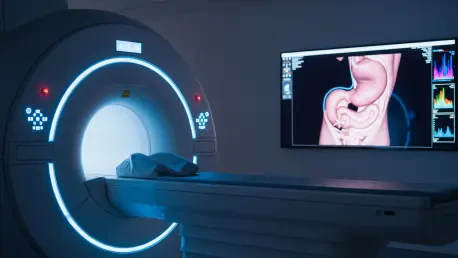
Magnetic Resonance Imaging has emerged as the definitive choice for complex cases in 2026, offering high-resolution images that allow for precise mapping of maternal anatomy without radiation. Modern medical protocols favor the use of 1.5T scanners, particularly during the sensitive first trimester, to provide clear anatomical maps while adhering to established safety margins. Advanced techniques such as Diffusion-Weighted Imaging are especially useful because they can pinpoint areas of active inflammation or infection by tracking the movement of water molecules within the tissues. This often removes the need for intravenous contrast agents that could potentially cross the placental barrier and affect the fetus. By utilizing these specialized sequences, radiologists can distinguish between a simple fluid-filled structure and a dangerous abscess, providing the surgical team with the specific information they need to intervene safely.
The transition to MRI-based protocols has also addressed the common problem of inconclusive ultrasound findings, which previously led to prolonged observation periods and increased patient anxiety. With rapid imaging protocols now available, a full abdominal survey can be completed quickly, providing a comprehensive view of the appendix, adnexa, and renal systems in a single session. This efficiency is critical in the emergency department setting, where bed availability and rapid decision-making are paramount for maintaining hospital throughput. Furthermore, the high specificity of MRI reduces the frequency of indeterminate results, which in turn minimizes the need for follow-up scans or repeat clinical evaluations. As medical centers continue to invest in dedicated MRI slots for obstetric emergencies, the speed of diagnosis has improved, ensuring that pregnant patients receive a level of care that is technologically advanced and deeply respectful of the unique biological needs of the fetus.
Clinical Protocols and Fetal Safety
Precision in Critical Scenarios: Managing Appendicitis
Appendicitis remains the most frequent non-obstetric surgical emergency during pregnancy, occurring in roughly one out of every fifteen hundred cases globally. The diagnostic stakes are incredibly high in these situations: failing to catch an inflamed appendix before it ruptures can be fatal for the fetus and life-threatening for the mother. Conversely, performing an unnecessary surgery on a healthy pregnant patient also carries significant risks, including preterm labor and surgical complications. MRI provides a high level of consistency among radiologists, allowing for more confident diagnoses that prevent both dangerous delays and unnecessary invasive procedures. By providing a clear, three-dimensional view of the abdominal cavity, MRI allows surgeons to plan their approach with precision, often leading to shorter operative times and less trauma to the patient. This reliability has made MRI the preferred method for definitive diagnosis in hospitals.
Strict safety standards are maintained throughout the imaging process to ensure fetal well-being, including the restricted use of gadolinium-based contrast agents. While older practices in the past prioritized external lead shielding during scans, modern research suggests that most fetal radiation exposure during maternal CT scans comes from internal scatter, making external shields less effective than previously thought. Instead, the focus has shifted toward optimizing scanner settings and utilizing MRI whenever possible to eliminate radiation exposure entirely. Modern 1.5T MRI protocols are designed to be fast, often taking less than twenty minutes, which reduces the time the patient must remain still and minimizes any potential heating effects on the fetal environment. These procedural optimizations ensure that the diagnostic process is as stress-free as possible for the expectant mother, providing her with the medical answers she needs while maintaining a safe environment for her child.
Comprehensive Approaches: Ensuring Maternal and Fetal Wellness
A comprehensive diagnostic approach also requires looking beyond the appendix to consider other potential causes of abdominal pain, such as renal issues, ovarian torsion, or fibroid degeneration. By using a standardized imaging protocol that systematically reviews all abdominal organs, medical teams can identify rare but serious conditions like ectopic pregnancies or adrenal infarctions that might otherwise be missed. This holistic view ensures that every possible threat to the mother and child is identified, allowing for a proactive and safe treatment plan that addresses the psychological and medical anxieties of the patient. In the clinical environment of 2026, radiologists are trained to look for these incidental findings that can mimic the pain of appendicitis but require vastly different management strategies. Identifying a simple case of kidney stones or a degenerating fibroid via MRI can prevent a patient from undergoing surgery.
The implementation of specialized MRI pathways for maternal care successfully bridged the gap between diagnostic necessity and fetal safety. Healthcare providers across the country adopted these protocols to ensure that every pregnant patient presenting with acute pain received the most accurate evaluation possible without the fear of radiation. These systems focused on rapid access to imaging and interdisciplinary consultation between radiologists and obstetricians to streamline the care process. The shift toward non-contrast MRI sequences also demonstrated a commitment to minimizing chemical exposure, prioritizing natural physiological safety. By establishing clear guidelines for when to bypass ultrasound and move directly to MRI, hospitals significantly reduced the time to treatment for critical conditions. These advancements provided a foundation for future medical practices, ensuring that maternal health remained a priority while safeguarding the next generation.