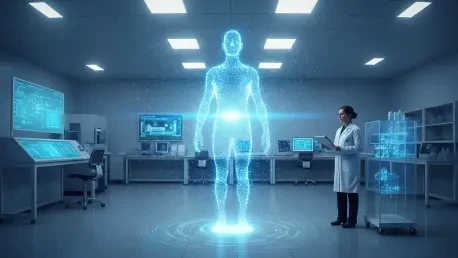

The terrifying unpredictability of amyotrophic lateral sclerosis often leaves families in a state of constant anxiety as they wait for the next physical capability to vanish without any clear timeline from their physicians. For decades, the medical community has struggled to provide specific prognoses for ALS patients because the disease manifests with such high levels of heterogeneity. While one individual might experience a rapid decline over several months, another might maintain a plateau of stability for years, leaving caregivers in a perpetual state of logistical and emotional limbo. To address this profound uncertainty, researchers at Temple University and Temple Health have launched an ambitious initiative that leverages artificial intelligence to construct digital twins. These sophisticated virtual models serve as dynamic replicas of individual patients, allowing medical teams to simulate the disease’s progression with unprecedented accuracy. By moving away from a one-size-fits-all approach to neurology, this project aims to provide a personalized roadmap that helps families reclaim a sense of agency.
From Industrial Efficiency to Medical Innovation
Translating Industrial Frameworks to Human Biology
The foundational architecture for this medical breakthrough actually stems from the high-stakes world of aerospace and heavy industrial manufacturing, where systems must operate with zero margin for error. In these sectors, engineers build highly detailed digital replicas of physical assets, such as jet engines or metropolitan power grids, to monitor performance in real-time and predict potential failures before they occur. By subjecting these virtual models to extreme stress tests and simulated environmental conditions, technicians can identify structural weaknesses or maintenance needs without risking the integrity of the physical hardware. This predictive capability has revolutionized how modern infrastructure is managed, shifting the focus from fixing broken components to preventing malfunctions through foresight. Temple researchers recognized that the human body, particularly one under the siege of a complex neurodegenerative disease, could benefit from similar predictive modeling to optimize care.
Evolution From Static Records to Dynamic Models
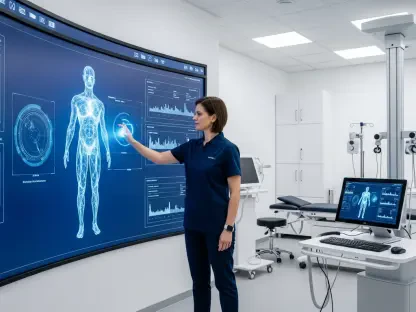
Transitioning this framework into the realm of human biology requires a shift from static medical records to living, breathing data structures that evolve as the patient does. A standard electronic health record offers little more than a historical snapshot, reflecting past symptoms and diagnostic results without providing any insight into future developments. In contrast, a medical digital twin functions as a dynamic entity that is constantly updated with new physiological data, creating a virtual mirror that tracks the specific nuances of an individual’s health status. This allows clinicians to run complex “what-if” simulations, observing how the virtual counterpart reacts to various hypothetical stressors or therapeutic interventions. Because the twin is unique to the patient, these simulations offer a preview of potential outcomes that are specific to that person’s biology. This methodology effectively bypasses the traditional trial-and-error approach, reducing the risk of ineffective treatments.
Data-Driven Personalization and Implementation
Integrating Diverse Variables for High-Fidelity Accuracy
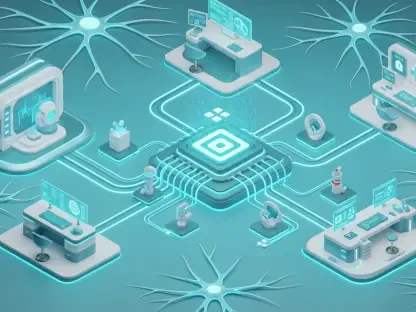
Engineering a high-fidelity digital replica of an ALS patient necessitates the aggregation of an immense variety of data points that go far beyond simple clinical observations. The Digital Twin for Personalized Medicine Project at Temple integrates complex genetic markers, biochemical profiles, and detailed historical health records to establish a baseline for the virtual model. However, the researchers understand that biology does not exist in a vacuum, which is why the AI also incorporates social determinants of health and environmental factors. Information regarding a patient’s living conditions, geographical location, and even their access to specialized support services is fed into the algorithm to create a comprehensive picture of the individual’s life. This holistic data set allows the AI to understand how external pressures might accelerate or decelerate the progression of the disease. By synthesizing these diverse variables, the system can identify unique patterns that contribute to the patient’s specific experience.
Utilizing Real-Time Biometric Streams and Global Comparisons
To maintain the accuracy of the twin over time, the system utilizes a continuous stream of real-time data collected via wearable technology and advanced biosensors. Patients are equipped with smartwatches and specialized sensors that track critical metrics such as limb mobility, respiratory volume, and the subtle shifts in speech clarity that often precede major clinical milestones. This constant monitoring ensures that the digital twin remains synchronized with the patient’s actual physical state, allowing for immediate adjustments to the predictive model. Furthermore, the AI does not analyze this data in isolation; it compares the individual’s trajectory against massive global databases containing thousands of historical ALS cases. By identifying subtle correlations between a current patient and past cohorts, the AI can detect emerging trends that might be invisible to even the most experienced neurologists. This combination of personalized real-time tracking and vast historical context provides a level of foresight that was previously impossible.
Transforming Patient Care and Research
Proactive Planning and Management of Disease Milestones
The most immediate clinical impact of this technology lies in its ability to transform the daily management of ALS from a series of reactive crises into a structured and proactive plan. For many families, the transition to using a feeding tube or a ventilator is a traumatic event often triggered by a sudden and unexpected decline in function. With the insights provided by a digital twin, medical teams can predict these significant shifts months in advance, giving the patient and their caregivers the necessary time to prepare emotionally and logistically. This foresight allows for the installation of equipment and the modification of the home environment to occur during a period of relative stability, rather than in the midst of an emergency. By knowing exactly when a patient’s ability to swallow or breathe is likely to diminish, physicians can ensure that interventions are timed to maximize both comfort and safety. This strategic approach to palliative care significantly improves the quality of life for the patient and reduces caregiver burnout.
Virtual Pharmaceutical Testing and Real-Time Treatment Refinement
Beyond symptom management, the digital twin serves as a revolutionary platform for refining pharmaceutical treatments in a disease known for its extreme heterogeneity. Because ALS affects every individual differently, a medication that proves life-extending for one person might have absolutely no impact on another, or even cause detrimental side effects. Using the virtual replica, doctors can simulate the administration of various therapies to see how the patient’s specific biological profile reacts before any actual drugs are prescribed. This virtual testing ground allows clinicians to identify the most effective dosage and combination of therapies to slow the progression of the disease for that specific individual. As new drugs are developed and approved, they can be immediately tested against the digital twin to determine their potential efficacy. This real-time refinement of treatment plans ensures that the patient is always receiving the most optimized care possible, effectively turning the digital twin into a personalized laboratory for neurological health.
Enhancing Clinical Trial Ethics via Virtual Controls
The integration of digital twins into the research landscape also addresses one of the most significant ethical and logistical hurdles in modern medicine: the placebo problem in clinical trials. In traditional trials for ALS, a portion of the participants must be assigned to a control group that receives a placebo, meaning they are denied access to potentially life-saving experimental treatments. By utilizing digital twins as “virtual controls,” researchers can simulate how a specific patient would have progressed without the drug, using the virtual model as the benchmark for comparison. This shift allows a much higher percentage of trial participants to receive the active medication, making research participation far more attractive and ethical for those with terminal diagnoses. Furthermore, this approach accelerates the entire drug discovery process by providing clearer data on efficacy in a shorter amount of time. The ability to use virtual replicas to replace or supplement human control groups represents a fundamental shift in how clinical research is conducted.
Broadening the Scope of Precision Neurology Across Conditions
The expansion of this technology required a coordinated effort between researchers and policymakers to ensure that the infrastructure for digital twins was both robust and accessible to diverse populations. As the program moved into clinical testing phases over the last few years, the medical community witnessed a significant shift toward precision neurology that prioritized the individual over the average statistical patient. Hospitals across the country began to implement standardized protocols for high-fidelity data collection, ensuring that patients from all walks of life could benefit from personalized virtual replicas. Stakeholders and healthcare systems invested heavily in the computational power and security frameworks required to support these AI models, recognizing that the long-term savings in crisis management far outweighed the initial costs of implementation. Ultimately, this technological evolution turned the tide against diseases that were once considered entirely unpredictable, creating a landscape where personalized insights led to more dignified and effective care.