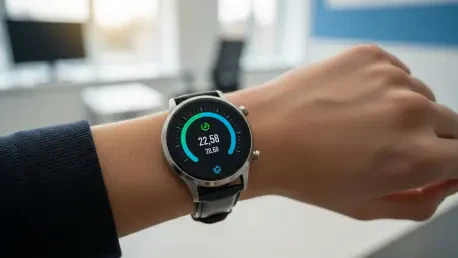

The promise of modern wearable technology was rooted in the idea that more data would lead to better health outcomes, yet many users now find themselves trapped in a cycle of digital anxiety. As wrist-worn sensors become more sophisticated, tracking everything from blood oxygen levels to autonomic nervous system recovery, a psychological paradox has emerged in the daily lives of millions. Instead of these tools serving as a bridge to better self-understanding, they often act as a barrier, distancing individuals from their own biological intuition. The volume of physiological information available at a glance has shifted the locus of control from internal sensations to external metrics, creating a dependency that can be as physically taxing as it is mentally draining. When a small screen determines the quality of a person’s day before they even step out of bed, the relationship between human and machine has evolved past simple monitoring into a form of digital governance that requires a critical re-evaluation of health.
Psychological Impacts and the Data Trust Paradox
Moving From Internal Awareness to Digital Judgment
One of the most prevalent symptoms of smartwatch dependency is the ritualistic checking of a sleep score immediately upon waking, which often occurs before an individual has even had a chance to assess their own level of alertness. This behavior suggests a profound shift in trust, where the user allows a mathematical representation of their night to dictate their emotional and physical expectations for the coming day. If the device reports a low score due to minor disruptions that the user might not have even noticed, it can trigger a wave of perceived fatigue and anxiety, effectively manifesting physical symptoms where there were none. This reliance on digital confirmation erodes the natural ability to sense bodily needs, replacing somatic awareness with a rigid adherence to numerical targets. For high achievers and those prone to health-related perfectionism, this external judgment becomes a source of chronic stress, as the pursuit of a perfect score replaces the actual goal of feeling rested and restored.
Over time, the constant stream of labels such as “poor recovery” or “low readiness” can fundamentally alter how an individual interprets normal physiological fluctuations. A standard feeling of tiredness after a productive afternoon might be viewed through a lens of alarm if the smartwatch suggests an unusual heart rate variability reading. This digital filter creates a scenario where people begin to question their own reality, wondering if they are only feeling exhausted because their wearable device indicated a low score earlier in the day. This erosion of physical self-confidence is a quiet but significant side effect of the wearable revolution, as it encourages a form of body dysmorphia where the data on the screen is treated as more “real” than the physical sensations in the muscles or the mind. Instead of using the data to investigate why they might feel off, users often work backward, looking for reasons to justify a negative reading provided by an algorithm that lacks access to their subjective experience.
Behavioral Effects: The Illusion of Algorithmic Accuracy
The psychological influence of wearable metrics often translates directly into behavior, where a low recovery score can function as a self-fulfilling prophecy. If an individual is told by their device that they are not ready for physical exertion, they may unconsciously lower their expectations for productivity or feel more fatigued than their physiological state would otherwise dictate. This creates a feedback loop where the device’s prediction of low performance actually causes the low performance, as the user’s mental state adapts to match the digital output. Furthermore, the gamification of fitness—manifesting as closing activity rings or maintaining “streaks”—can lead to a sense of data guilt. Users may feel compelled to meet numerical targets even when their bodies are clearly signaling a need for rest or recovery. This behavior prioritizes the maintenance of a digital record over the actual health of the person, which can eventually lead to injury or total burnout.
Users frequently grant smartwatches a level of authority that exceeds the actual technical capabilities of consumer-grade hardware. These devices utilize photoplethysmography and accelerometers to estimate complex biological states, yet the results are often presented as definitive percentages or scientific certainties. This presentation of data creates a “black box” effect, where the complexity of the underlying algorithm masks the inherent uncertainty of the measurements. Most users are unaware that factors such as skin tone, ambient temperature, or the tightness of the wristband can significantly skew results. By trusting these digital metrics over their own experiences, individuals are essentially ceding their right to interpret their biological state to a computer program that operates on generalized statistical models rather than individualized medical analysis. This disconnect between data perception and data reality is a cornerstone of digital dependency.
Identifying Dependency and Restoring Physical Balance
Recognizing Signs: Unhealthy Tech Habits and Clinical Risks
Experts in digital health have identified several behavioral indicators that suggest a person has developed an unhealthy relationship with their wearable device. A primary warning sign is the experience of significant emotional distress or a feeling of being “uncovered” when the device is lost, broken, or simply charging. If a person feels that their workout or healthy choices were wasted because they were not recorded, it indicates that the metric has become more important than the action itself. Other signs include an obsessive frequency of checking the device—often dozens of times per hour—and allowing the day’s mood to be entirely dictated by the morning’s readiness score. When the data becomes a source of anxiety rather than a tool for empowerment, the relationship has become maladaptive. These behaviors often mimic the patterns seen in other forms of digital addiction, where the brain seeks the hit of dopamine from reaching a goal.
From a clinical standpoint, it is vital to distinguish between general health awareness and medical diagnosis, as smartwatches are not calibrated for the latter. Medical professionals frequently observe patients who experience high levels of health anxiety—sometimes referred to as cyberchondria—driven by erroneous or misinterpreted data from their wearables. A single spike in heart rate or a dip in blood oxygen can be caused by something as simple as a poorly positioned sensor or a high intake of caffeine, yet for a dependent user, it can trigger a full-scale panic response. Clinicians warn that relying on these devices for medical reassurance is a dangerous practice, as consumer technology lacks the rigorous testing and environmental controls required for clinical accuracy. The greatest risk occurs when a user ignores genuine physical symptoms, such as chest pain or shortness of breath, simply because their watch indicates that their vitals are within the normal range at that moment.
Strategic Integration: Mindful Management and Future Awareness
Reclaiming a healthy relationship with wearable technology required the implementation of a body-first protocol, where individuals prioritized their internal state over digital data. This approach involved checking in with one’s energy levels, muscle soreness, and mental clarity before even looking at a smartwatch in the morning. By making a conscious effort to guess their own sleep or recovery scores based on physical feelings, users were able to rebuild the neural pathways associated with somatic awareness. This simple practice served as a powerful reminder that the human body is the primary source of health information, and the device is merely a secondary observer. Experts also suggested taking digital sabbaticals, where the watch was left at home for certain activities to remind the user that the benefits of exercise exist independently of the data. These intentional breaks helped to reduce the compulsion to track every movement and allowed for a more spontaneous life.
The evolution of health management in the current era reached a point where the most effective strategy was not more data, but better interpretation. Moving forward, the most successful users were those who viewed their smartwatch data through a lens of healthy skepticism, treating metrics as broad trends rather than daily commandments. This shift in perspective allowed individuals to use the technology as a catalyst for deeper self-inquiry rather than a judge of their biological worth. By focusing on monthly patterns rather than daily fluctuations, people avoided the trap of data-driven anxiety and maintained their physical self-confidence. Ultimately, the integration of wearables into daily life worked best when it complemented, rather than replaced, personal intuition and professional medical advice. Those who successfully navigated this transition found that true well-being was a holistic state that required listening to the body’s own signals above all else, regardless of what the screen displayed.