
While the long-term survivorship of implants may benefit from better alignment, current research shows no functional difference in the short-term post-operative window. This observation presents a complex challenge to the rapid adoption of robotic-assisted total knee arthroplasty, which has often been marketed as a revolutionary leap in patient recovery. For decades, the success of knee replacements has been measured by the surgeon’s ability to manually navigate the intricate anatomy of the joint using mechanical guides and visual assessment. However, the introduction of robotic systems aimed to standardize these outcomes by removing human variability from the equation. A comprehensive study published in BMC Musculoskeletal Disorders in 2026 scrutinizes this transition, specifically evaluating the HURWA Orthopaedic System. This research seeks to determine whether the mechanical perfection achieved through robotic intervention translates into a tangible reduction in post-operative pain or a faster return to daily activities. By comparing patients across two distinct surgical cohorts, the study highlights a significant gap between technical success and biological healing. The data suggests that while surgeons are now able to place implants with unprecedented precision, the fundamental biological processes of recovery remain unchanged by the level of technology used during the procedure. This disconnect underscores the importance of tempering technological enthusiasm with clinical evidence, ensuring that patient expectations remain grounded in realistic functional outcomes rather than just radiographic perfection.
Clinical Methodology: Comparing Robotic and Manual Frameworks
The 2026 study utilized a rigorous prospective randomized controlled trial to evaluate the differences between robotic-assisted surgery and traditional manual methods. Researchers recruited 130 patients suffering from end-stage knee osteoarthritis, randomly assigning them to two groups of 65. After accounting for minor post-randomization exclusions, the final analysis focused on 64 robotic cases and 63 manual cases, ensuring the statistical power necessary to draw meaningful conclusions. The primary goal was to observe how each method affected radiographic accuracy and early clinical performance. Key metrics included the overall hip-knee-ankle alignment, which serves as a benchmark for how the prosthetic joint distributes weight across the limb. By using standardized protocols for both groups, the researchers were able to isolate the impact of the robotic system itself, rather than variations in general hospital care or surgeon experience. This framework provided a clear and objective look at how modern technology compares to the manual techniques that have been refined over several decades of orthopedic practice.
Beyond the technical measurements, the study placed a heavy emphasis on patient-reported outcomes to gauge the real-world impact of the technology. These assessments were conducted at several intervals, culminating in a 60-day post-operative review that tracked pain levels, physical function, and joint range of motion. Specifically, the researchers monitored the frontal femoral component angle and the lateral tibial component angle, which are essential for ensuring the artificial joint interacts correctly with the surrounding soft tissue. By focusing on these early-stage clinical outcomes, the study addressed one of the most common questions from patients: will a robotic surgery help them get back on their feet faster? The dual-track approach of measuring both the skeletal alignment through X-rays and the subjective experience of the patient allowed for a comprehensive understanding of where the robot succeeds and where its influence remains limited. This methodology ensured that the findings were grounded in both the mechanical reality of the operation and the physiological experience of the recovery period.
Technical Outcomes: The Impact of Digital Precision on Alignment
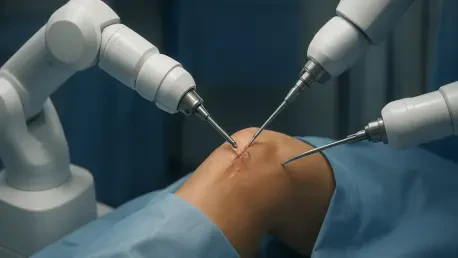
When it came to the mechanical execution of the surgery, the robotic-assisted group demonstrated a clear and significant advantage in precision. The radiographic data revealed that the robotic system was much more consistent in achieving the intended surgical plan compared to manual instrumentation. For instance, in the measurement of the hip-knee-ankle alignment, only 3.33% of the robotic group fell outside the targeted range. In stark contrast, the manual group saw 43.3% of its patients fall into the outlier category, where the alignment deviated more significantly from the ideal goal. This disparity highlights the robot’s role as a powerful tool for reducing human error and visual misjudgment. In a traditional setting, even highly skilled surgeons must rely on mechanical jigs that can sometimes shift or be placed with slight inaccuracies due to the unique bone morphology of the patient. The robotic system, however, uses digital mapping and real-time feedback to ensure that bone resections are executed with high fidelity to the pre-operative plan, effectively eliminating the variability that often plagues manual techniques.
The reduction of alignment outliers is perhaps the strongest argument for the adoption of robotic platforms in orthopedics. By providing a quantitative framework for the surgery, the robot allows for a more predictable mechanical result across a wide range of patient anatomies. This is particularly relevant in complex cases where bone deformities or previous injuries might make manual alignment more difficult. The robotic system acts as a digital safety net, confirming the surgeon’s plan and ensuring that the physical cuts match the virtual blueprint. This level of reproducibility is difficult to achieve consistently with manual tools alone, as it requires the perfect synchronization of visual assessment and hand-eye coordination. While the study indicates that these technical gains do not necessarily change the immediate recovery experience, they represent a significant step forward in the standardization of surgical quality. The ability to nearly eliminate alignment errors provides a level of technical security that was previously unattainable, offering a more controlled environment for the placement of sophisticated prosthetic components.
The Recovery Disconnect: Biological Realities Versus Mechanical Accuracy
Despite the robotic system’s ability to achieve near-perfect alignment, the study found no significant difference in patient outcomes at the 60-day mark. Both the robotic and manual groups reported similar levels of pain, stiffness, and physical disability during the early stages of healing. This finding suggests a functional disconnect between the mechanical precision of the surgery and the biological response of the human body. The recovery from a total knee replacement is an inherently traumatic process for the joint tissues, involving a significant inflammatory response, the healing of soft tissues, and the recalibration of the nervous system to a new prosthetic joint. These biological factors seem to follow their own timeline, which is not accelerated by the accuracy with which the bone is cut or the implant is placed. For the patient, the experience of the first two months is defined more by swelling and muscle rehabilitation than by the degrees of alignment seen on a post-operative X-ray.
This observation points toward a “ceiling effect” in modern orthopedic surgery. Traditional manual knee replacement is already a highly successful procedure when performed by experienced surgeons, often resulting in high levels of patient satisfaction. Because the baseline for success is already quite high, it becomes increasingly difficult for new technologies to provide a statistically significant improvement in the early post-operative window. While a robot can certainly place an implant more accurately, it does not change the fact that the surgery involves substantial bone removal and tissue manipulation. The body’s need to heal from this intervention remains the primary driver of the recovery experience. Therefore, while the robotic group may have technically “better” knees on paper, their subjective experience during the first several weeks of rehabilitation remains identical to those who underwent manual surgery. This insight is crucial for clinicians who must manage patient expectations, ensuring they understand that while the technology is advanced, it is not a shortcut through the natural healing process.
Learning Dynamics: Efficiency and Mastery Over Time
The adoption of robotic technology in the operating room introduces a unique learning curve that can initially impact the efficiency of the surgical team. The 2026 study noted that robotic-assisted procedures took longer on average than their manual counterparts, adding approximately 13 to 15 minutes to the total operative time. This increase is primarily due to the additional steps required for system setup, bone registration, and the digital verification of alignment throughout the procedure. However, the researchers identified a clear inflection point in the datafter approximately 22 cases, the surgical team’s efficiency improved significantly. This suggests that the time penalty associated with robotic surgery is a temporary hurdle that can be overcome through experience and familiarity with the software and hardware interface. Once a team masters the workflow, the robotic system becomes a seamless part of the operative environment, and the time difference between robotic and manual methods begins to narrow.
Interestingly, the study found that the high level of technical precision was maintained even during the initial learning phase. This indicates that while surgeons may take longer to complete the procedure while they are still learning the system, the quality of the implant placement does not suffer. The primary challenge for the surgeon is not achieving accuracy with the robot, but rather integrating the technology into their existing surgical rhythm without unnecessary delays. This “safe” learning curve is a significant advantage, as it allows for the introduction of new technology without compromising the mechanical integrity of the patient’s new joint. As surgical centers continue to adopt these platforms, the focus is shifting toward specialized training programs that help teams reach their peak efficiency more quickly. By understanding the typical progression of the learning curve, hospitals can better manage their operating room schedules and ensure that the transition to robotic-assisted surgery is as smooth as possible for both the staff and the patients.
Strategic Integration: The Robot as a Decision Support Tool
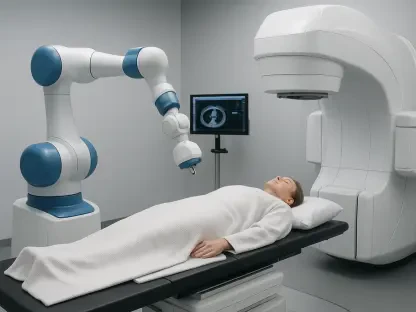
In the modern orthopedic landscape, robotic systems are increasingly viewed as sophisticated decision support tools rather than autonomous surgical machines. The robot does not replace the surgeon’s expertise; instead, it provides a “digital check” that enhances the planning and execution phases of the procedure. Before any bone is removed, the system allows the surgeon to assess the balance of the ligaments and the tension of the soft tissues throughout the knee’s full range of motion. This pre-cut data is invaluable for personalizing the surgery to the patient’s specific anatomy. The surgeon can adjust the planned position of the components on a screen, seeing in real-time how those changes will affect the final stability of the joint. This ability to simulate the outcome before taking any irreversible actions is a fundamental shift from traditional manual methods, where many of these assessments are made through feel and visual judgment after the bone has already been cut.
The synergy between human judgment and robotic precision is what defines the success of the procedure. While the robot ensures that the cuts are executed with sub-millimeter accuracy, the surgeon remains the primary architect of the alignment strategy. If a surgeon chooses a functional alignment over a mechanical one, the robot serves as the high-fidelity instrument that makes that choice a reality. This collaborative approach allows for a level of customization that was previously difficult to achieve with standard manual tools. By acting as an advanced navigation and measurement system, the robot empowers the surgeon to make more informed decisions during the most critical moments of the operation. Ultimately, the goal of integrating these systems is to combine the nuanced clinical intuition of the human brain with the consistent, data-driven execution of a machine, creating a surgical environment where uncertainty is minimized and technical excellence is standardized.
Long-Term Projections: Alignment and Implant Durability
While the early clinical data shows no immediate functional advantage for robotic surgery, the long-term implications for implant longevity remain a primary focus for researchers. The prevailing theory in orthopedics is that better alignment leads to more even wear on the prosthetic components, particularly the polyethylene liner that sits between the metal femoral and tibial parts. If a knee is perfectly aligned, the weight is distributed exactly as intended, which should theoretically prevent the premature degradation of the materials. Over time, even minor misalignments in manual surgery can lead to uneven loading, which may cause the implant to loosen or wear out sooner than expected. By eliminating the outliers through robotic precision, the hope is that the lifespan of the knee replacement can be extended, potentially reducing the need for complex revision surgeries decades down the line.
Proving this long-term benefit is a significant challenge, as it requires tracking patients for 10 to 20 years to see if there is a measurable difference in survivorship rates. Currently, the medical community relies on computer modeling and intermediate-term data, which suggests that robotic precision is a positive factor for durability. However, without long-term longitudinal studies, these benefits remain speculative. The true value of the “robotic advantage” may only become apparent in the next decade as more data becomes available from the thousands of robotic procedures being performed today. For the patient, this means that while the robot might not make their knee feel better in the first 60 days, it might be the reason their knee replacement is still functioning perfectly 20 years later. This long-term perspective is essential for evaluating the cost-effectiveness and overall utility of robotic systems in a healthcare environment that is increasingly focused on durable, high-quality outcomes.
Clinical Perspectives: Advancing Future Patient Outcomes
The clinical research concluded that the HURWA system provided a reliable framework for standardized surgical results. Patients who participated in the study achieved high levels of technical accuracy without the risks associated with manual instrumentation errors. However, the study also emphasized that the early post-operative experience was not significantly altered by the presence of a robot. The surgical community learned that while technology could refine the execution of a plan, the rate of physical recovery was still dictated by the patient’s own physiological response and adherence to physical therapy. Ultimately, the 2026 analysis highlighted that the value of robotic assistance was found in its consistency and the mitigation of outlier cases, rather than in an immediate reduction of post-operative discomfort. By focusing on these findings, medical professionals shifted their approach to patient counseling, emphasizing long-term joint health over the promise of a faster recovery window.
Looking forward, the integration of these robotic platforms necessitated a change in how hospitals allocated resources and training. Surgeons were encouraged to view the robotic interface as a collaborative tool that augmented their existing expertise rather than a replacement for clinical intuition. Hospitals that adopted these systems began prioritizing extensive pre-operative planning and intra-operative data collection to build a more robust database for future joint replacement research. This focus on data allowed for more personalized alignment strategies that moved beyond a one-size-fits-all mechanical approach. Patients were advised to concentrate on their pre-habilitation and early physical therapy sessions, recognizing that these factors remained the primary drivers of short-term satisfaction. The consensus moved toward using robotic precision as a foundation for improving the longevity of the joint, while simultaneously managing patient expectations about the immediate weeks following surgery. These steps ensured that the adoption of high-tech tools led to meaningful improvements in the standard of care without creating unrealistic promises regarding the speed of biological healing.