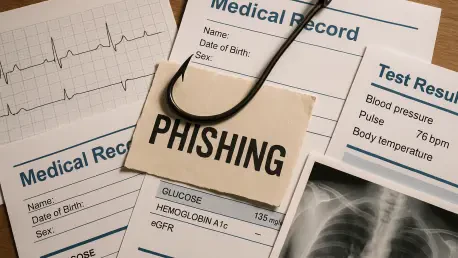

Cybercriminals are increasingly targeting patient portal users by sending fraudulent SMS messages and emails that mimic official notifications from healthcare providers. As medical facilities across the United States transition to digital-first environments, the use of electronic health record platforms such as MyChart has become the standard for modern patient care. These portals offer unparalleled convenience for viewing sensitive test results, managing prescriptions, and scheduling urgent appointments, yet this very accessibility provides a lucrative target for bad actors. The inherent trust between a patient and their physician is being exploited to launch sophisticated phishing campaigns that bypass traditional security layers. These digital attacks do not typically involve the brute-force hacking of the medical infrastructure itself but rather focus on manipulating the human element to surrender sensitive login credentials. Understanding the scope of this modern epidemic is essential for every digital user to maintain the privacy of their medical narrative.
Deceptive Tactics Used by Modern Scammers
Social Engineering: Common Methods of Deception
The most frequent strategy employed by cybercriminals in this sector is credential harvesting through the deployment of highly convincing lookalike websites. Scammers distribute fraudulent emails or SMS messages, a technique known as smishing, which creates a false sense of urgency regarding a patient’s health status. These messages often urge individuals to click a link to view a supposed new message, an updated medical record, or a critical lab result from their healthcare provider. The link directs the user to a counterfeit login page that is designed to mirror the official portal interface with alarming precision, including the correct logos, fonts, and color schemes. Once a patient enters their username and password into these rogue fields, the attacker captures the data in real-time. This immediate theft provides the scammer with full access to the victim’s legitimate medical account and the vast wealth of sensitive personal information stored within the secure database.
Beyond the visual replication of websites, social engineering tactics often rely on psychological pressure to force quick, uncalculated decisions from unsuspecting users. For instance, a message might claim that an account will be suspended or that a pending medical bill requires immediate payment to avoid collections. This pressure bypasses the critical thinking process that might otherwise lead a person to question the source of the communication. Furthermore, these attackers frequently monitor the timing of legitimate hospital communications to send their fraudulent messages during peak hours when patients expect updates. By aligning their deceit with the natural rhythm of healthcare interactions, scammers increase the likelihood that a patient will perceive the notification as a routine part of their care. This sophisticated level of planning highlights the evolution of phishing from generic mass emails to highly targeted attacks aimed at compromising the sanctity of the patient-provider relationship and financial privacy.
Technical Exploits: Incentives and Malware Risks
Apart from direct credential theft, modern scammers frequently utilize the freebie trap to entice patients into engaging with malicious digital content. These deceptive messages often promise non-existent rewards such as free Medicare kits, wellness giveaways, or specialized senior health packages. Because legitimate healthcare providers almost never offer unsolicited physical goods or high-value prizes through portal notifications, these offers should serve as immediate red flags for any observant user. However, for those navigating chronic illnesses or financial difficulties, the promise of free medical resources can be a powerful motivator that leads them to click through to a dangerous site. Once the user interacts with the link to claim their prize, they are often prompted to provide even more personal details, including home addresses and secondary contact information. This additional data allows the cybercriminal to build a more complete profile of the victim for use in further identity theft operations.
Technical vulnerabilities are also exploited through fraudulent links designed specifically for malware injection into the user’s personal device. Some counterfeit sites are programmed to trigger alarming security pop-ups that falsely claim the user’s computer or smartphone has been infected with a virus. These prompts then instruct the patient to download critical updates or run specific system commands to clean the device and protect their medical data. In reality, following these instructions installs malicious software, such as keyloggers or ransomware, directly onto the user’s operating system. This malware can silently track every keystroke, including banking passwords and Social Security numbers, or it can lock the device entirely until a ransom is paid in cryptocurrency. This transition from simple phishing to active malware deployment represents a significant escalation in the danger posed to patients who rely on mobile devices to manage their health, turning a simple notification into a total system compromise.
Impact of Exposure and Strategic Countermeasures
Severe Consequences: Identity Theft and Financial Impact
The stakes of losing control over a medical portal are significantly higher than typical social media breaches because health data is permanent, deeply personal, and comprehensive. Medical identity theft allows scammers to impersonate victims to obtain controlled substances, prescription drugs, or expensive medical equipment under the victim’s name. This does not just incur massive financial costs for the patient and their insurance provider; it can also dangerously corrupt a patient’s actual medical history. When a fraudster’s medical encounters are recorded in a victim’s file, it can lead to incorrect blood type entries, false allergy information, or inaccurate chronic condition records. These errors create a life-threatening environment for the actual patient, as future doctors may base critical treatment decisions on fraudulent data. Unlike a stolen credit card that can be easily replaced, a compromised medical identity requires an exhaustive process to rectify and clean the official health records.
Furthermore, patient portals frequently contain a treasure trove of financial data, including insurance policy numbers, billing addresses, and payment history. Cybercriminals can leverage this information, often combined with Social Security numbers found in billing documents, to file fraudulent insurance claims or open new lines of credit in the victim’s name. The presence of insurance details is particularly valuable on the dark web, where active policy numbers are sold to individuals seeking medical care without coverage. This results in the victim’s insurance limits being reached or their premiums skyrocketing due to services they never received. The financial recovery process for this type of fraud is notoriously complex, as medical billing systems are often fragmented across multiple providers and state lines. Consequently, a single successful phishing attack can lead to years of financial instability and legal battles for a patient who was simply trying to check their latest blood test results.
Defensive Strategies: Habits and Remediation
The primary defense against healthcare phishing is a fundamental shift in how patients interact with digital notifications and mobile alerts. Security experts advise users to ignore any links provided in unsolicited texts or emails, even if they appear to come from a known hospital system or a familiar doctor’s office. The safest practice is to bypass the message entirely and access the patient portal exclusively through a bookmarked official website or a verified mobile application downloaded from a legitimate app store. By refusing to use the doorway provided by a suspicious message, patients can effectively neutralize the threat of counterfeit websites and credential harvesting. This proactive approach ensures that the user is always operating within a secure, encrypted environment managed by the healthcare provider. Moreover, users should enable multi-factor authentication on their accounts, which adds an essential layer of security that requires a secondary code even if a password is stolen.
If a user realizes they have inadvertently interacted with a suspicious link or provided their credentials on a questionable site, immediate remediation is essential to limit the damage. The patient should log into their legitimate portal through a trusted channel and change their password instantly to lock out the potential attacker. It is also wise to update passwords for any other accounts that shared the same login information to prevent the aforementioned credential stuffing attacks. If financial or insurance information was disclosed during the encounter, it is critical to contact banks and insurance providers immediately to monitor for unauthorized charges and place fraud alerts on credit reports. Taking these steps within the first few hours of a suspected breach can drastically reduce the long-term impact on one’s financial and medical reputation. Speed is the most critical factor in successful remediation, as attackers often move quickly to exploit stolen data before the victim has a chance to react.
Proactive Steps for Future Data Integrity
The rise of patient portal phishing necessitated a comprehensive reevaluation of how individuals interacted with their digital health records. To ensure future data integrity, users adopted more rigorous verification protocols and embraced the security features provided by modern healthcare platforms. These actions successfully mitigated many of the risks associated with social engineering by removing the reliance on unverified communication channels. Patients also played a more active role in monitoring their own medical histories, which allowed for the rapid identification and correction of fraudulent entries. By integrating multi-factor authentication and utilizing dedicated healthcare applications, the community built a resilient defense against the evolving tactics of cybercriminals. These strategic shifts in behavior proved that while technology continued to advance, the most effective protection remained the informed and cautious participation of the patients themselves. Moving forward, the focus shifted toward maintaining this high standard of digital hygiene to preserve the privacy of medical narratives.