
By combining fellowship-trained expertise with cutting-edge robotic tools, Mercy Medical Center is redefining the standard of care for orthopedic reconstruction. This Baltimore-based institution recently integrated the Mako SmartRobotics system into its surgical repertoire, signaling a shift toward more precise and personalized joint replacement procedures. For individuals grappling with severe arthritis or complex rotator cuff issues, this development represents a major leap in medical technology. The program is spearheaded by Dr. Gregory V. Gasbarro, whose specialized training enables him to leverage these automated tools for maximum clinical benefit. Unlike traditional manual approaches, this robotic-assisted methodology provides a comprehensive data set that allows surgeons to navigate the unique complexities of human anatomy with unprecedented accuracy. By bringing this technology to the Mid-Atlantic region, the center ensures that local patients have access to top-tier care without needing to travel to distant metropolitan hubs.
Advances in Surgical Customization
Digital Mapping and Pre-Operative Assessment
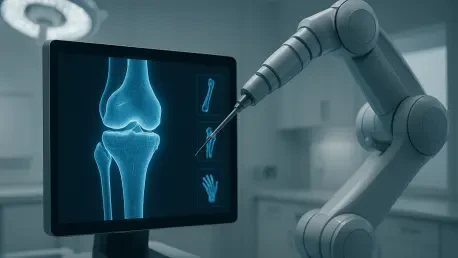
The implementation of this robotic platform begins long before the patient ever enters the operating room. Through the use of a detailed three-dimensional CT scan, the system generates a virtual model of the patient’s shoulder joint, allowing the surgeon to plan every detail of the procedure in advance. This pre-operative phase is crucial because it accounts for individual variations in bone density and joint structure that might not be visible through standard imaging techniques.
This level of preparation allows for the selection of the most appropriately sized implants and the determination of their ideal placement. By simulating the surgery in a digital environment, the medical team can identify potential challenges and adjust the strategy to ensure the best possible fit. This proactive approach minimizes the need for extensive bone removal and preserves as much healthy tissue as possible, which is a key factor in long-term joint stability and overall patient satisfaction.
Real-Time Precision and Intraoperative Flexibility
During the actual procedure, the robotic-arm assistance provides the surgeon with tactile, visual, and auditory feedback to ensure the surgical plan is executed with pinpoint accuracy. The technology does not replace the surgeon’s skill but rather enhances it by providing a high degree of precision in bone preparation. This is particularly vital in shoulder arthroplasty, where the socket is small and the margin for error is minimal compared to larger joints like the hip or knee.
Furthermore, the system allows for real-time adjustments based on the tension of the surrounding ligaments and tendons. If the surgeon observes that the joint requires a slight modification to achieve perfect balance, the software can recalculate the alignment instantly. This intraoperative flexibility ensures that the final result is perfectly tuned to the patient’s functional needs. Such technological support reduces the likelihood of implant malalignment, which is a leading cause of early failure in traditional surgeries.
Institutional Impact and Patient Outcomes
Holistic Recovery and Integrated Care
Beyond the technical aspects of the surgery, the institution has integrated this technology into a broader framework of patient support known as the Shoulder Joint Journey. This program focuses on comprehensive education, ensuring that patients understand every phase of their treatment from the initial consultation through physical therapy. By combining high-tech intervention with high-touch personal care, the hospital creates a supportive environment that facilitates faster recovery and improved mobility.
The primary objective of this integrated care model is to help patients return to their daily activities with minimal discomfort. Clinical evidence suggests that the precision offered by robotic assistance leads to reduced postoperative pain and a more natural-feeling joint. Patients who have struggled with chronic dysfunction find that this advanced approach provides a more reliable path toward reclaiming their quality of life. The focus remains on achieving the best functional outcomes through a blend of innovation and empathetic care.
Strategic Advancements and Future Clinical Standards
In conclusion, the strategic adoption of robotic technology established a new benchmark for orthopedic excellence within the region. Medical leadership at the facility recognized that the transition toward data-driven surgery was essential for maintaining high standards of clinical success. By investing in these sophisticated systems, the hospital successfully improved the accuracy of complex reconstructions and provided surgeons with tools that surpassed traditional manual methods. The initiative demonstrated a clear commitment to evolving medical practices and prioritizing patient safety above all else.
To capitalize on these advancements, healthcare providers implemented rigorous training protocols for surgical staff and streamlined the patient intake process. This transition allowed for a scalable model of precision medicine that addressed the growing needs of the community. Future efforts focused on expanding the use of such robotics into other sub-specialties to create a unified surgical ecosystem. These actions ensured that the facility remained at the forefront of medical innovation while providing patients with a clear, evidence-based pathway to recovery.