
Israeli health researchers have discovered that government mandates for geriatric hospitals are fundamentally built upon Shalom Schwartz’s universal human values. This landmark investigation, spearheaded by Keren Semyonov-Tal and Eldad Davidov and featured in the Israel Journal of Health Policy Research, provides a profound look into how institutional health policy is shaped by social psychology. By dissecting the dense regulatory framework of the Israeli Ministry of Health, the researchers revealed that these administrative mandates serve as much more than bureaucratic checklists. Instead, they act as critical operational tools that translate deep-seated ethical motivations into the daily routines of medical staff caring for the elderly. This study bridges the gap between abstract psychological theories and the concrete application of safety protocols in environments where residents are often at their most vulnerable. The analysis highlights the delicate balance between maintaining rigorous clinical standards and upholding the inherent dignity of patients facing physical and cognitive decline.
Theoretical Framework and Research Methodology: Mapping the Motivational DNA
The researchers began their inquiry by hypothesizing that specific universal values serve as the underlying motivational DNA for health policy across the country. To explore this, they utilized Shalom Schwartz’s theory of basic human values, which identifies ten core values that influence human behavior globally. These values are categorized into four higher-order dimensions: conservation, openness to change, self-enhancement, and self-transcendence. By applying this psychological lens to state-mandated procedures, the team sought to identify which values were prioritized in geriatric wards. This approach allowed the researchers to move beyond a simple reading of rules and instead uncover the moral foundations that drive modern healthcare governance. The theory suggests that for a regulation to be effective, it must resonate with the cultural and ethical values of both the practitioners and the society they serve, making Schwartz’s framework an ideal tool for such an ambitious analysis.
The investigation involved a rigorous qualitative content analysis of 147 formalized clinical and administrative procedures issued by the Ministry of Health from 2007 through the current year of 2026. This extensive regulatory corpus encompasses over 1,000 pages of documentation, all rooted in historical statutory frameworks like the 1940 People’s Health Ordinance. To navigate this massive volume of data, the research team employed ATLAS.ti software, which allowed for a systematic and iterative manual coding process. They specifically focused on extracting textual segments that aligned with Schwartz’s value dimensions while filtering out data that did not directly relate to institutional safety. This inductive-deductive synthesis categorized the findings into three distinct organizational levels: the micro-level involving direct patient safety, the meso-level concerning staff safety, and the institutional level focusing on broader organizational risk management. This structure provided a clear map of how values permeate every layer of a geriatric hospital’s operations.
Micro-Level Patient Safety and Security: Protecting the Vulnerable
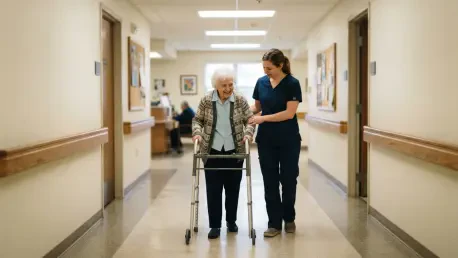
Patient safety emerged as the most dominant theme within the regulations, functioning at the micro-level of direct interaction between clinicians and residents. This focus aligns perfectly with the core values of security and universalism, which prioritize the protection of all individuals regardless of their status. A primary manifestation of these values is seen in the rigorous standards for environmental modifications. The Ministry of Health mandates specific physical upgrades, such as the continuous installation of handrails in hallways and the total elimination of slippery flooring surfaces. These requirements are not merely suggestions; they are enforceable standards designed to mitigate the physical risks inherent in institutional living for older adults. By codifying these environmental factors, the state ensures that the value of security is literally built into the physical infrastructure of every geriatric facility across the nation, providing a tangible safety net for those with limited mobility.
Beyond physical infrastructure, the regulations emphasize clinical accuracy and infection control as key components of resident protection. The study noted that directives for hygiene are exhaustive, detailing strict hand-washing protocols and the mandatory use of protective gear for staff and visitors to prevent institutional outbreaks. To address the risk of medical errors, the state enforces a dual-identifier protocol that requires healthcare providers to verify a patient’s identity through at least two independent indicators before any treatment is administered. This meticulous attention to detail reflects a deep commitment to the value of universalism, where every patient is granted the same high level of protection against potential harm. Furthermore, significant portions of the regulatory text are dedicated to safeguarding residents from various forms of abuse, mandating immediate reporting to welfare authorities. This ensures that the hospital remains a sanctuary where the rights and well-being of the elderly are proactively defended against any form of exploitation.
Staff Safety and Occupational Health: Caring for the Caregivers
The second major theme identified by the researchers addresses the meso-level of workplace dynamics, where the safety and well-being of healthcare workers are directly linked to the quality of patient care. This regulatory focus incorporates the values of benevolence and security, recognizing that a supported and healthy workforce is the backbone of any medical institution. A notable find in the study was the progressive approach the Ministry of Health takes regarding professional burnout. Rather than viewing exhaustion as an individual failing, the regulations categorize burnout as a systemic risk factor that can jeopardize patient safety. Consequently, nurse managers and administrators are instructed to implement specific interventions and training programs designed to identify and mitigate the drivers of staff stress. This reflects a holistic understanding of healthcare, where the emotional and psychological health of the provider is considered a prerequisite for the delivery of safe, high-quality medical services.
Occupational health also extends to the physical protection of employees through comprehensive vaccination frameworks and safety protocols. These regulations are designed to protect staff from job-related hazards and to prevent healthcare workers from inadvertently acting as vectors for disease transmission within the vulnerable geriatric population. By prioritizing the health of its workforce, the state ensures long-term institutional stability, which is essential for maintaining the continuity of care that elderly patients require. The study suggests that by embedding the value of benevolence into these occupational mandates, the government creates a reciprocal environment where staff members feel protected, which in turn fosters a greater commitment to patient safety. This systemic protection of the caregiver is a critical component of the Israeli health policy framework, demonstrating that the safety of the patient and the provider are inextricably linked in the quest for institutional excellence.
Institutional Risk Management and Quality: Standardizing Excellence
At the meso-organizational level, the research focused on how the values of conformity and tradition drive proactive hazard identification and clinical risk management. The procedures heavily emphasize the necessity of comprehensive medical recordkeeping, which serves as the empirical foundation for all risk management activities. By mandating the precise recording of every fall, medication error, or adverse event, the Ministry of Health ensures that hospitals create a robust data trail. This information is not used for punishment but rather for deep analysis to identify systemic weaknesses before they lead to serious harm. This reliance on established protocols and historical data illustrates how the value of tradition is used to maintain stability and improve safety. The act of documentation becomes a ritual of quality control, ensuring that the collective experience of the institution is used to inform future clinical decisions and organizational policies.
When accidents do occur, the protocols mandate a response centered on interprofessional team reviews and corrective actions. The goal of these reviews is to foster a culture of continuous quality improvement, shifting the focus away from individual blame and toward systemic solutions. This approach ensures that internal safety protocols are constantly refined based on past performance and real-world outcomes. Additionally, hospitals are required to develop and maintain detailed emergency management plans to ensure that safety standards and the continuity of care are upheld even during natural disasters or public health crises. These mandates reflect the value of conformity, as they require every facility to adhere to a standardized model of crisis response. By integrating these values into the institutional fabric, the regulations create a reliable framework that can withstand external shocks while consistently delivering a high standard of care to every resident.
Mapping Regulations to Schwartz’s Theory: The Value Profile Balance
The synthesis of the study’s findings reveals a distinct value profile within Israeli geriatric regulation that is heavily weighted toward conservation and self-transcendence. Security and universalism serve as the primary engines for patient safety measures, reflecting a broad societal commitment to protecting the most vulnerable members of the community. At the same time, benevolence and security drive the regulations focused on staff welfare, while conformity and tradition provide the structure for risk management and institutional stability. This alignment suggests that the Israeli regulatory framework is intentionally designed to create a safe, predictable, and caring environment for the elderly. By anchoring these mandates in universal values, the government ensures that its health policies are not only technically sound but also ethically grounded, resonating with the fundamental moral priorities of the population it serves.
Despite these strengths, the researchers identified a significant gap regarding the value of self-direction within the regulatory corpus. While independent thought and professional autonomy are essential for creative problem-solving and proactive safety reporting, they are largely absent from the official mandates. The authors suggested that this lack of emphasis on professional autonomy might inadvertently discourage staff from taking the initiative in complex or non-routine clinical situations that fall outside the standard protocols. While the current system excels at standardization and the implementation of evidence-based procedures, it may lack the flexibility required for truly personalized geriatric care. This finding points toward a potential evolution in health policy, where the benefits of rigid safety standards are balanced with a greater respect for the professional judgment of clinicians and the personal autonomy of the residents themselves.
Contextual Challenges and State Roles: Navigating the Autonomy Conflict
The researchers placed these findings within the unique context of the Israeli healthcare landscape, where the Ministry of Health operates in a triple role as the regulator, the primary service provider, and the sponsor of public health. This centralization of power allows for an unprecedented level of standardization, ensuring that comprehensive safety protocols are applied uniformly across all geriatric facilities in the country. However, this dual role as both the rule-maker and the provider also creates inherent tensions, particularly when strict safety standards clash with the autonomy of the residents. Because geriatric wards serve as both medical facilities and permanent residential homes, the highly regulated, hospital-like environment can sometimes feel overly restrictive for the people living there. This conflict represents one of the most significant challenges for modern geriatric policy: how to ensure a safe environment without diminishing the quality of life or the independence of the residents.
This tension is most visible in regulations concerning physical restraints or constraints on cognitive capacity, which are often implemented in the name of safety but can directly conflict with a resident’s right to self-determination. The study highlighted that while these measures are designed to protect the individual from harm, they can also strip away the personal agency that is vital for psychological well-being. Balancing these competing interests requires a nuanced approach that the researchers argued is still evolving. The centralized nature of the Israeli system provides a unique platform for addressing these issues at a national level, allowing for the development of policies that prioritize both safety and human rights. As the population ages, the challenge for policymakers will be to refine these regulations so that they continue to protect the vulnerable while also fostering an environment that respects the autonomy and individuality of every person in geriatric care.
Future Policy Development: Actionable Insights for Global Healthcare
The study demonstrated that Israeli geriatric regulations are deeply rooted in universal human values, proving that bureaucracy can serve as a vital instrument for translating ethical principles into clinical practice. By organizing these mandates into micro, meso, and macro levels, the authors provided a clear conceptual map that allowed policymakers to see where safety systems were strong and where gaps remained. The discovery that the value of security is a primary driver of geriatric care provides a solid foundation for further strengthening patient protection protocols. However, the move toward a more comprehensive care model required the intentional integration of self-direction into the regulatory language. This transition encouraged healthcare providers to utilize their professional expertise more freely, leading to more innovative and patient-centered solutions in the ward.
As a result of these findings, researchers recommended that future policy updates focus on creating more flexible frameworks that allow for greater resident autonomy. They proposed that the next generation of mandates should explicitly recognize the hospital as a home, not just a clinical setting, thereby elevating the value of self-direction alongside security. To achieve this, health departments began piloting programs that empowered frontline staff to adapt safety protocols to the specific needs of individual patients, rather than following a one-size-fits-all approach. This shift was supported by new training modules that prioritized ethical decision-making and autonomy-respecting care. Furthermore, the researchers initiated ongoing empirical studies to observe how these value-based mandates were implemented in real-time within the wards. These steps ensured that the moral DNA of health policy continued to evolve, keeping the fundamental needs and rights of the elderly at the heart of every regulation.