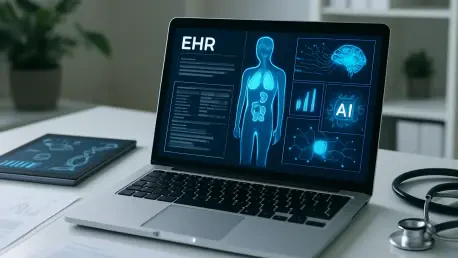

The medical landscape currently grapples with a staggering volume of data that often obscures rather than clarifies the path to patient wellness. Embedded artificial intelligence serves to streamline the before, during, and after phases of a patient visit without replacing human judgment. This shift represents a fundamental departure from the traditional role of the Electronic Health Record as a digital filing cabinet. For decades, these systems functioned as passive repositories, housing historical notes that required manual retrieval and synthesis. However, the modern clinical environment demands more than historical logging; it requires a digital infrastructure that recognizes the context of a patient encounter. By evolving into a system of action, the platform now proactively organizes the physician’s day, surfacing critical alerts and preparing necessary documentation. This ensures that the digital tool works for the provider, effectively reclaiming hours previously lost to administrative navigation.
Optimizing the Operational Journey
Reducing Pre-Visit Complexity: Predictive Logic and Preparation
Managing the logistics of a patient visit involves a complex web of scheduling and insurance verification that has historically burdened administrative staff. Modern platforms now utilize predictive logic to anticipate these needs, identifying gaps in a patient’s history or pending laboratory results before the appointment occurs. For instance, if a patient with chronic hypertension is scheduled for a follow-up, the system of action automatically prompts the staff to request recent logs or flags the need for an updated metabolic panel. This proactive stance eliminates the search for information that often delays consultations. Furthermore, AI-driven scheduling algorithms analyze historical cancellation patterns to optimize the daily calendar, ensuring that community health clinics maintain high utilization rates. By automating these “before” phases, the platform transforms into a dynamic engine that prepares the patient for a successful clinical interaction without requiring constant manual oversight.
Streamlining Documentation: Real-Time Decision Support
The actual clinical encounter has long been hampered by the necessity of manual data entry, which often creates a physical barrier between the physician and the patient. In a system of action, ambient listening technology and natural language processing work in the background to transcribe the conversation into structured clinical notes in real time. This allows the doctor to maintain eye contact and focus on the nuances of the physical exam. Beyond simple transcription, these systems offer real-time clinical decision support by cross-referencing the conversation with established medical guidelines and the patient’s unique health profile. If a clinician considers a specific medication, the software immediately surfaces potential drug interactions or suggests lower-cost therapeutic alternatives. This immediate feedback loop reduces the cognitive load and ensures care plans are evidence-based. By integrating these actions, the platform serves as an intelligent assistant during the visit.
Strategic Integration: The Future of Health Platforms
Consolidating Clinical and Financial Data Streams
For years, medical practices have struggled with a fragmented technology stack, relying on various third-party applications to manage everything from intake to billing. The move toward unified systems of action is currently dismantling these silos, integrating clinical and financial workflows into a single cohesive interface. This consolidation is crucial because it allows for a more holistic view of the patient’s journey and the practice’s operational health. When billing information is tightly coupled with clinical documentation, the system can automatically flag coding errors before a claim is submitted. This shift places a significant responsibility on software vendors to maintain high standards of transparency while ensuring AI remains a “glass-box” system. By providing a single source of truth, organizations can reduce the overhead of managing multiple vendor contracts and minimize data integrity risks. Looking from 2026 to 2029, the industry is expected to phase out isolated legacy software in favor of these intelligent suites.
Strategic Imperatives: Implementing Resilient Digital Infrastructure
The transition toward proactive digital infrastructure represented a pivotal shift in medical operations, requiring leaders to prioritize long-term efficiency over short-term data collection. Clinical administrators who successfully navigated this change focused on auditing their existing tech stacks to identify points of friction where manual data entry still dominated. The implementation of these tools necessitated a culture of continuous feedback, where clinicians regularly evaluated the accuracy of automated notes and decision support prompts. It was essential to prioritize vendors who demonstrated a commitment to interoperability and secure data practices. By focusing on the automation of repetitive tasks, medical practices finally freed their staff to engage in high-value patient care activities. Ultimately, the industry moved toward a model where the digital infrastructure acted as an efficient partner, ensuring that clinical expertise remained at the forefront while software managed the logistics.