
The transition to the European Union’s In Vitro Diagnostic Regulation imposes rigorous safety and efficacy standards that high-complexity genomic profilers must now satisfy. This shift represents a significant evolution in how precision medicine tools are validated and marketed within one of the world’s most sophisticated healthcare landscapes. Recently, Tempus AI reached a critical milestone by securing IVDR certification for its xR RNA-sequencing assay, classifying it as a Class C diagnostic device. This achievement is not merely a bureaucratic checkbox; it serves as a robust validation of the technology’s ability to detect complex gene rearrangements and specific splice variants in solid tumor tissues. By providing a high-resolution view of the molecular drivers behind an individual’s cancer, this tool equips clinicians with the granular data needed to move beyond one-size-fits-all treatments. The move signals a broader trend where genomic sequencing is no longer just an exploratory research tool but a strictly regulated medical necessity.
Navigating the Complexities: the Regulatory Framework for Diagnostics
The journey toward full compliance with Regulation 2017/746 has been characterized by significant logistical hurdles for the diagnostic industry. A primary challenge was the limited availability of notified bodies—independent organizations authorized to assess device conformity—which led to concerns about potential market shortages for essential diagnostic tests. In response, the European Union implemented extensions via Regulation 2024/1860, pushing transition deadlines for legacy Class C devices to late 2028. However, manufacturers were required to implement a comprehensive Quality Management System and apply for formal certification well in advance of these dates to maintain market access. By securing this certification now, in 2026, the xR assay avoids the uncertainty associated with the upcoming regulatory cliff. This proactive approach ensures that clinical users across Europe can continue to integrate advanced RNA profiling into their standard workflows without the threat of sudden regulatory disruptions.
Securing certification as a Class C device underscores the complexity and high risk associated with genomic profiling tools used in oncology. These tests are critical because their results directly influence clinical management decisions, such as the selection of targeted therapies or enrollment in specialized clinical trials. For Tempus, the achievement demonstrates that its internal quality protocols meet the stringent European benchmarks for safety and clinical performance. This regulatory foundation is especially important for maintaining partnerships with biopharmaceutical companies that operate on a global scale. These organizations require long-term stability and regulatory certainty to conduct international research and develop companion diagnostics that can be deployed across multiple jurisdictions. By aligning with IVDR standards today, the technology establishes itself as a reliable anchor for the next generation of precision therapies, ensuring that the data generated is both scientifically sound and legally compliant for years to come.
Technical Foundations: Precision and Superiority in RNA Analysis
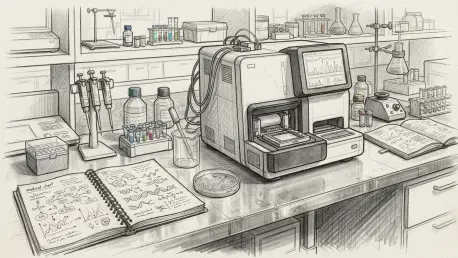
The technical sophistication of the xR RNA-sequencing assay is a cornerstone of its clinical utility. Operating on the Illumina NovaSeq 6000 platform, the assay utilizes hybridization-based capture technology to analyze RNA extracted from formalin-fixed paraffin-embedded tissue samples. This medium is the standard for tumor biopsies, but its preservation process can often degrade genetic material, making high-quality sequencing a difficult task. To overcome this, the assay is optimized for a sequencing depth of 6 million unique deduplicated reads, providing the sensitivity needed to identify rare gene rearrangements. Internal validation studies have confirmed the platform’s reliability, showing a 100% agreement rate for detecting RET rearrangements and over 92% for BRAF fusions compared to traditional methods. Such precision is vital for oncologists who must distinguish between various molecular drivers to choose the most effective treatment for patients with complex solid tumors.
Perhaps the most significant clinical advantage of this technology is its ability to bridge the diagnostic gap left by traditional DNA-only sequencing methods. Large-scale studies involving approximately 80,000 samples have demonstrated that nearly 30% of actionable gene fusions are identified exclusively through RNA analysis. In certain conditions, such as low-grade gliomas, this number rises to nearly 70%, while in sarcomas, over half of the critical drivers would be missed by DNA testing alone. This expanded detection capability has a direct impact on treatment pathways, increasing the percentage of patients eligible for targeted, life-extending therapies by nearly 24%. By identifying drivers like ROS1, NTRK, or ALK fusions that might otherwise remain hidden, the assay transforms the therapeutic outlook for a significant portion of the patient population. Consequently, the integration of RNA profiling is shifting from an optional enhancement to a standard requirement for comprehensive genomic assessment.
Strategic Outlook: Global Research and the Future of AI Integration
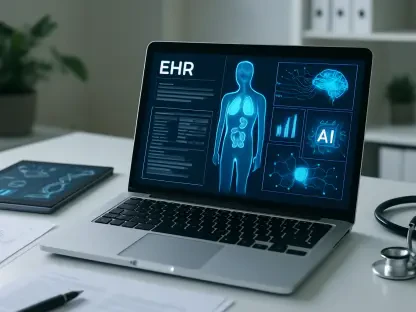
Beyond individual patient care, the certification of the xR assay provides strategic advantages for the broader biopharmaceutical industry. As clinical trials become increasingly global, having a standardized diagnostic platform that satisfies both U.S. and European regulatory requirements simplifies the development of companion diagnostics. This alignment allows drug developers to use a single, validated assay to identify eligible participants and monitor treatment efficacy across different regions. This reduces the time and cost associated with multi-regional trials and ensures that the genomic data collected is consistent and high-quality. Moreover, the integration of these tools into an AI-driven “data-driven operating system” for healthcare allows for the creation of massive, multimodal data libraries. These libraries combine clinical records with molecular insights, enabling researchers to identify patterns in treatment response and accelerate the discovery of novel biomarkers for a wide range of cancers.
The successful deployment of IVDR-certified RNA sequencing laid the groundwork for a more integrated and intelligent approach to precision oncology. By treating each diagnostic test as a critical node in a larger digital ecosystem, technology providers helped clinicians manage the immense volume of data generated by modern genomic profiling. This systematic approach transformed raw molecular information into actionable insights, assisting physicians in navigating the complexities of personalized medicine with greater confidence. Moving forward, the focus transitioned toward expanding these capabilities to include a wider array of biomarkers and improving the accessibility of high-complexity testing across all European healthcare systems. Healthcare organizations were encouraged to prioritize the adoption of certified platforms to ensure the highest standards of patient safety. Ultimately, the industry moved away from fragmented diagnostic models, embracing a unified framework where data integrity and regulatory compliance served as the primary drivers of clinical innovation.