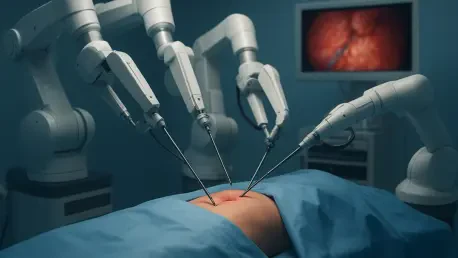

Surgeons utilize robotic arms to achieve a wider range of motion than the human wrist can provide, allowing for delicate maneuvers in tight anatomical spaces. This leap in technology has fundamentally altered the landscape of cancer treatment, moving away from the large incisions of the past. As of late 2026, robotic platforms have become the standard of care for many urological and gynecological malignancies, offering unparalleled visualization through high-definition 3D cameras. These systems do not replace the surgeon but act as a sophisticated extension of their capabilities, filtering out tiny hand tremors and translating large hand movements into microscopic actions. This level of control is particularly vital when operating near critical structures like nerves or major blood vessels, where a fraction of a millimeter can determine the success of the procedure. By integrating advanced imaging directly into the console, clinicians can now distinguish between healthy tissue and tumor margins with a clarity that was once impossible to achieve.
Advancements in Surgical Precision and Ergonomics
The current generation of robotic systems employs multi-articulated instruments that mimic the human hand but with far greater agility, enabling access to areas like the deep pelvis or the upper abdomen with minimal disruption to surrounding organs. This mechanical advantage is paired with enhanced fluorescence-guided surgery, which utilizes injectable dyes to highlight cancerous lymph nodes and vascular pathways in real-time. Such visual cues allow surgical teams to perform more radical resections of malignant tissue while preserving as much functional anatomy as possible. For instance, in complex partial nephrectomies, the ability to clamp specific vessels and remove a tumor while saving the majority of the kidney has become significantly more reliable. The steady growth in the adoption of these platforms from 2026 to 2028 suggests a shift toward more personalized surgical plans where the robot’s software assists in mapping the unique anatomy of each patient before the first incision is ever made.
Beyond the immediate technical benefits for the patient, the ergonomic design of modern robotic consoles addresses the long-term physical strain placed on surgical oncologists. Traditional open and laparoscopic surgeries often require surgeons to stand in uncomfortable positions for hours, leading to physical fatigue that can potentially impact decision-making and precision during the final stages of a lengthy operation. Robotic platforms allow the surgeon to sit in an ergonomic position with their head and neck properly supported, which has been shown to reduce musculoskeletal fatigue and maintain high levels of cognitive focus throughout the procedure. Furthermore, the integration of digital ecosystems allows for the recording and analysis of surgical data, which serves as a powerful tool for training the next generation of oncology specialists. These systems facilitate a collaborative environment where a senior surgeon can provide remote guidance or review procedural telemetric data to refine techniques.
Impact on Patient Recovery and Clinical Outcomes
Transitioning from traditional methods to robotic-assisted surgery has led to a measurable decrease in postoperative complications and a notable reduction in the length of hospital stays for cancer patients. When incisions are smaller and tissue trauma is minimized, the inflammatory response of the body is less severe, allowing patients to regain their mobility and baseline health much faster than in the past. This rapid recovery is especially critical in the context of multidisciplinary cancer care, as it enables patients to begin necessary adjuvant treatments like chemotherapy or radiation therapy much sooner than they would following a standard open surgery. Recent clinical data from 2026 indicate that patients undergoing robotic-assisted thoracic surgery for lung cancer experience fewer pulmonary complications and require less narcotic pain medication during their recovery phase. These improved clinical pathways not only enhance the quality of life for the individual but also optimize hospital resources.
The evolution of robotic oncology from 2026 and into the immediate future focused on the democratization of these high-tech tools through the development of more portable and cost-effective platforms. Hospitals and healthcare systems prioritized the standardization of robotic training programs to ensure that the benefits of precision surgery were available to a broader demographic of patients. Manufacturers worked toward integrating haptic feedback systems, which provided surgeons with a sense of touch that was previously missing from the robotic experience, further enhancing the safety of delicate dissections. This progress was supported by a growing emphasis on real-time data analytics, which helped surgical teams predict and mitigate potential intraoperative risks. Stakeholders moved toward a model where robotic systems were no longer viewed as luxury items but as essential components of a modern oncology department. Institutions that successfully invested in these technologies set a new benchmark for excellence.