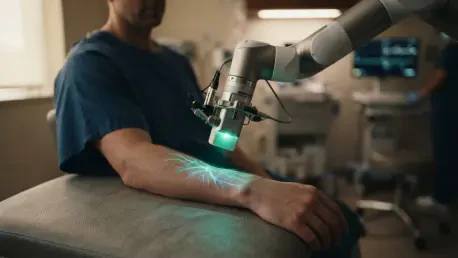

Medical facilities facing staffing challenges can now look to autonomous robotics as a scalable solution for standardizing the quality and consistency of routine diagnostic blood draws. The U.S. Food and Drug Administration recently granted De Novo authorization to the Aletta autonomous robotic phlebotomy device, marking a historic milestone as the first fully autonomous system of its kind to enter the American market. This regulatory clearance defines a new category of medical technology specifically designed to handle high-frequency diagnostic procedures without the constant manual intervention of a specialist. By addressing the severe shortage of trained phlebotomists, this innovation allows outpatient centers to manage patient flow more effectively while maintaining rigorous safety standards. The system is currently authorized for use in adult populations within outpatient environments, provided a trained supervisor is present. This move toward automation reflects a broader industry trend where precision robotics and artificial intelligence converge to solve labor-intensive logistical hurdles in modern medicine.
1. Advanced Sensing and Patient Safety Protocols
The Aletta system operates by merging sophisticated multimodal imaging technologies with advanced robotics to ensure the highest degree of accuracy during the venipuncture process. It utilizes a combination of near-infrared light, traditional ultrasound, and Doppler ultrasound to create a comprehensive map of the patient’s vascular structure. This integrated approach allows the artificial intelligence to distinguish between veins and arteries with extreme precision, significantly reducing the likelihood of accidental arterial punctures. Unlike manual methods that rely on tactile feel or visual inspection alone, the robotic system analyzes subsurface data to identify the most viable vein for blood collection. If the onboard sensors fail to locate a suitable vessel that meets the safety criteria, the device will simply decline to attempt the procedure, thereby preventing unnecessary patient discomfort. This data-driven methodology ensures that every blood draw is performed with a standardized level of technical excellence that is difficult to replicate across a manual workforce.
Safety is integrated into every stage of the autonomous procedure through a series of multi-layered protocols designed to protect the patient from physical harm and contamination. Throughout the initial scanning and needle guidance phases, the device continuously applies disinfectant to the skin surface to maintain a sterile environment. The internal hardware includes sensitive motion sensors that can detect if a patient shifts or moves their arm during the process; if significant movement occurs, the needle automatically detaches and the procedure is immediately halted. This reflexive safety feature is a critical component of the device’s design, ensuring that mechanical precision does not come at the expense of patient safety. Furthermore, the system undergoes rigorous cleaning by trained professionals between each patient session to adhere to strict infection control standards. These safeguards, combined with the ability to pause and alert a supervisor via sensors, provide a controlled environment that minimizes the risks typical of manual collection.
2. Operational Impact and Strategic Clinical Adoption
The introduction of autonomous phlebotomy into the healthcare ecosystem necessitates a shift in how staff resources are allocated and managed within outpatient clinics. Under the current FDA authorization, the Aletta device requires the oversight of a supervisor who is professionally trained in phlebotomy, yet the efficiency gains remain substantial. A single trained individual can effectively monitor up to three robotic units simultaneously, tripling the throughput capacity of a standard blood draw station. The supervisor’s role transitions from performing the physical labor of needle insertion to managing the technology and ensuring that the sequence of collection tubes is handled correctly. Patients interact with the device through a guided interface that helps them position their arm, and the session begins only after a confirmation from the patient or the supervisor. This collaborative model preserves the human element of clinical care while leveraging automation to handle the repetitive, physically taxing aspects of the job.
Healthcare organizations seeking to modernize their diagnostic capabilities adopted a proactive stance by evaluating how autonomous systems fit into existing lab workflows. Facilities that successfully integrated the Aletta device focused on comprehensive training for their phlebotomy supervisors, ensuring they possessed the technical expertise to manage the robotic interface and handle tube verification. Decision-makers prioritized the installation of these units in high-traffic outpatient centers where the volume of routine blood draws was most likely to cause bottlenecks. They also monitored patient feedback to adjust the environment around the robotic stations, creating a more comfortable and less clinical atmosphere for those transitioning from manual to automated care. To prepare for future advancements, medical leaders established clear protocols for maintenance and sanitation, treating the robotic units as essential infrastructure rather than experimental tools. These early adopters proved that the strategic use of automation effectively alleviated staffing pressures and stabilized the quality of care.