
Remote maintenance access points served as the primary entry vector for hackers who attempted to ruin regional blood supplies through thermal manipulation. This alarming breach, which unfolded in early November 2026, targeted the specialized infrastructure of Coolworld, a leading provider of temperature-controlled equipment for the French Blood Establishment (EFS). The incident signalizes a dangerous evolution in the cyber threat landscape, where the objective is no longer the simple extraction of personal data but the physical destruction of life-saving medical assets. By infiltrating the digital systems of a third-party maintenance provider, the attackers managed to bypass traditional perimeter defenses and gain direct control over the environmental settings of regional storage facilities. This specific attack occurred in the Bourgogne-Franche-Comté region, a vital hub for blood safety samples and plasma storage. It highlights how the modern healthcare supply chain is only as strong as its least secure partner, forcing a total reconsideration of how medical facilities manage their operational technology.
The Vulnerability of Third-Party Medical Infrastructure
Part 1: Exploiting Remote Maintenance and Support Networks
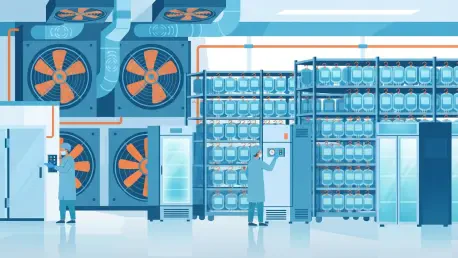
The core of the security failure rested in the trust relationship between the EFS and its equipment vendor, Coolworld. Hackers leveraged credentials intended for routine maintenance to gain unauthorized administrative access to industrial refrigeration units. Once inside the network, the malicious actors did not seek out financial records; instead, they targeted the setpoints of freezers containing fresh frozen plasma. These units, which normally operate at a consistent and safe level of approximately −30°C, were reprogrammed to heat up to an astonishing 110°C. Such a drastic temperature shift would have denatured the proteins in the plasma within minutes, rendering the entire supply useless for patient transfusions and critical safety testing. The sophistication of this maneuver suggests that the attackers possessed specific knowledge of industrial control protocols, allowing them to manipulate thermal environments without triggering immediate automated shutdowns. This level of precision indicates a worrying trend toward targeted environmental sabotage.
Part 2: Human Vigilance as a Necessary Defense Layer
Despite the severity of the intrusion, a catastrophe was avoided thanks to the rapid response of on-site personnel and independent monitoring systems. An on-call technician noticed unusual temperature spikes on a secondary monitoring console during the middle of the night, prompting an immediate investigation. This manual intervention allowed staff to move the sensitive blood products to alternative storage locations before the heat reached critical thresholds. The incident confirms that while automated alerts are helpful, human vigilance remains a cornerstone of resilience in the face of unpredictable cyber threats. Furthermore, the recovery process revealed that the attackers had attempted to hide their tracks by modifying local logs, though they failed to account for the physical sensor readings that ultimately betrayed their presence. This event serves as a stark reminder that the digital integrity of the cold chain is directly linked to patient outcomes, especially as healthcare providers move from 2026 into 2027 with more integrated and interconnected cooling systems.
Strengthening Operational Technology and Defensive Frameworks
Part 3: Addressing Risks in Industrial Refrigeration Controllers
To prevent future occurrences of such environmental manipulation, security experts are now focusing on the inherent vulnerabilities within internet-facing refrigeration controllers. Agencies like CERT-FR have specifically identified risks associated with controllers from manufacturers such as Danfoss and Copeland, which are frequently used in large-scale medical storage. Many of these devices were originally designed for efficiency and ease of remote management rather than robust cybersecurity, leaving management interfaces exposed to the public internet. Organizations must move toward a policy of strict network segmentation, ensuring that industrial control systems are never directly reachable from outside the facility. By implementing secure VPNs with multi-factor authentication for all third-party maintenance tasks, providers can significantly reduce the attack surface. Furthermore, the systematic application of firmware updates between 2026 and 2028 will be essential to patch known vulnerabilities that allow for remote unauthorized command execution and setpoint overrides.
Part 4: Establishing Redundant and Air-Gapped Monitoring Solutions
The successful mitigation of the EFS incident demonstrated that the path forward for healthcare security involves a multi-layered approach. Officials determined that relying solely on vendor-managed software was no longer a viable strategy for protecting critical national infrastructure. Consequently, the adoption of air-gapped monitoring systems that operate independently of the primary control network became a top priority for regional health boards. These systems provided an objective source of truth that attackers could not easily manipulate from a remote location. Additionally, the transition toward proactive threat hunting within the supply chain ensured that secondary service providers met the same rigorous security standards as the hospitals themselves. By re-evaluating the security of every thermal sensor and cooling unit, the industry took concrete steps to safeguard the blood supply against the growing threat of physical-digital sabotage. This period marked a transition where medical organizations treated cybersecurity as a clinical necessity, ensuring that the technology meant to preserve life remained resilient.