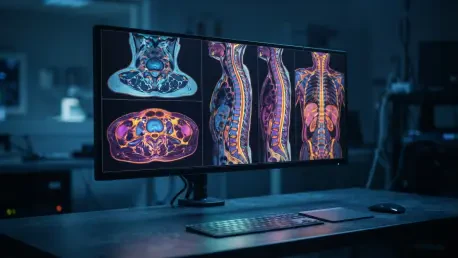

The global healthcare infrastructure is currently grappling with an unprecedented shortage of diagnostic experts while medical imaging demands continue to skyrocket across every major medical facility. This widening gap between scan volume and the global shortage of radiologists created a critical bottleneck. Consequently, the industry is witnessing a massive pivot toward centralized professional services. Financial benchmarks highlight this, notably RadNet’s $350 million acquisition of Onrad, projected to yield $200 million in annual revenue. This deal underscores a trend where the “choke point” in healthcare is no longer hardware, but the lack of human expertise.
The Current Landscape of Teleradiology Expansion
Market Drivers and Growth Statistics
The diagnostic industry is evolving rapidly as staffing deficits outpace the technological advancements of the last decade. As patient populations age, the necessity for frequent imaging grows, yet the pipeline for new radiologists remains constrained. This imbalance has turned the professional services segment into a primary revenue driver. Hospitals once focused on purchasing MRI machines now prioritize third-party interpretation services to maintain throughput.
Moreover, the financial scale of these transactions suggests the market is no longer satisfied with small, local providers. Large-scale investments are required to stabilize the supply of diagnostic reports. By securing large networks of clinicians, corporate entities provide a level of reliability that independent practices cannot match. This move toward massive service blocks is transforming how health systems allocate budgets, shifting funds from equipment capital toward recurring service agreements.
Case Study: RadNet’s Strategic Integration of Onrad
RadNet formed its Radiology Professional Services division to address market fragmentation. This move allowed the organization to shift from purely providing physical locations to offering a comprehensive 24-hour remote interpretation network. By managing services for over 270 hospital clients, the company centralized the reading process. This integration proves human capital is the most valuable asset in the modern imaging lifecycle, especially when supported by a robust digital infrastructure.
The acquisition of Onrad’s network of 130 radiologists complements previous investments in artificial intelligence, such as Gleamer’s diagnostic tools. Furthermore, by incorporating assets like the former Direct Radiology unit, the company built a lifecycle solution covering everything from the initial scan to the final AI-verified report. This model provides a blueprint for how technical efficiency and professional expertise can be merged into a single, scalable entity.
Expert Perspectives on the Consolidation Trend
RadNet CEO Howard Berger has emphasized that professional staffing is now a higher priority than expanding outpatient infrastructure. In his view, the value of diagnostic capacity has officially surpassed the value of hardware. Hospitals are increasingly desperate for speed and accuracy in interpretation, as delayed reports stall treatment pathways. This shift in priority favors those who control the labor supply over those who manufacture the scanning devices.
To maintain stability during these mergers, companies use performance-based earn-outs and equity issuance. For instance, potential payments reaching $210 million through 2027 serve as a mechanism to retain high-level talent and ensure market dominance. Experts suggest these financial structures are essential for keeping radiologists engaged as the industry transitions toward a corporate-managed model. The focus remains on ensuring rapid growth does not compromise clinical excellence.
The Future of Teleradiology and Industry Implications
The transition from fragmented local providers to centralized diagnostic powerhouses is expected to accelerate. As these multi-divisional entities grow, they will likely implement AI-augmented workflows to alleviate the chronic burnout currently plaguing the profession. These tools automate routine tasks, allowing doctors to focus on complex cases. However, the challenge of maintaining quality care amidst such rapid scaling remains a concern for patient advocates.
Furthermore, the consolidation of remote services offers a unique opportunity to bridge the healthcare gap for rural facilities. Leveraging a centralized expert pool allows small clinics to access the same diagnostic precision as metropolitan hospitals. This accessibility is crucial for improving patient outcomes. As the system becomes more integrated, the distance between the patient and the specialist will continue to shrink, improving diagnostic equity.
Summary and Strategic Outlook
The shift in value from medical technology to professional diagnostic capacity signaled a new era for healthcare management. Market consolidation emerged as a necessary solution to the persistent labor crisis that threatened to paralyze hospital departments. Integrated service models provided a framework that balanced technological innovation with human expertise, ensuring that medical data did not overwhelm interpretation capacity.
Strategic decision-makers focused on stabilizing the workforce through equity and long-term incentives to prevent talent attrition. These strategies allowed the industry to move toward a sustainable path where quality and speed were no longer mutually exclusive. The evolution of the diagnostic sector ultimately proved that the strength of a healthcare system depended less on its machinery and more on the accessibility of its professional minds.