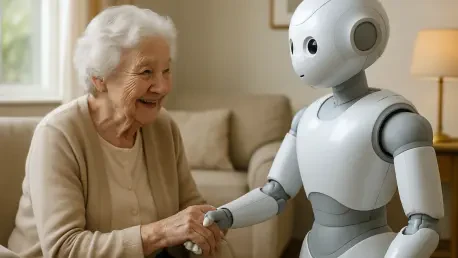

By automating the delivery of linens and maintenance of dining rooms, facilities allow human staff to focus on the emotional needs of their residents. As the senior living landscape enters this pivotal year, the industry finds itself at a crossroads where the rising demand for high-quality care meets an unprecedented shortage of professional caregivers. The demographic shift, often characterized by the aging of the massive Baby Boomer generation, has created a scenario where traditional staffing models are no longer sustainable. Consequently, the adoption of robotics has transitioned from a futuristic experiment into an operational necessity. Facilities are now redefining their environments to integrate autonomous systems that handle the heavy lifting of logistics, ensuring that the limited human talent available is directed toward tasks that require genuine empathy and complex decision-making. This strategic shift aims to create a more resilient ecosystem that can withstand the pressures of labor volatility while maintaining the standard of care that seniors and their families expect.
Maximizing Human Impact Through Automation
Strategic Workforce Redesign
In the current operational climate, senior care leaders have realized that the primary barrier to high-quality resident engagement is not a lack of compassion, but a lack of time. Robotic assistants are being deployed to manage the repetitive and time-consuming tasks that have historically burdened nursing aides and hospitality staff. For example, autonomous floor scrubbers and delivery robots are now commonplace in many upscale assisted living communities. These machines navigate corridors with precision, delivering meal trays from the kitchen to dining halls and transporting heavy laundry loads between units. By offloading these un-glamorous logistical chores, administrators are successfully redesigning the caregiver’s workday. This allows a certified nursing assistant to spend fifteen minutes listening to a resident’s concerns rather than rushing to empty a trash bin. The result is a workforce that feels less like manual laborers and more like clinical professionals, leading to higher job satisfaction.
Building on this foundation of efficiency, the strategic redesign of the workforce ensures that the human element of senior care remains central to the mission of every facility. While a robot can deliver a medication cup or a clean sheet, it cannot recognize the subtle signs of depression in a resident’s eyes or the nuanced change in a person’s gait that might signal an oncoming medical issue. By stripping away the administrative and janitorial clutter from a caregiver’s schedule, technology provides the breathing room necessary for these high-value interactions. This evolution is particularly critical in memory care settings, where residents require constant emotional grounding and personalized redirection. When the staff is no longer tethered to a rigid schedule of physical deliveries, they can engage in the meaningful, one-on-one activities that improve cognitive outcomes and overall quality of life. This paradigm shift does not seek to replace people with silicon; instead, it uses silicon to make the human experience more profound.
Enhancing Physical Safety and Reliability
The physical demands of senior care have long been a major contributor to workplace injuries, particularly back strains and musculoskeletal disorders caused by resident transfers. In response, modern facilities are incorporating robotic lift systems and exoskeletons that assist staff in moving residents from beds to wheelchairs or baths. These devices act as force multipliers, allowing a single caregiver to perform a transfer that previously required two or three people, all while significantly reducing the risk of injury for both the employee and the resident. By minimizing the physical toll of the job, operators are extending the careers of veteran caregivers who might have otherwise been forced into early retirement due to chronic pain. Furthermore, these mechanical solutions provide a level of stability and smoothness during movement that manual lifting can rarely match, which enhances the resident’s sense of security and dignity. This focus on physical safety is a cornerstone of creating a sustainable workplace that attracts and retains talent.
In addition to physical safety, robotics provide a layer of operational reliability that is essential for maintaining 24/7 coverage. Traditional staffing models are often vulnerable to unexpected absences, which can lead to dangerous gaps in supervision during night shifts or holidays. Autonomous security and monitoring robots now bridge these gaps by performing routine safety patrols and fall detection sweeps. These machines do not get tired, distracted, or call out sick, ensuring that every hallway is monitored and every distress signal is caught in real-time. When a robot identifies a potential emergency, it immediately alerts the human staff, allowing for a rapid response that can be the difference between a minor incident and a tragic outcome. This predictable coverage gives peace of mind to both facility managers and the families of residents, knowing that there is a constant, unwavering presence maintaining the environment. This synergy between human intuition and robotic consistency creates a safety net that is robust.
Moving from Innovation to Implementation
A Problem-Centric Approach to Technology
The senior living industry has matured past the stage of adopting technology for its own sake, moving away from the era of gadget-centric investments. In previous years, some providers rushed to purchase expensive social robots or novelty devices that ultimately failed to integrate into daily workflows, often ending up as unused assets. Today, the focus has shifted toward a problem-centric strategy where every piece of hardware is selected based on its ability to solve a specific, measurable operational bottleneck. Successful operators now conduct thorough audits of their daily processes to identify where human labor is being wasted or where resident safety is most at risk. This data-driven approach ensures that robotics are not just flashy additions to a facility, but are essential components of a stable business model. By prioritizing utility and return on investment, organizations are able to justify the initial capital expenditure through long-term savings in labor costs and improved health outcomes for their residents.
Integrating these advanced systems requires more than just a purchase agreement; it necessitates a complete rethinking of the facility’s internal workflows. When a robotic delivery system is introduced to a dining room, for example, the kitchen staff and servers must coordinate their movements with the machine’s pathing algorithms to maximize efficiency. This transition involves specialized training sessions where employees learn to see the robot as a teammate rather than a replacement. By focusing on stabilizing these internal processes, providers are seeing a stabilization in their bottom lines. The reduction in wasted movement and the streamlining of routine tasks allow communities to operate with a leaner, more focused team that is capable of delivering superior service. This shift toward practical implementation ensures that technology serves the staff and residents, rather than forcing people to adapt to the machine. The goal is a seamless environment where automation is so well-integrated that it becomes nearly invisible.
Normalizing Automation in Daily Care
Successful facilities transitioned toward a high-tech future by normalizing the presence of autonomous systems in daily care. Operators who prioritized the seamless integration of these tools saw immediate gains in operational efficiency and staff morale. They treated robotics as a standard utility, much like high-speed internet, which allowed the workforce to focus exclusively on compassionate, high-touch interactions. This strategic transition addressed the labor crisis by magnifying the impact of existing staff rather than seeking to replace them. Administrators carefully balanced the implementation of monitoring tech with the need for digital dignity, ensuring that resident privacy remained a top priority. Ultimately, the industry proved that automation was not a threat to the human element but rather its greatest protector. Providers who embraced this shift established a new benchmark for excellence, creating environments where both employees and seniors thrived. The move toward robotic integration became the foundation for a sustainable model.
Moving forward, providers refined the interoperability between different robotic platforms to create unified digital ecosystems. Leaders who took the initiative to invest in robust Wi-Fi infrastructure and staff training programs found themselves at a distinct competitive advantage, as their facilities were better equipped to handle the complexities of modern aging. They recognized that the path to solving the labor crisis did not lie in finding more people to do manual labor, but in utilizing technology to maximize the impact of the human workforce. By embracing this high-tech, high-touch philosophy, the industry laid the groundwork for a sustainable future where the dignity of aging was upheld by both human compassion and robotic precision. The results confirmed that a balanced approach was the most effective way to provide long-term care. Organizations that moved beyond pilot programs to full-scale adoption realized the vision of a safer, more efficient, and deeply human healthcare environment.