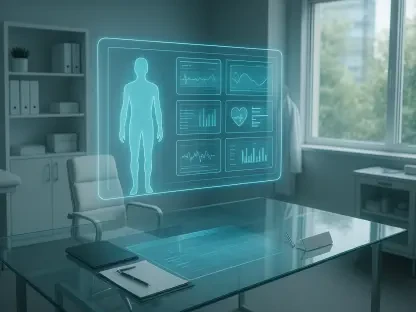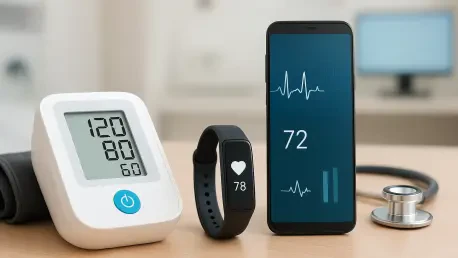

In intensive care units, radar-based systems are often preferred over cameras because they preserve patient privacy while functioning effectively in low-light or obstructed conditions. The healthcare landscape is currently experiencing a significant shift toward ambient intelligence, moving away from traditional monitoring methods that require patients to be physically tethered to machines. This evolution is driven by the development of non-contact medical Internet of Things (IoT) systems, which use sensors integrated into the environment to track vital signs. A comprehensive review of foundational studies highlights a transition where walls and furniture become active participants in patient care. This architectural pipeline spans from the physics of signal acquisition to the sophisticated machine learning models required to interpret human life signs without a single touch. This movement aims to eliminate the “white coat effect” and physical distress for patients who are sensitive to medical environments.
Primary Sensing Modalities in Modern Research
Radar and vision-based systems currently represent the gold standard in the field, accounting for the vast majority of research. Vision-based technology typically employs high-definition cameras to detect remote photoplethysmography (rPPG) signals, which are subtle changes in skin color that occur with every heartbeat as blood volume fluctuates. Conversely, radar systems—specifically millimeter-wave technology—measure the mechanical displacement of the chest cavity caused by breathing and heart contractions. While vision systems provide high resolution and can monitor multiple people at once, radar is particularly valuable in clinical settings because it can operate in total darkness and see through blankets, clothing, or bandages. These two modalities form the backbone of the current push toward pervasive healthcare, offering a way to collect data without interrupting the patient’s rest or requiring any physical interaction.
Beyond the dominant use of radar and cameras, researchers are exploring secondary modalities to fill specific niches where traditional imaging might fail. Acoustic sensors are being used to monitor breathing patterns and coughs by analyzing frequency signatures, while infrared thermography maps body temperature changes without skin contact. Another emerging field involves Wi-Fi-based sensing, which tracks how the human body disrupts wireless signals to gather health data without additional infrastructure. Additionally, “near-contact” solutions, such as ballistocardiography sensors embedded directly into chairs or mattresses, offer high signal quality while remaining completely unobtrusive to the patient. These methods provide a versatile toolkit for healthcare providers, allowing them to choose the most appropriate sensor based on the physical layout of the room and the specific needs of the individual being monitored.
Disparities in Physiological Data Tracking
A significant finding in current research is the imbalance regarding which vital signs are tracked, as some metrics are far easier to digitize than others. Respiration and heart rate are the primary focus of most studies because they are tied to periodic mechanical or optical changes that are relatively easy to capture from a distance. These metrics have reached a level of technological maturity that makes them prime candidates for immediate clinical application, with many systems achieving accuracy comparable to hospital-grade pulse oximeters. However, this focus leaves a gap in the comprehensive monitoring required for high-acuity patient care where a full range of vitals is necessary. The ease of detecting movement and color changes has led to a saturation of research in these areas, while more complex indicators of patient health remain under-represented in the current body of academic literature.
In contrast, critical parameters such as blood pressure, oxygen saturation, and core body temperature are rarely addressed by contactless systems due to technical barriers. The challenge is rooted in fundamental physics; for instance, estimating blood pressure requires a deep understanding of vascular stiffness and pulse wave velocity, which is difficult to model accurately without physical pressure sensors. Similarly, tracking oxygen levels depends on the absorption of specific light wavelengths, a process that becomes much more complex when signals must travel through the air and reflect off a moving subject. Achieving medical-grade accuracy for these vitals requires sophisticated algorithmic corrections to account for ambient light interference and patient movement. Until these hurdles are cleared, contactless systems will likely remain a supplementary tool rather than a full replacement for all traditional equipment.
Overcoming the Benchmarking and Evaluation Crisis
A major bottleneck preventing these technologies from entering mainstream hospital use is the lack of standardized evaluation metrics across the industry. The research field is currently a patchwork of different reporting methods, making it difficult to compare the efficacy of one system against another fairly. Some studies use small groups of healthy volunteers in controlled labs, while others test in noisy hospital environments with patients who have actual cardiovascular issues. This lack of consistency means that even highly accurate prototypes often fail to gain the necessary trust from the medical community because the results are not reproducible across different settings. Without a standard way to measure error rates and signal-to-noise ratios, developers find it difficult to demonstrate that their products meet the rigorous safety requirements demanded by medical regulators for real-world deployment.
To bridge the gap between laboratory success and bedside utility, the industry must adopt a unified set of benchmarks that apply to all sensing modalities. This includes the creation of standardized datasets that represent a wide range of skin tones, ages, and body types, as well as common error metrics that everyone agrees upon. By establishing a rigorous and transparent testing phase, developers can provide healthcare providers with the objective data needed to make informed decisions about technology adoption. Standardization is the primary bridge that will allow contactless IoT to move from a research curiosity to a validated medical tool that doctors can rely on for diagnosis. Furthermore, having a shared framework encourages collaborative competition, driving researchers to focus on improving the specific performance markers that matter most to nurses and physicians working in high-pressure units.
Deployment Strategies and Environmental Context
The integration of contactless systems depends heavily on the specific clinical environment and the physical condition of the patient being monitored. For instance, in intensive care units and hospital wards, radar is often the preferred choice because it functions through bandages and blankets while preserving patient privacy by avoiding identifiable images. In contrast, vision-based systems are ideal for sleep labs or examination rooms where lighting is controlled and the patient’s face is clearly visible to the camera. Each environment presents unique challenges, such as signal interference from other medical machines or physical obstructions that require a tailored approach to sensor placement. For dementia units, embedded sensors in furniture offer a way to monitor patients who might be agitated by wall-mounted devices or who might attempt to remove wearable sensors, ensuring a safer experience.
High-acuity monitoring increasingly relies on sensor fusion, where multiple technologies work in tandem to provide a level of redundancy and error-checking that a single sensor cannot achieve on its own. This hybrid approach combines radar and vision technology to minimize false alarms and ensure a level of accuracy essential for life-critical applications. By using one modality to validate the readings of another, healthcare systems can ensure that a sudden change in lighting or a patient shifting in bed does not trigger a false emergency alert. For example, if a vision system detects a drop in heart rate, the radar system can confirm whether the actual mechanical pulse has changed. This multi-layered approach ensures that the technology adapts to the patient’s needs and surroundings rather than forcing the patient to adapt to the technology, leading to a much more resilient infrastructure.
Strategic Implementation of Privacy and Precision
The industry moved toward a decentralized architecture that prioritized patient confidentiality during the widespread rollout of these systems. Stakeholders successfully implemented edge computing and federated learning, which ensured that raw data was processed locally on individual devices rather than being transmitted to vulnerable central servers. This shift addressed the ethical concerns associated with continuous monitoring, allowing healthcare networks to improve their diagnostic algorithms without compromising personal privacy. Only learned mathematical updates were shared with the central model, maintaining a high level of security across the entire infrastructure. This evolution was essential for turning silent observers on the wall into trusted components of the modern medical environment, where data protection was treated with the same importance as clinical accuracy in every monitored room.
Ultimately, the successful integration of ambient intelligence represented a paradigm shift in how patient care was delivered in clinical settings. Providers discovered that patients were much more likely to consent to monitoring when they knew their data remained on-site and encrypted, leading to higher quality longitudinal data for chronic disease management. These systems effectively bridged the gap between intensive hospital care and comfortable recovery, providing a seamless transition for patients returning home. The adoption of standardized benchmarking allowed for a transparent evaluation of different sensing modalities, which fostered innovation and trust among medical professionals. By focusing on privacy-first designs and environmental adaptability, the healthcare sector established a foundation for a future where monitoring was an invisible, supportive presence that protected every individual.