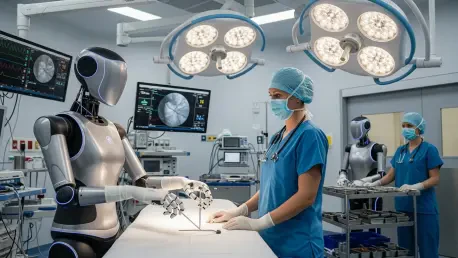

The delivery of the first Master™ humanoid robot to a prominent dental group in Los Angeles during June 2026 represents a defining moment in the evolution of professional service automation. This milestone marks the official entry of Faraday Future into the burgeoning “Physical AI” sector, signaling a profound shift from a company once strictly associated with electric vehicles to one that is now a pioneer in robotic logistics. By deploying these bipedal assistants into a high-stakes medical environment, the company seeks to prove that humanoid technology is finally ready to handle the unpredictable nature of real-world professional settings. The objective is to create a seamless synergy between artificial intelligence and human expertise, where the robot serves as the functional backbone of office operations. This integration is not just about novelty; it is a calculated effort to alleviate the administrative burdens that have historically plagued healthcare facilities. As the machine begins its tenure in the clinic, it carries the weight of proving that Physical AI can be a reliable, safe, and indispensable asset for business owners looking to modernize their patient-facing workflows.
Operational Transformation: From Logistics to Patient Care
Automating Healthcare Tasks: Reception and Administrative Flow
In its primary capacity at the Los Angeles dental facility, the Master™ robot functions as an advanced interface designed to handle the repetitive, high-frequency tasks that frequently cause delays in a busy practice. Its responsibilities are centered on the front-of-house experience, including the complex orchestration of patient check-ins, the verification of appointment schedules, and the initial greeting of visitors upon their arrival. By automating these essential interactions, the robot effectively removes the initial bottleneck at the reception desk, allowing for a more fluid and predictable flow of people throughout the day. The sophisticated sensors and natural language processing capabilities of the machine enable it to recognize returning patients and provide them with immediate updates regarding their wait times or any paperwork that requires completion. This level of automation ensures that the first point of contact for every patient is efficient and professional, reducing the stress often associated with check-in procedures while maintaining a high standard of service that reflects the clinic’s commitment to technological advancement.
While the capabilities of humanoid robots are expanding rapidly, the implementation of this technology within a medical environment requires strict adherence to safety protocols and the establishment of clear operational boundaries. To maintain professional standards and patient safety, the Master™ robot is currently restricted to administrative and reception areas, ensuring that it does not enter clinical zones where delicate dental procedures are performed. This spatial limitation is a deliberate part of the deployment strategy, designed to prevent any potential interference with sensitive medical equipment or the sterile environments required for treatment. Instead of assisting with direct patient care, the robot acts as an expert guide for wayfinding within the building, directing patients to the correct consultation rooms or helping them locate amenities without requiring a human staff member to leave their post. By clearly defining these zones of operation, the facility can enjoy the logistical benefits of robotic assistance while ensuring that the core medical functions of the practice remain entirely in the hands of qualified human professionals who can focus on clinical excellence.
Elevating Patient Experience: Accessibility and Workflow Optimization
One of the most significant advantages of integrating humanoid robotics into a metropolitan healthcare setting is the ability to overcome the language barriers that can often complicate patient interactions. The Master™ robot is equipped with the capacity to communicate fluently in more than 50 different languages, a feature that is particularly invaluable in a culturally diverse city like Los Angeles. This linguistic flexibility allows the robot to act as a universal bridge, greeting patients and answering logistical questions in their native tongues, which fosters a sense of inclusivity and comfort from the moment they walk through the door. Beyond simple translation, the AI is programmed to understand cultural nuances in communication, ensuring that every interaction is polite and contextually appropriate. This capability not only improves the patient’s immediate experience but also ensures that critical logistical information, such as appointment details or intake instructions, is conveyed accurately and without the risk of misinterpretation. As a result, the healthcare provider can serve a much broader demographic with greater confidence, knowing that their administrative interface is capable of meeting the diverse needs of a global patient base.
The adoption of robotic assistants is driven by a fundamental need to optimize internal workflows and allow human employees to dedicate their time to more cognitively demanding and high-value activities. In a traditional medical office, staff members are often overwhelmed by a constant stream of administrative data entry, phone coordination, and routine logistical tasks that distract from patient-centered care. By delegating these repetitive responsibilities to an AI-driven humanoid, the practice can reallocate its human capital toward areas that require emotional intelligence, clinical judgment, and personalized interaction. This shift in operational focus has a direct impact on the overall efficiency of the practice, as clinical staff are no longer burdened by the minute-to-minute management of the waiting room or basic scheduling inquiries. Furthermore, the presence of such advanced technology enhances the professional reputation of the facility, signaling to patients that the practice is at the forefront of the industry. The ultimate goal is to create a more harmonious environment where technology handles the mechanics of the office, leaving the human touch for the aspects of healthcare that matter most to patient outcomes.
The Path to Scaling: Strategic Models and Economic Realities
The Integrated Ecosystem: Leveraging the Three-in-One Model
The expansion of Faraday Future into the robotics market is underpinned by a sophisticated strategic model known as the “Three-in-One” ecosystem, which integrates physical hardware, real-world data collection, and an evolving AI “Brain.” In this framework, the humanoid and bionic robots serve as the physical interface between the digital intelligence and the physical world, acting as mobile data collection hubs that learn from every interaction. This creates a continuous evolutionary loop where the software is constantly refined based on the specific challenges and nuances encountered in environments like a dental office or a hospital lobby. The data gathered from navigating hallway corners, interpreting various human speech patterns, and managing logistical tasks is fed back into the central AI system, allowing the entire fleet of robots to become more capable over time. This approach ensures that the technology is not static; instead, it adapts and improves its performance based on actual usage patterns, making the robot an increasingly valuable asset the longer it is integrated into a business’s daily operations. This model represents a departure from traditional robotics, focusing on a living software architecture that grows alongside the physical infrastructure.
To establish a dominant position in the commercial robotics sector, the company has set ambitious delivery targets, aiming to deploy 1,500 units by the end of the 2026 calendar year. This aggressive scaling strategy is designed to transition the organization’s primary identity from an automotive manufacturer to a comprehensive provider of AI-driven services. By meeting these milestones, the firm intends to demonstrate the commercial viability of humanoid technology across a wide range of industries beyond healthcare, including education, security, and hospitality. To facilitate this broad adoption, the company is developing multiple form factors that are tailored to the specific needs of different operational environments. While the humanoid model is ideal for patient-facing roles where a familiar physical presence is beneficial, other sectors may require “bionic” forms that are optimized for specialized physical tasks or industrial inspection. This multi-pronged approach to product development allows for a more versatile application of Embodied AI, ensuring that the technology can be customized to meet the unique functional requirements of a diverse set of commercial clients while maintaining a unified technological core.
Market Entry Obstacles: Financial Stability and Supply Logistics
Despite the technical achievements associated with the first delivery of the Master™ robot, the path to widespread industrial adoption is complicated by significant financial and regulatory hurdles. The organization currently faces substantial liquidity constraints, which have raised questions about its ability to maintain its ambitious robotics roadmap without securing significant new infusions of capital. Managing these financial obligations is critical for the long-term stability of the robotics division, especially as the company works to meet the strict compliance standards required by the Nasdaq stock exchange. Failure to maintain these standards or secure necessary funding could jeopardize the development cycles and delivery schedules that are essential for gaining market share in the highly competitive AI sector. The transition to a robotics-heavy business model requires an immense amount of upfront investment in research, development, and manufacturing capacity, making financial health a primary concern for stakeholders and potential partners alike. Proving that the business can remain solvent while scaling such a capital-intensive product line is just as important as proving that the robots themselves can perform their administrative duties effectively.
The successful deployment of the Master™ humanoid robot in a professional medical setting demonstrated that the integration of Physical AI into daily healthcare operations was no longer a theoretical exercise. Organizations that observed this transition recognized that the initial step toward modernization involved a comprehensive audit of their existing administrative bottlenecks to identify where robotic assistance could provide the most immediate value. It became clear that successful adoption required not only the acquisition of advanced hardware but also a commitment to training staff on how to work alongside these machines to maximize efficiency. Looking ahead, facility managers sought to establish clear safety boundaries and operational protocols to ensure that robotic assistants enhanced, rather than hindered, the patient experience. The focus shifted toward building a scalable technological infrastructure that could support the continuous data requirements of an evolving AI brain. By prioritizing linguistic versatility and logistical automation, these early adopters set a new standard for patient-centric service, proving that the strategic use of robotics was a vital component of a resilient and future-proof healthcare practice.