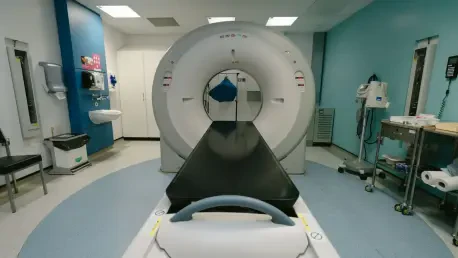

Medicare’s Procedure Price Lookup tool often fails to show the full cost difference because it compares hospitals to surgical centers instead of freestanding imaging offices. This discrepancy often leaves patients blindsided by bills that are significantly higher than expected for routine diagnostic services. When a healthcare provider suggests a brain MRI at a nearby hospital outpatient department, the recommendation typically feels like a standard part of the care pathway rather than a financial decision. However, the physical location of the scanner is frequently the primary driver of the final price tag under the Original Medicare framework. While the technology and the expertise required to interpret the images remain constant across different settings, the administrative designation of the facility triggers entirely different reimbursement rules. For many individuals, this means a routine referral becomes an expensive lesson in healthcare economics, as the out-of-pocket obligation scales upward based on the building’s affiliation.
1. Analyzing the Dual Payment Structure
Medicare currently maintains two distinct reimbursement tracks for outpatient services, which leads to a sharp divergence in costs for identical procedures. Hospital outpatient departments operate under the Outpatient Prospective Payment System, which generally allows for higher facility fees to cover the overhead of maintaining a full-scale medical institution. In contrast, freestanding imaging centers and physician offices utilize the Physician Fee Schedule, which typically results in a lower total cost for the same scan. For a brain MRI without contrast, the facility component at a hospital can be more than 90% higher than the technical component at an independent site. This structural gap is not a reflection of superior equipment or more detailed imaging; rather, it is a byproduct of a legacy billing system that rewards hospitals for their broader operational scale. As healthcare systems continue to acquire independent practices, they often transition these sites to hospital-based billing to capture these higher rates.
Although the facility fee gap is substantial, the total impact on a patient’s wallet is slightly different once professional fees are factored into the equation. Every MRI requires a radiologist to interpret the results, and this professional component is billed separately. When the professional fee is added to the facility charge, the total Medicare-approved amount at a hospital outpatient department remains significantly higher, though the percentage difference narrows. For instance, while the facility fee alone might show a 91% increase, the total coinsurance for a patient with Original Medicare often ends up being about 59% higher at the hospital compared to a freestanding center. Understanding this distinction is vital because patients are responsible for 20% of the total approved amount after meeting their deductible. Consequently, even a scan that looks identical on paper can fluctuate from a $40 copay to over $60 depending on which side of the street the building sits.
2. Identifying the Burdened Patient Groups
The financial burden of site-of-service pricing falls unevenly across the Medicare population, primarily targeting those who rely solely on Original Medicare. For beneficiaries without a supplemental policy, such as Medigap Plan G, every dollar of the Medicare-approved amount translates directly into a higher out-of-pocket expense. These individuals must navigate a landscape where a simple referral can consume a larger portion of their fixed income than necessary. In contrast, patients enrolled in Medicare Advantage plans or those with comprehensive supplemental coverage often remain insulated from these price swings. In these cases, the insurer absorbs the higher facility costs or the plan sets a flat copayment for all imaging services regardless of location. This creates a situation where the most vulnerable seniors, who may be managing multiple chronic conditions on a budget, are the ones most likely to feel the sting of hospital-based pricing if they do not proactively seek out lower-cost alternatives.
Broader economic factors in 2026 further complicate the situation for patients trying to manage their healthcare expenses. With the annual Part B deductible and standard premiums continuing to rise, the added weight of inflated facility fees can lead some patients to delay or skip necessary diagnostic testing. While federal regulators have proposed measures to align payment rates for certain non-contrast imaging services starting in 2027, the current reality remains a fragmented pricing model. The ongoing efforts by the Centers for Medicare and Medicaid Services to implement site-neutral payments aim to save the program hundreds of millions of dollars, but these changes take time to phase in across all procedure codes. Until these reforms are fully realized, the responsibility of price discovery remains with the consumer. This requires a level of diligence that was once unnecessary in the healthcare sector, as the name on the door now dictates the price of the service provided inside.
3. Implementing Cost Management Strategies
Managing these expenses requires a shift from passive compliance with referrals to active verification of billing practices. The first step involves confirming the specific billing status of any facility before an appointment is finalized. Patients should not assume that a clinic located in a retail plaza or a separate office park is independent; many are technically off-campus hospital departments. By asking the scheduler for the facility’s Medicare billing classification and the specific CPT code on the physician’s order, a patient can gain the information needed for an accurate comparison. Once the CPT code is identified, the next step is to contact both the hospital and a local independent imaging center to ask for the total Medicare-approved amount at each site. This direct inquiry bypasses the limitations of online lookup tools and provides a concrete figure for calculating the 20% coinsurance. Having these numbers in hand allows for an informed decision based on actual out-of-pocket costs.
Beyond financial comparisons, it was essential to verify whether a specific location was medically necessary for the procedure. Patients were encouraged to ask their physicians if there was a clinical reason why a hospital-based scan was preferred over a freestanding accredited center. In many instances, referrals were made out of professional habit or system affiliation rather than a requirement for specialized hospital equipment. If the physician confirmed that a routine, high-quality scan at an independent center met all diagnostic needs, the patient successfully avoided unnecessary facility premiums. By treating the healthcare referral as a recommendation rather than an absolute mandate, individuals took control of their financial health while still receiving high-quality medical care. These proactive steps allowed patients to navigate the complex Medicare landscape more effectively, ensuring that they did not pay a premium for the building when the medicine itself was the same across different providers.