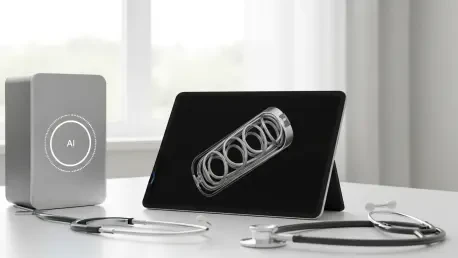

The historical tension between obtaining high-resolution diagnostic images and protecting patients from excessive X-ray exposure has long remained a central challenge in modern interventional cardiology. For decades, medical professionals had to accept a direct correlation where clearer visual data necessitated a higher dose of radiation, creating a persistent safety risk for both the person on the table and the clinical team in the room. However, the introduction of SmartIQ, an advanced artificial intelligence software algorithm integrated into the Azurion image-guided therapy platform, represents a fundamental shift in this paradigm by utilizing deep learning to decouple image quality from radiation intensity. By processing raw data with sophisticated neural networks, this technology allows physicians to navigate complex coronary structures with unprecedented clarity while significantly lowering the biological cost of the procedure. This advancement arrives at a critical juncture when the volume of minimally invasive cardiac interventions is rising, necessitating a more sustainable approach to long-term radiation management in catheterization labs worldwide.
Advancing Safety Through Computational Intelligence
Optimization of Ultra-Low Dose Protocols
The transition from traditional hardware-based filtration to AI-driven image reconstruction marks a significant evolution in how medical imaging systems handle the trade-off between noise and detail. SmartIQ builds upon the foundation of the previous ClarityIQ technology, yet it achieves a level of efficiency that was previously thought to be impossible with standard X-ray tube configurations. By implementing an ultra-low dose protocol, the software can now deliver a reduction of over 50% in X-ray radiation compared to the most conservative settings found on its predecessor. This is not merely a marginal improvement but a complete overhaul of the imaging chain, where the AI identifies and removes electronic noise while sharpening the edges of stents and fine vessels. Consequently, the system maintains the high-contrast visibility required for delicate tasks like wire placement and balloon inflation without the need for the high-energy bursts that were once standard in complex coronary cases.
The practical implications of such a drastic reduction in radiation are profound for the high-volume clinical environment where cumulative exposure is a constant concern for staff members. Medical professionals who spend their entire careers in the lab are at risk for long-term health issues related to scatter radiation, and the ability to cut the source dose in half dramatically lowers that occupational hazard. Beyond the safety of the staff, the technology addresses the needs of sensitive patient populations, including those who require multiple staged procedures or individuals with specific comorbidities that make radiation sensitivity a primary concern. By reducing the invisible burden of the procedure, SmartIQ allows interventionalists to focus entirely on the anatomical challenges at hand, knowing that the digital enhancements provided by the AI are doing the heavy lifting to ensure visual fidelity. This shift toward intelligent software as the primary driver of image quality suggests a future where hardware limitations are increasingly mitigated by algorithmic innovation.
Validating Performance Through Clinical Evidence
To ensure that the reduction in radiation does not come at the expense of diagnostic accuracy, rigorous testing has been conducted to compare the performance of SmartIQ against established industry benchmarks. A blinded pilot study, recently featured in the Journal of the Society for Cardiovascular Angiography and Interventions, provided a clear indication of how these AI-generated images are perceived by practicing clinicians. In the vast majority of cases reviewed during the study, the participating physicians expressed a strong preference for the images processed by the new AI software over those generated by older systems. The scoring focused on several critical factors, including the sharpness of vessel borders and the clarity of the background, with SmartIQ consistently outperforming previous standards. These results indicate that the technology is not just matching the status quo with less radiation, but is actually providing a superior visual experience that can improve the speed and confidence of a diagnosis.
Further verification of these benefits is currently underway through the RADIQAL trial, a comprehensive study that has already reached 60% of its enrollment target. This trial specifically monitors the software’s impact on radiation dosing in real-world scenarios, tracking how much energy is saved across a diverse range of patient sizes and procedural complexities. By collecting this large-scale data, the industry can better understand how AI-driven imaging adapts to the unpredictable nature of interventional cardiology. The ongoing nature of this research highlights a commitment to evidence-based medicine, ensuring that every claim regarding dose reduction is backed by quantifiable metrics. As more data points are integrated into the final analysis, the medical community will have a robust framework for adopting these tools as the new standard of care, replacing older, more radiation-intensive protocols with a more precise and safer alternative for all stakeholders involved in cardiac care.
Strategic Integration into the Global Healthcare Landscape
Economic and Market Trajectories of Medical AI
The introduction of SmartIQ is a localized manifestation of a much larger trend where artificial intelligence is becoming the backbone of the global healthcare economy. Projections indicate that the healthcare AI market, which was valued at nearly $12 billion in 2024, is on a path to exceed $57 billion by 2029, driven by the demand for efficiency and safety. Within this context, the development of intelligent imaging algorithms is seen as a transformative breakthrough rather than a minor software update, as it solves a fundamental physical problem through digital means. Healthcare facilities are increasingly looking for ways to modernize their existing infrastructure without necessarily replacing every piece of hardware, and software-based solutions like SmartIQ provide a scalable way to achieve this. This economic reality encourages manufacturers to invest heavily in software that can be updated and refined over time, ensuring that the technology remains at the cutting edge throughout its lifecycle.
This rapid growth in the market also reflects a shift in institutional priorities, where the long-term cost-effectiveness of safety technology is becoming a primary purchasing driver. Reducing radiation exposure can lead to fewer complications and potentially shorter procedure times, both of which contribute to the overall financial health of a hospital system. Furthermore, as regulatory bodies around the world place more emphasis on patient safety and dose tracking, the ability to demonstrate a 50% reduction in exposure becomes a significant competitive advantage. For clinicians, the integration of these tools represents a way to stay relevant in a field that is moving toward more data-driven and automated processes. By adopting AI-enhanced platforms, hospitals are not just buying a tool; they are investing in a future-proof ecosystem that can adapt to the evolving demands of cardiology, where the expectation for high-quality care is matched by an equal demand for the highest safety standards.
Global Accessibility and Regulatory Progress
While the technology has already earned the European CE mark, making it available to practitioners across the continent, its journey toward global implementation continues with pending clearances in the United States. The upcoming major industry debut at the EuroPCR 2026 conference in Paris will serve as a platform for international experts to observe the software’s capabilities in a live clinical context. This staged rollout ensures that as the technology enters new markets, it is supported by a wealth of localized data and a network of trained professionals who understand its nuances. By targeting the most influential cardiovascular conferences, the developers aim to set a new global benchmark for how coronary procedures should be performed. This strategy focuses on building trust within the global medical community, ensuring that the transition to AI-supported imaging is viewed as a natural and necessary step in the evolution of the catheterization laboratory.
Looking toward the immediate future of cardiac intervention, the emphasis should shift toward the widespread adoption of these dose-reduction technologies as a standard requirement for all new lab installations. Healthcare administrators and lead cardiologists were encouraged to evaluate their current radiation safety protocols to determine where AI-driven software could provide the most immediate benefit to their patient outcomes. Future considerations will likely involve the integration of even more predictive AI features, such as real-time dose mapping and automated vessel analysis, to further streamline the workflow. It was recommended that facilities prioritize the training of their staff on these new digital platforms to ensure that the maximum safety benefits are realized during every procedure. By embracing these computational advancements, the medical field moved closer to a reality where the risks associated with diagnostic imaging were minimized, allowing the focus to remain entirely on the life-saving potential of interventional medicine.