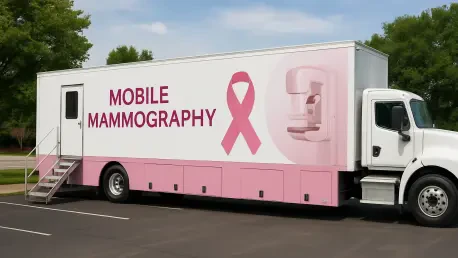

A sleek, thirty-eight-foot-long medical suite painted with symbols of hope and health is currently navigating the winding rural roads of Sussex County, Delaware, fundamentally altering how residents perceive and access life-saving screenings. This initiative by TidalHealth represents a strategic pivot in the state’s public health framework, specifically targeting the complex logistical and social barriers that have historically kept preventative care out of reach for thousands. In a region where the distance to a major medical facility can be measured not just in miles but in hours of lost wages and transportation struggles, this mobile unit serves as a bridge. It is not merely a vehicle but a fully realized clinical environment designed to dismantle the physical, financial, and psychological hurdles that often discourage individuals from seeking early diagnostic services. By embedding high-tech diagnostic capabilities directly into local neighborhoods and workplaces, the program aims to shift the paradigm from reactive treatment to proactive early detection, which is vital in a state facing some of the most significant health challenges in the Mid-Atlantic region.
Advanced Technology and Financial Sustainability
Cutting-Edge Diagnostics: Tomosynthesis on the Move
The mobile unit functions as a sophisticated, self-contained clinic that mirrors the exact technological capabilities found in stationary medical centers, ensuring that patients do not have to compromise on quality for the sake of convenience. At the heart of this mobile suite is the current gold standard in breast health: 3D mammography imaging, also known as digital breast tomosynthesis. This technology allows radiologists to examine breast tissue layer by layer, significantly increasing the accuracy of detection and reducing the likelihood of false positives or unnecessary callbacks. The efficiency of the operation is designed to respect the patient’s time, with complete screenings typically taking only fifteen minutes from start to finish. This rapid turnaround is essential for maintaining a high volume of patients and fitting into the busy schedules of those who might only have a brief window during a lunch break or between errands to prioritize their health.
Furthermore, the clinical environment inside the unit is meticulously maintained to provide a private, comfortable, and professional experience that rivals any hospital setting. High-resolution monitors, specialized software for image processing, and secure data transmission systems allow for the seamless integration of mobile results into the broader TidalHealth medical record system. This ensures that any findings are immediately accessible to a patient’s primary care physician or specialists, facilitating a faster transition to follow-up care if needed. By bringing this level of technological sophistication to a church parking lot or a community center, the program eliminates the “technological divide” that often exists between affluent urban centers and under-resourced rural areas. The commitment to using the latest imaging hardware demonstrates that the quality of care is dictated by clinical standards, not by a patient’s zip code or their ability to travel to a metropolitan hub.
Funding Models: A Blueprint for Long-Term Viability
Securing the longevity of such an ambitious project required a sophisticated financial architecture, which was successfully built upon a foundation of public-private partnerships totaling over $1 million. Major contributions from local entities, such as the Perdue Foundation and Joseph Zimmer LLC, provided the necessary capital to launch the unit and equip it with the required medical technology. These investments were not merely one-time donations but part of a broader strategy to establish a sustainable health infrastructure that can withstand fluctuating economic conditions. The involvement of local industry leaders highlights a growing recognition that the health of the community is inextricably linked to the stability of the local workforce and economy. By funding a mobile solution, these organizations are investing in a healthier, more resilient population that is less likely to suffer from the catastrophic consequences of late-stage disease.
A critical component of this financial strategy is the Sheila Zimmer Breast Screening Fund, which was established to ensure that the unit remains accessible to everyone, regardless of their financial status or insurance coverage. This dedicated resource provides financial assistance to patients who lack the means to cover out-of-pocket costs or who are entirely uninsured, effectively removing the price tag as a deterrent to care. This fund acts as a safety net, allowing the medical staff to focus on clinical outcomes rather than administrative billing hurdles. By combining corporate philanthropy with a mission-driven screening fund, TidalHealth has created a model that balances high operational costs with a commitment to social equity. This multifaceted funding approach ensures that the mobile unit will continue to serve Sussex County for years to come, providing a consistent and reliable presence in a region that has often felt overlooked by traditional healthcare investments.
Overcoming Geographic and Economic Obstacles
Navigating the Inland Healthcare Deserts
TidalHealth has identified several “healthcare deserts” within Sussex County, particularly along the western corridors of Route 13 and Route 113, where the lack of medical infrastructure is most acute. While the coastal areas of Delaware often enjoy robust medical facilities and a higher density of specialists, these inland regions are characterized by a starkly different reality, including higher poverty rates and significant food insecurity. In these communities, the struggle to meet basic daily needs often pushes preventative healthcare to the bottom of a family’s list of priorities. When a household is focused on keeping the lights on or putting food on the table, a routine mammogram can seem like an unattainable luxury rather than a life-saving necessity. The mobile unit addresses this head-on by physically entering these underserved spaces, effectively shrinking the gap between the patient and the provider.
The geographic isolation of these rural corridors is compounded by the lack of public transportation options, making a trip to a traditional imaging center a daunting logistical challenge. For many residents, owning a reliable vehicle is not a guarantee, and the few available transit routes often do not align with medical office hours. A routine thirty-minute appointment can easily transform into a day-long journey when accounting for bus schedules or the need to rely on rides from friends and family. By parking the mobile unit at familiar, central locations such as local grocery stores, libraries, or community centers, TidalHealth significantly reduces the “travel burden” on the patient. This localized approach not only saves time but also reduces the fuel costs and logistical stress associated with long-distance travel, making it much more likely that a resident will follow through with their scheduled screening.
Removing Barriers for the Rural Workforce
The local economy of Sussex County is heavily dependent on the agricultural and seasonal sectors, where the workforce often faces unique challenges in accessing traditional healthcare. Many of these workers are employed in positions that do not offer flexible hours or paid time off, meaning that a visit to a doctor’s office often results in a direct loss of income. For a family living paycheck to paycheck, the choice between earning a full day’s wages and attending a medical appointment is a difficult one that frequently favors immediate financial survival. The mobile mammography unit solves this dilemma by coordinating with employers to bring the clinic directly to the workplace. This allows employees to step away for a mere twenty minutes to complete their screening and return to work almost immediately, minimizing the disruption to their livelihood and the employer’s productivity.
This workplace-based strategy is particularly effective in reaching populations that might otherwise fall through the cracks of the healthcare system. By meeting people where they spend the majority of their time, the program normalizes the act of screening and makes it a seamless part of the workday rather than a stressful external obligation. Furthermore, this approach helps to reach individuals who may not be actively seeking care or who may not have a primary care provider to remind them of the need for regular screenings. The presence of the unit at a job site serves as a powerful visual reminder and an invitation to prioritize health. Through these efforts, TidalHealth is successfully engaging a demographic that is often underserved by traditional clinic hours, ensuring that the most vulnerable members of the workforce have an equal opportunity to detect potential health issues at their earliest and most treatable stages.
Cultivating Trust and Cultural Inclusion
Breaking Language and Institutional Barriers
The mobile mammography initiative is specifically designed to address the unique needs of Sussex County’s diverse population, which includes significant Hispanic, Latino, and Haitian-Creole communities. For many of these residents, language barriers and a lack of familiarity with the American medical system can make seeking care an intimidating and overwhelming experience. To combat this, the unit utilizes advanced remote interpretation services that allow medical staff to communicate effectively with patients in their native languages. This ensures that every individual fully understands the procedure, the results, and any necessary follow-up steps. By removing the confusion that often stems from language gaps, the program fosters a sense of safety and inclusion, encouraging more members of these communities to participate in regular health screenings.
Beyond simple translation, the initiative employs a human-centric staffing model that prioritizes empathy and cultural sensitivity. The staff members are trained to recognize and respect the cultural nuances that may influence a patient’s perception of healthcare and cancer screenings. For some, there may be a deep-seated mistrust of large medical institutions or a cultural stigma associated with a cancer diagnosis. The mobile unit’s smaller, more intimate setting helps to alleviate these fears, providing a less clinical and more personal environment. By engaging with patients on a human level and providing clear, compassionate communication, the team works to break down the institutional barriers that have historically marginalized non-English speaking populations. This deliberate focus on cultural competency is essential for building a healthcare system that is truly equitable and accessible to all residents, regardless of their background.
Building Trust Through Community Integration
Establishing a lasting presence in underserved communities requires more than just high-tech equipment; it requires the slow and steady work of building institutional trust. TidalHealth achieves this by utilizing a “wraparound” support system where registered nurses and community health workers guide patients through every single step of the screening process. These professionals act as advocates and educators, answering questions and providing reassurance to those who may be nervous or skeptical. By having a consistent team of familiar faces, the mobile unit transitions from being a foreign object in the neighborhood to a trusted community resource. This relationship-based approach is crucial for overcoming the general mistrust that many marginalized groups feel toward the medical establishment, often rooted in years of being underserved or misunderstood.
The strategy of parking at familiar local hubs, such as health fairs, church events, and cultural festivals, further reinforces this sense of community integration. When the mobile unit is seen alongside trusted local leaders and organizations, it gains a level of “borrowed trust” that a traditional hospital setting cannot replicate. This physical presence helps to normalize the idea of cancer screenings, making them a regular topic of conversation within the community rather than a hidden or feared medical procedure. Over time, these consistent interactions help to dismantle the stigma surrounding breast health and encourage a culture of proactive wellness. By being a visible and accessible part of the local landscape, the mobile unit serves as a constant reminder that the healthcare system is actively working to meet the community’s needs on its own terms.
The Data-Driven Need for Early Detection
Addressing High Incidence and Mortality Rates
The urgent necessity of this mobile service is underscored by the sobering reality that Delaware consistently records some of the highest breast cancer incidence rates in the United States. While a high incidence rate can sometimes be a sign of a robust and successful screening program that is catching more cases, the state’s high mortality rate suggests a different and more concerning story. A high death rate often indicates that a significant number of these cancers are being identified only after they have progressed to more advanced stages, where treatment options are more invasive and less likely to be successful. The gap between detection and survival in Delaware highlights a critical failure in the timing of care, reinforcing the idea that simply having more screenings is not enough; those screenings must reach people earlier in the disease cycle.
The mobile mammography unit is a direct response to this data, functioning as a primary tool for shifting the timeline of diagnosis. By making screenings more accessible, the program increases the likelihood that a patient will be diagnosed at Stage 0 or Stage 1, where the five-year survival rate is exceptionally high. In contrast, late-stage diagnoses often require aggressive chemotherapy and surgery, and the outcomes are significantly less favorable. The initiative is not just about numbers; it is about changing the trajectory of lives by intervening before a manageable condition becomes a terminal one. By focusing on the “when” of diagnosis, TidalHealth is addressing the root cause of the state’s high mortality rates, providing a practical and immediate solution to a long-standing public health crisis that has affected countless families across the region.
Confronting Racial Inequities in Health Outcomes
Racial disparities further complicate the landscape of breast cancer in Delaware, with non-Hispanic Black populations facing significantly higher mortality rates than their white counterparts, even when the incidence of the disease is similar. In Sussex County, this demographic records some of the highest death rates in the state, a clear indication that the current healthcare infrastructure has not been serving everyone equally. These disparities are often the result of a combination of factors, including systemic barriers to care, lack of insurance, and late-stage diagnoses. For many Black women in rural areas, the obstacles to obtaining a mammogram are compounded by historical inequities that have limited their access to high-quality medical services. The mobile unit is a vital component of the effort to close this gap by ensuring that life-saving technology is available to those who have been most underserved.
By specifically targeting the neighborhoods and community centers where these disparities are most prevalent, TidalHealth is taking a data-driven approach to health equity. The goal is to ensure that every woman, regardless of her race or socioeconomic status, has the same opportunity for early detection and successful treatment. This requires more than just providing the service; it involves active outreach and the removal of every possible barrier that might prevent a woman of color from getting screened. The mobile unit’s success in these communities is measured not just by the number of screenings performed, but by the potential to reverse decades of inequitable health outcomes. Through this targeted intervention, the program aims to create a future where a person’s race is no longer a predictor of their survival when facing a breast cancer diagnosis.
Ensuring a Seamless Path to Recovery
Operational Excellence and Financial Inclusion
To maximize its impact and reach as many residents as possible, TidalHealth has streamlined the operational logistics of the mobile unit to be as inclusive and user-friendly as possible. One of the most significant changes is the implementation of a policy that does not collect any form of cash payment on-site, which removes the immediate financial anxiety that often accompanies a medical visit. Instead, the focus is entirely on the clinical screening, with administrative details and billing being handled through a more flexible and supportive system. Staff members are trained to work proactively with patients to identify their insurance status and, if necessary, connect them with available grants and financial resources. This approach ensures that no one is turned away due to an inability to pay at the time of service, making the screening process a low-stress experience for all.
Furthermore, the booking process has been simplified to accommodate the diverse needs of the community, offering both pre-scheduled appointments and flexibility for those who may encounter the unit while out in their neighborhood. This hybrid model allows the program to maintain a steady flow of patients while also remaining open to spontaneous screenings, which is often how the most disconnected individuals are brought into the system. By removing the traditional barriers of complex scheduling and upfront costs, the initiative has created an environment where the path to a mammogram is as clear and straightforward as possible. This commitment to inclusivity is a core tenet of the program’s mission, reflecting a deep-seated belief that economic status should never be a deterrent to receiving life-saving diagnostic imaging in a modern society.
Navigating the Continuum of Care
The true value of the mobile mammography unit lies in its role as a gateway to a much broader and more comprehensive “continuum of care,” ensuring that a patient’s journey does not end with the initial screening. When a scan shows an abnormal result, the program immediately pairs the patient with a dedicated nurse navigator who serves as a guide through the often-confusing world of follow-up tests, biopsies, and potential treatments. These navigators provide the logistical and emotional support necessary to ensure that the patient does not become lost in the system, which is a common risk for those living in rural areas or facing socioeconomic challenges. This modern evolution of mobile health fills a critical gap that was left after the state’s previous screening van was retired several years ago, providing a much-needed link between detection and recovery.
The initiative established a powerful network of support through close collaboration with organizations like the Delaware Breast Cancer Coalition and other local health advocates. These partnerships ensured that every individual had access to the full spectrum of care, including financial assistance for further diagnostics and peer support groups for those undergoing treatment. Administrators focused on creating a seamless transition from the mobile unit to stationary specialty centers, guaranteeing that the quality of follow-up care remained consistent with the initial screening. The program successfully demonstrated that mobile health is most effective when it is fully integrated into the existing medical infrastructure, rather than operating in isolation. Moving forward, the focus remained on expanding these navigation services and strengthening community ties to ensure that no resident ever has to face a health crisis alone, regardless of where they live or what resources they have.