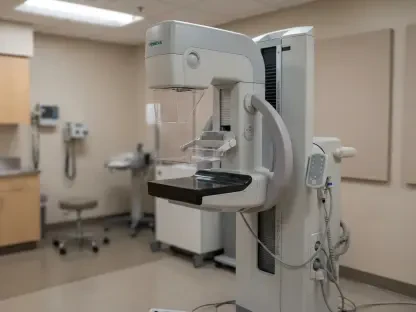

While upper-income adults tend to expect improved health outcomes from AI, only twenty-five percent of lower-income individuals share that same positive outlook for the future. This divergence in sentiment underscores a profound barrier to the seamless integration of automated intelligence within the American medical system, where the promise of streamlined efficiency often clashes with deep-seated cultural and economic anxieties. As the healthcare industry attempts to transition toward more algorithmic decision-making, it faces a complex landscape of skepticism that is not merely about the technology itself but about the preservation of human empathy in clinical settings. The current trajectory suggests that while the capabilities of large language models and diagnostic algorithms have advanced significantly, the psychological readiness of the average patient remains stalled. This gap highlights a critical misalignment between the rapid pace of corporate innovation and the slower, more cautious evolution of societal trust, particularly when it comes to life-and-death situations in clinics.
The Hierarchy of Trust and Public Acceptance
Public support for medical AI is not a monolith but rather a tiered structure that depends heavily on the specific nature of the task being performed by the machine. Applications that focus on administrative or linguistic assistance, such as translating medical jargon for non-native speakers or simplifying the complex results of laboratory tests, currently enjoy a high degree of acceptance from the American public. In these contexts, patients view the technology as a helpful intermediary that enhances their understanding without overstepping into the realm of professional medical authority. However, this comfort is strictly conditional upon the presence of human oversight, as the vast majority of individuals insist that a qualified physician must provide the final review of any AI-generated insight. The reluctance to hand over the reins of clinical judgment reflects a pervasive belief that the nuance of human experience is irreplaceable in a medical context, particularly when mistakes can have permanent consequences.
The boundaries of public patience are most sharply defined when automated systems are applied to high-stakes financial or insurance determinations that lack immediate human recourse. Very few Americans are currently willing to accept a reality where an algorithm makes final decisions regarding insurance coverage or the processing of complex claims without direct intervention from a human representative. This resistance is rooted in a fundamental fear that removing the person from the loop creates an accountability vacuum, where mistakes are buried in code and patients are left with no clear path for appeal. The prospect of being denied life-saving treatment by a black-box system that cannot explain its reasoning triggers a visceral rejection among consumers who already feel marginalized by the healthcare bureaucracy. Consequently, the industry is finding that even the most efficient cost-saving algorithms are met with intense hostility if they are perceived as a means to decouple financial responsibility from human ethical standards.
Demographic Disparities and Quality of Care Concerns
Expectations regarding the long-term impact of artificial intelligence on health outcomes are increasingly fragmented across different age groups and socioeconomic backgrounds. Surprisingly, the younger demographic of so-called digital natives is showing a marked increase in skepticism as these technologies move from theoretical concepts to tangible clinical tools in their daily lives. Many adults under thirty are now expressing concern that the integration of AI will lead to a degradation of care quality rather than an improvement, suggesting that familiarity with digital systems does not necessarily equate to trust in their medical application. Furthermore, a significant optimism gap has emerged based on household income, where those with fewer resources often view AI as a potential tool for further marginalization or reduced access to human doctors. For these individuals, the fear is that high-quality human care will become a luxury for the wealthy, while the rest of the population is relegated to standardized and potentially flawed automated diagnostic protocols.
Beyond the immediate concerns of clinical accuracy, there is a pervasive and growing anxiety regarding the security of sensitive personal health information in an era of massive data harvesting. Over half of the American population currently believes that the adoption of large-scale AI systems will inevitably lead to data breaches or the unauthorized use of private medical records by third-party entities. This fear is exacerbated by the opaque nature of how many healthcare algorithms are trained, leaving patients to wonder who truly owns their genetic profiles or diagnostic histories. Additionally, many patients worry that the intrusion of digital screens and algorithmic prompts into the exam room will permanently erode the sanctity of the doctor-patient relationship. The “human touch,” which involves intuition, physical presence, and the building of a rapport over years of service, is seen as being at risk of being replaced by a sterile, data-driven interaction that prizes speed over the essential connection that defines the healing process.
Infrastructure Hurdles and New York State Policy
While the ethical and social debates continue to unfold in the public square, the physical expansion of artificial intelligence is hitting a hard ceiling due to unprecedented infrastructure limitations. The data centers required to house the massive server arrays that power modern algorithms are not merely digital constructs; they are industrial facilities with an insatiable appetite for electricity and water. In response to these escalating demands, New York State officials have implemented a temporary pause on certain permits for large-scale facilities to evaluate their long-term impact on the regional power grid. This move highlights a growing realization among policymakers that the digital revolution cannot be allowed to jeopardize the stability of basic utilities or the state’s environmental goals. Regulators are now tasked with the difficult job of balancing the economic incentives of being a tech hub against the immediate physical constraints of a grid that was never designed to support the concentrated load of multi-megawatt computing operations.
The current regulatory scrutiny in New York is specifically focused on the secondary effects of these massive computing hubs, such as noise pollution, excessive water consumption for cooling, and the potential for rising electricity rates for local residents. Although some narrow exemptions have been carved out for data centers that are dedicated exclusively to medical research or essential manufacturing, the majority of commercial providers are finding themselves caught in a bottleneck of environmental reviews. This situation creates a significant logistical hurdle for the healthcare sector, which increasingly relies on these external computing resources to manage patient data and run predictive models. The mismatch between the ambition of healthcare innovators and the reality of local infrastructure suggests that the growth of AI in medicine will be moderated not only by public opinion but also by the physical capacity of the environment to sustain it. Until sustainable cooling technologies and more efficient power management become standard, the rollout of advanced digital services will remain tethered to the limits of the physical world.
Local Resistance: Strategic Pathways for Sustainable Growth
The conflict between technological advancement and community preservation is perhaps nowhere more visible than in the local resistance movements taking shape in the Finger Lakes region. Residents in towns such as Lansing, New York, have voiced strong opposition to proposed data center projects like Lake Hawkeye, arguing that these facilities are incompatible with the rural and scenic character of their communities. For these residents, the promise of localized tax revenue and a handful of specialized jobs is a poor trade-off for the massive consumption of water from local lakes and the industrialization of historically agricultural or residential areas. This resistance has forced local governments to consider formal prohibitions or strict zoning laws that would effectively block the development of the very infrastructure needed to support the next generation of digital healthcare. It reveals a fundamental paradox where the tools meant to modernize society are viewed as a threat to the quality of life and the ecological stability of the regions where they must physically reside.
Stakeholders in both the medical and technological sectors identified that a path forward required a radical shift toward transparency and local accountability. They recognized that the previous strategy of rapid, unchecked deployment failed to account for the deep skepticism of the patient base and the physical limitations of local municipalities. To address these concerns, developers began to prioritize the creation of explainable AI systems that allowed physicians to trace the reasoning behind every automated suggestion, thereby re-establishing the human as the final arbiter of care. Simultaneously, the industry moved toward decentralized and more energy-efficient computing models that reduced the strain on any single community’s resources. By integrating local environmental groups into the planning phases of infrastructure projects, companies managed to align their technological goals with the preservation of regional character. Ultimately, the transition toward a more integrated digital health system succeeded only when it was treated as a collaborative social effort rather than a purely technical or economic mandate.