
The quest for sharper diagnostic clarity has propelled the global magnetic resonance imaging contrast agent market toward a projected $2.17 billion valuation by 2030. This expansion signifies a major transition from basic visualization to a complex, molecular understanding of human pathology.
Modern imaging demands more than simple visibility; it requires a functional map of biological processes. This review examines how chemical innovation transforms patient outcomes by balancing high-resolution imagery with rigorous safety standards.
Fundamentals: Evolutionary Context of Technology
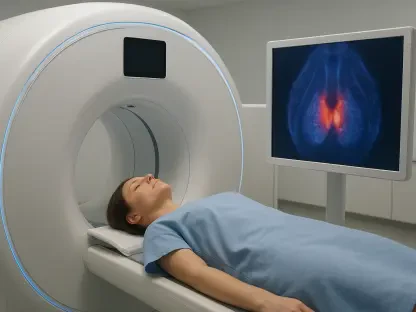
Contrast agents function by altering T1 and T2 relaxation times of water protons to enhance signal differences. This principle allows radiologists to distinguish subtle abnormalities that would otherwise remain invisible.
The industry has moved beyond non-specific fluids toward targeted molecular tools. This evolution supports personalized medicine, where diagnostic solutions are tailored to a patient’s specific physiological profile.
Key Chemical Components and Functional Mechanisms
Gadolinium-Based Contrast Agents (GBCAs)
Gadolinium remains the clinical standard due to its potent paramagnetic properties. Macrocyclic chelates offer superior stability, effectively encaging the toxic gadolinium ion to prevent its release within the body.
While these agents dominate routine practice, their performance in T1-weighted imaging remains the benchmark. The focus is on maximizing relaxivity while ensuring that chemical bonds remain intact during excretion.
Superparamagnetic Iron Oxide Nanoparticles (SPIONs)
SPIONs represent a shift toward utilizing the body’s natural metabolic pathways. These iron-based alternatives provide excellent T2 contrast and are processed by the liver, reducing synthetic chemical retention.
Their application in neuroimaging is valuable for highlighting vascular changes. By mimicking biological elements, these particles offer a biocompatible profile that addresses safety concerns associated with heavy metals.
Nanoparticle-Based and Molecularly Targeted Agents
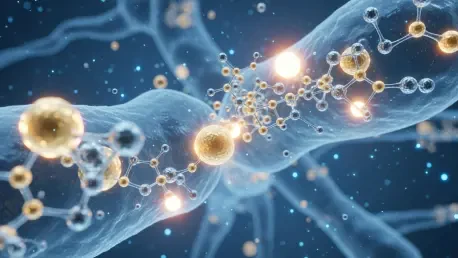
Functionalized nanoparticles use specific ligands to bind to cellular biomarkers on tumor surfaces. This site-specific delivery allows for the visualization of lesions at a nearly microscopic level.
Moreover, these agents enable a transition to functional imaging. By identifying specific protein expressions, they provide a bridge between diagnostic radiology and targeted therapeutic interventions.
Recent Innovations: Emerging Industry Trends
The market is currently defined by a 7.4% CAGR, driven by infrastructure expansion and low-toxicity formulations. New approvals, like Ferabright, demonstrate the growing preference for iron-based solutions in brain imaging.
Green radiology has also emerged as a vital trend, emphasizing environmentally sustainable chemicals. This movement aims to reduce bioaccumulation in human tissue and the broader ecosystem.
Real-World Clinical Applications and Sector Deployment
Oncology: Early Lesion Detection
Advanced contrast media are essential for identifying primary tumors and mapping metastatic spread. This precision allows for earlier detection, which is often the deciding factor in successful patient outcomes.
These tools also facilitate real-time surgical planning and treatment monitoring. By visualizing exact boundaries, surgeons can minimize damage to healthy surrounding tissue during complex procedures.
Neurological: Neurovascular Diagnostics
In neurology, advanced agents are deployed to map neurodegenerative changes and assess acute conditions. Their ability to cross or highlight the blood-brain barrier is critical for diagnosing glioblastoma.
Outpatient imaging centers rely on these precise tools for rapid assessment. The efficiency of modern agents reduces scan times, allowing for higher patient throughput without sacrificing diagnostic accuracy.
Gastrointestinal: Hepatobiliary Imaging
Traditional agents often struggle with the complex environment of the liver. Specialized hepatobiliary agents are designed to be absorbed by functioning liver cells, making them indispensable for identifying focal lesions.
This specificity improves the differentiation between benign and malignant growths. Consequently, clinicians can avoid invasive biopsies by relying on high-confidence imaging results.
Technical Hurdles: Regulatory Challenges
The risk of Nephrogenic Systemic Fibrosis and long-term gadolinium deposition remains a regulatory concern. These safety issues have prompted stricter guidelines and a push for more stable chemical structures.
Developing novel nanoparticle agents faces high costs and rigorous validation requirements. Balancing high-resolution needs with the economic reality of healthcare spending creates a persistent barrier for new market entries.
Future Outlook: Technological Breakthroughs
The next generation of “smart” agents will likely respond to physiological stimuli like pH changes. This would allow for imaging that reflects the dynamic biochemical state of tissue in real time.
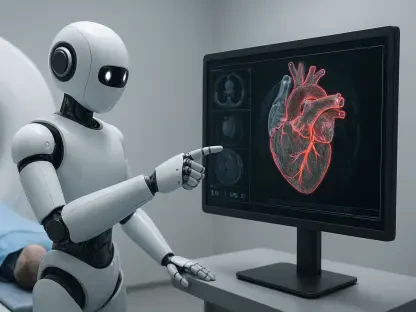
Furthermore, the integration of artificial intelligence will optimize contrast dosage and timing. AI algorithms can enhance subtle signals, allowing for lower concentrations of contrast media while maintaining high quality.
Summary and Final Assessment of MRI Contrast Evolution
The transition from basic gadolinium chelates to advanced nanoparticle systems marked a significant era of progress. Researchers successfully prioritized patient safety by developing bio-compatible alternatives that reduced long-term chemical retention.
The diagnostic market achieved a robust valuation by focusing on precision across clinical sectors. This evolution ensured that the balance between efficacy and safety remained the cornerstone of future radiological developments.