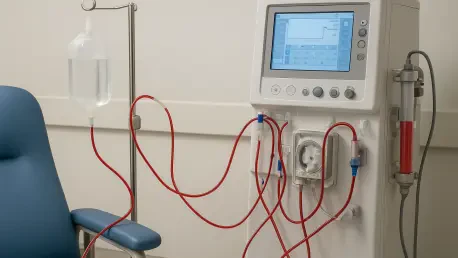

Early feedback from trial participants indicates high satisfaction with the functional performance of the aXess device during life-sustaining dialysis sessions. This momentum marks a critical juncture for the medical technology firm Xeltis as it officially surpasses the fifty percent enrollment threshold in its landmark United States pivotal trial. With more than 70 out of the 140 targeted adult patients now successfully enrolled across 20 specialized clinical sites, the study is rapidly approaching its goal of evaluating a transformative approach for those suffering from end-stage renal disease. The logistical efficiency demonstrated by the research teams highlights a significant shift in how complex vascular trials are conducted within the American healthcare landscape. By focusing on a patient-centric model that prioritizes long-term vessel health, the program has attracted widespread interest from both the clinical community and the patient populations who have long struggled with the limitations of current grafting technologies. This reaching of the milestone signifies a validation of the operational strategy to bring regenerative solutions into modern nephrology.
Transforming Vascular Access: The Role of Bioabsorbable Scaffolds
The Restorex Platform: Engineering Living Blood Vessels
At the core of this medical advancement lies the proprietary Restorex platform, a technology that fundamentally alters the interaction between synthetic materials and human biology. Unlike traditional hemodialysis grafts that remain as permanent foreign bodies, the aXess device utilizes an advanced bioabsorbable polymer designed to facilitate the natural creation of a living vessel. This process, known as endogenous tissue restoration, allows the patient’s own cells to migrate into the porous scaffold and begin the regenerative process. As the host tissue matures and strengthens around the temporary structure, the polymer is gradually absorbed by the body, eventually leaving behind a durable and natural blood vessel. This transition from a synthetic implant to a living biological entity aims to resolve the chronic failures associated with conventional vascular access, such as thrombosis and stenosis. By providing a scaffold that mimics the mechanical properties of native tissue, the device reduces the inflammatory response typically seen with legacy grafts.
Clinical Foundations: Validating Performance across Global Markets
The current American study builds upon a solid foundation of clinical data gathered during the European pivotal trial, where the performance of the device was benchmarked against existing standards. Results from those earlier investigations revealed that the bioabsorbable technology provided higher secondary patency rates compared to traditional arteriovenous grafts and performed on par with mature natural fistulas. Furthermore, the findings emphasized a remarkable resistance to infection and a significant reduction in the number of surgical reinterventions required to maintain vessel access. These outcomes were instrumental in securing the Food and Drug Administration’s Breakthrough Device Designation, which has expedited the regulatory pathway for this technology in the United States. As the trial continues to progress, researchers are meticulously monitoring safety and patency metrics to ensure that the regenerative benefits observed in European cohorts translate effectively to the diverse patient population within the American healthcare system.
Scaling Clinical Research: Modern Healthcare Implementation
Institutional Synergy: Leading American Medical Centers Drive Progress
The success of the enrollment process is largely attributed to the active participation of prestigious medical institutions, including Duke University Hospital, Emory University Hospital, and Houston Methodist Hospital. Under the guidance of national principal investigator Dr. John Lucas III and project leadership, these sites have integrated the novel implantation procedure into their existing vascular surgery workflows. This collaborative environment ensures that the data collected is both robust and representative of real-world clinical practice. The involvement of such high-caliber centers underscores the perceived potential of the device to address the unmet needs of millions of patients who depend on hemodialysis for survival. Furthermore, the logistical support provided by a group of international investors, including DaVita Venture Group and EQT Life Sciences, has enabled the trial to maintain its aggressive timeline despite the complexities inherent in multi-site clinical research. This synergy between academic excellence and strategic investment remains a cornerstone of the project’s continued advancement.
Strategic Integration: Shaping the Future of Renal Care Infrastructure
Medical professionals recognized that the successful integration of bioabsorbable scaffolds into routine practice required a significant shift in clinical perspective regarding long-term patient care. Stakeholders analyzed the preliminary results and determined that the transition toward regenerative implants offered a viable path to reducing the overall cost of treating end-stage renal disease by minimizing hospital readmissions. Actionable strategies were developed to train surgical teams on the nuances of handling regenerative polymers, ensuring that the benefits of the technology were maximized across different hospital settings. Furthermore, future considerations focused on expanding the application of the Restorex platform to other areas of cardiovascular health beyond hemodialysis access. The trial results provided a clear roadmap for the adoption of living implants, suggesting that the reliance on permanent synthetic hardware would eventually diminish. Industry leaders concluded that the focus must remain on biological synergy, paving the way for a more sustainable and effective healthcare infrastructure.