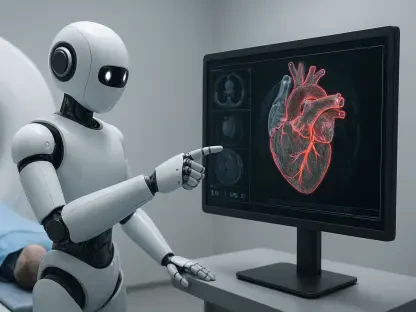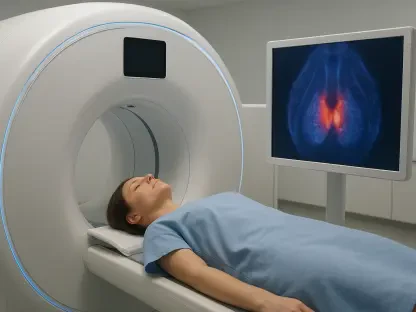

Research indicates that over eighty percent of physicians are already utilizing some form of artificial intelligence for tasks such as ambient documentation or medical imaging analysis. This widespread adoption marks a significant shift in the medical landscape, where the traditional boundaries between human expertise and computational power are becoming increasingly blurred. Recent policy frameworks from major organizations like the American Medical Association highlight a growing tension between those who view technology as a supportive tool and those who envision a future of complete clinical autonomy. While many practitioners see these advancements as a way to alleviate administrative burdens, others warn that the rapid integration of large language models could fundamentally alter the patient-provider relationship. This debate is no longer confined to theoretical discussions but is actively shaping the strategic direction of healthcare systems across the country as they navigate the implications of these powerful new technologies.
Human-Centric Perspectives and Professional Standards
Maintaining the Physician’s Role in Clinical Judgment
The American Medical Association, working alongside groups like the Digital Medicine Society, has established a comprehensive roadmap intended to preserve the central role of the physician as digital tools become more prevalent. This framework posits that medicine is a holistic endeavor that requires more than just diagnostic accuracy; it necessitates a deep human connection and the ultimate responsibility for clinical judgment. Even as software grows more sophisticated, the AMA argues that the professional obligation to the patient cannot be offloaded to an algorithm. They emphasize that while specific tasks may be automated, the ethical and legal burden of care must remain with a human clinician who can interpret data within the context of a patient’s unique life circumstances. This perspective views artificial intelligence as an augmented force that enhances human capabilities rather than a replacement for the nuanced decision-making process that defines the patient-doctor bond today.
John Whyte, a prominent voice within the medical community, often questions whether patients would truly feel comfortable if their care were managed entirely by a machine, especially in life-threatening situations like chest pain. The American College of Physicians supports this sentiment, viewing AI as a supportive entity that should ideally handle routine data processing while leaving the complex, high-stakes decisions to trained experts. This focus on accountability is a cornerstone of the human-centric argument, suggesting that algorithms lack the moral agency required to navigate the complexities of medical ethics. By keeping the physician at the helm, these organizations hope to ensure that the practice of medicine remains grounded in empathy and professional duty. This approach seeks to use technology to reduce burnout and improve efficiency without ever sacrificing the essential human elements that define the therapeutic relationship between a doctor and their patient in the modern era.
Navigating the Limitations of Professional Frameworks
It is vital to recognize that while organizations like the American Medical Association provide influential guidance, they do not possess the authority to create binding regulations or dictate federal policy. Their frameworks are designed to shape professional norms and guide advocacy efforts, but they do not control what the Food and Drug Administration authorizes for clinical use or what insurance companies choose to reimburse. Consequently, the push for human-centered care may encounter resistance from market forces that prioritize speed and cost reduction over traditional professional structures. The AMA’s stance naturally aligns with the interests of its members, who are physicians seeking to maintain their status and central role in a rapidly evolving technological environment. This dynamic creates a complex landscape where professional standards must constantly negotiate with the practical realities of a healthcare system driven by both technological innovation and relentless economic pressures.
Despite the clear guidelines provided by professional societies, the actual implementation of these standards varies significantly across different healthcare settings. Some hospital systems might adopt AI-driven tools with minimal human oversight to maximize throughput, while others may maintain a strictly physician-led model. This discrepancy highlights the potential for a fragmented healthcare experience where the level of human involvement depends more on the facility’s resources than on a standardized ethical framework. Furthermore, as technology continues to advance at an unprecedented pace, the delay between professional policy updates and technological breakthroughs can leave clinicians in a difficult position. They are often forced to balance the benefits of cutting-edge tools with the rigid requirements of older professional norms. This tension underscores the need for more agile governance models that can accommodate rapid innovation while still protecting the core values of safety and integrity.
The Case for Autonomous Artificial Intelligence
Challenging the Efficacy of Hybrid Care Models
In sharp contrast to the human-centric viewpoint, a growing number of researchers and tech advocates argue that artificial intelligence is already reaching a point where it can outperform human clinicians in several core tasks. A recent opinion piece published in the Journal of the American Medical Association suggests that the current era is characterized by the deployment of superior autonomous systems that could soon manage entire clinical workflows. Figures such as bioethicist Ezekiel Emanuel and tech investor Vinod Khosla suggest that keeping a human in the loop might actually be detrimental to patient outcomes in certain scenarios. They argue that human intervention can introduce bias, fatigue, and error into a process that an optimized algorithm could handle with greater precision and consistency. This perspective challenges the fundamental assumption that a doctor’s presence is always beneficial, suggesting instead that the future of medicine may lie in efficient autonomous systems.
The critique of hybrid care models is based on the idea that human clinicians often struggle to properly supervise AI systems, leading to a phenomenon known as automation bias where users either over-trust or under-trust the technology. If a physician is simply rubber-stamping the output of a sophisticated algorithm, they are not providing true clinical judgment; they are merely acting as a bottleneck. Proponents of autonomous AI argue that if a system has been proven to be safer and more effective than a human, requiring human oversight is not only inefficient but potentially unethical. This shift in thinking suggests that the traditional physician role may need to be entirely reimagined to focus on areas where human touch is truly irreplaceable, such as end-of-life care or complex social support. By removing the requirement for constant human supervision in routine diagnostics, healthcare systems could significantly increase their capacity and improve the standard of care.
Addressing Deskilling and Educational Transformation
One of the most significant concerns raised by those advocating for a transition to autonomous AI is the risk of deskilling among the medical workforce. As physicians increasingly rely on automated tools for diagnostic tasks and treatment planning, their own clinical abilities may begin to erode over time. If a doctor stops regularly interpreting complex imaging or performing certain physical assessments because an AI handles them, their ability to intervene effectively during a system failure or an edge case is significantly diminished. This erosion of skill creates a dangerous dependency on technology that could leave patients vulnerable if the digital infrastructure fails. To mitigate this risk, some experts suggest that the very nature of medical education must be overhauled to focus more on managing technology and understanding its underlying logic rather than just memorizing clinical facts. This ensures that the next generation of doctors can still provide high-quality and safe care.
It is also important to consider the motivations behind the push for autonomous systems, as many proponents have direct commercial ties to the companies developing these platforms. While the promise of increased efficiency and better outcomes is compelling, the financial incentives to replace expensive human labor with scalable software cannot be ignored. This intersection of technology and commerce raises questions about the transparency of the algorithms being used and the potential for profit-driven decisions to override patient needs. As the healthcare industry moves closer to accepting autonomous AI, there is an urgent need for robust regulatory oversight to ensure that these systems are held to the same, if not higher, standards as human clinicians. Balancing the incredible potential of these tools with the necessity of maintaining ethical safeguards remains one of the most significant challenges facing the medical community as it adapts to this new reality of clinical practice.
Economic and Structural Drivers of Implementation
Navigating Liability, Reimbursement, and Operational Costs
Despite the philosophical debates regarding AI autonomy, the current regulatory and economic landscape remains largely unprepared for a world where machines make independent clinical decisions. A major hurdle is the lack of clarity regarding legal liability; if an autonomous system makes a critical error, it is currently unclear whether the blame lies with the developer, the hospital, or the physician who was nominally in charge. This legal ambiguity creates a significant barrier to widespread adoption, as insurers and healthcare providers are hesitant to embrace technologies that carry undefined risks. Furthermore, the American healthcare system is built on reimbursement models that typically reward specific physician-led actions. Until billing codes are updated to recognize and compensate for services performed by autonomous AI, these tools are unlikely to see massive implementation, regardless of their clinical efficacy. Resolving these structural issues is essential for any long-term integration.
Beneath the high-level ethical discussions lies a powerful economic driver: the constant pressure on health systems to reduce operational costs and labor expenses. The promise of near-autonomous artificial intelligence is incredibly attractive to hospital administrators because it offers a way to deliver clinical services without the high salary and benefit costs associated with human physicians. This financial reality may ultimately push the industry toward autonomy much faster than professional frameworks or safety regulations can keep up. In a system where margins are tight and the demand for care is rising, the efficiency gains offered by AI are difficult to ignore. This economic pressure creates a risk that technology will be deployed primarily as a cost-saving measure rather than a tool for improving patient health. Consequently, it is vital that clinical outcomes remain the primary metric of success as health systems navigate the transition toward more automated workflows.
Practical Realities and Implications for Patients
For the average patient, these institutional debates can feel distant, yet the presence of artificial intelligence in their daily medical care is already a reality. From flagging anomalies in radiology scans to generating clinical notes in real-time, these tools are integrated into the modern clinical environment. However, this progress also reveals a significant geographic divide, particularly between well-resourced urban centers and underserved rural communities. In areas with a shortage of specialized doctors, autonomous AI is often marketed as a vital solution to bridge the gap in access to care. Yet, these are the same communities that may lack the secondary medical infrastructure necessary to catch technological errors or provide a human second opinion when needed. This paradox suggests that while AI can expand access, it must be implemented with careful consideration for the unique needs of different populations to avoid creating a two-tiered system of medical quality.
The evolution of the medical field toward a partnership between human expertise and machine intelligence necessitated a proactive approach from both providers and patients. Leaders in the industry recognized that the path forward required more than just technical innovation; it demanded a fundamental restructuring of how care was valued and delivered. Physicians moved toward a role that emphasized complex problem-solving and emotional support, while patients learned to advocate for transparency in how their data was utilized. Regulators eventually established clear guidelines for liability and reimbursement, ensuring that the integration of these tools prioritized safety over mere cost reduction. By focusing on the unique strengths of both humans and algorithms, the healthcare system developed a more resilient and equitable model of care. This transition demonstrated that the most effective solutions emerged when technology was used to support human elements of medicine.