
As the Executive Vice President and Chief Digital and Information Officer at NYU Langone Health, Nader Mherabi stands at the intersection of clinical excellence and technological evolution. With a career dedicated to transforming how health systems utilize data, Mherabi has become a pivotal figure in the “build vs. buy” debate that currently reshapes hospital operations. His recent leadership in developing the Solavia Decision Suite alongside the Dana-Farber Cancer Institute represents a landmark shift in specialty care, moving away from off-the-shelf vendor solutions toward bespoke, homegrown platforms. This interview explores the strategic catalysts behind this partnership, the intricacies of integrating complex oncology pathways into existing electronic health records, and the broader economic implications for health systems navigating high enterprise software costs.
The conversation covers the transition from being software consumers to developers following the exit of a major vendor, the technical advantages of cloud-based scalability in specialty medicine, and the rigorous governance required to manage a multi-institutional digital asset. Mherabi also provides a candid look at why many modern software-as-a-service models fail to meet the specific needs of clinicians, leading to a new era of healthcare-driven innovation.
When a critical software vendor decides to sunset a specialized tool that your clinicians rely on, how do you evaluate whether to find a replacement or take the leap into developing a homegrown solution?
The decision-making process really began when Philips decided to sunset their oncology business, which put us in a position where we had to move quickly to protect our clinical workflows. We had been using their product for oncology pathways, but during that transition, we realized that the underlying clinical content was actually being curated by our colleagues at Dana-Farber. This discovery was a lightbulb moment for us because it meant we weren’t just losing a tool; we were losing the delivery mechanism for high-level expertise that we already had access to through a partnership. We were faced with the choice of searching for a new vendor who might not understand our specific needs or joining forces with Dana-Farber to build something more robust, meaningful, and deeply collaborative. By choosing to build, we could ensure that the tool was tailor-made for the way our oncologists actually work, rather than trying to force their complex decision-making into a rigid, pre-packaged software framework.
In forming this partnership with the Dana-Farber Cancer Institute, how did you balance the clinical informatics expertise of one institution with the product development lifecycle of the other to create a functional tool?
The synergy between our two organizations was the engine that made Solavia possible, as each of us brought a very specific and necessary set of strengths to the table. Dana-Farber contributed an incredible depth of oncology informatics and curated content, which is the “brain” of the system, while NYU Langone provided the infrastructure for advanced product development and lifecycle management. We spent a significant amount of time during the discovery phase identifying the specific pitfalls and pain points of the previous product to ensure we didn’t repeat those mistakes. This collaborative spirit allowed us to build a product that wasn’t just a replacement, but a significant upgrade that genuinely pleased our oncologists and enhanced patient care. It felt less like a standard corporate deal and more like a shared mission to solve a problem that we both understood intimately from the front lines of cancer treatment.
You have emphasized that oncology research changes at a rapid pace. How does the architecture of the Solavia Decision Suite allow clinicians to keep up with these shifts without disrupting their existing workflows?
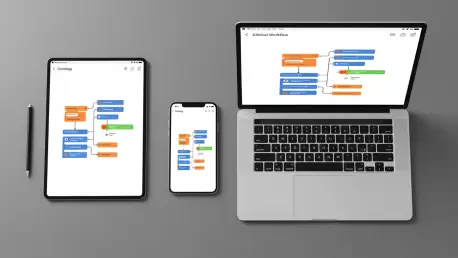
The beauty of creating a homegrown product is the level of integration we can achieve, particularly within the electronic health record, which for both our institutions happens to be Epic. Because a physician’s time is incredibly limited, we knew that if the information wasn’t right in front of them within their natural workflow, it wouldn’t be as effective. We designed Solavia to be intuitive, extremely fast, and responsive, managing the multinested branches of oncology treatment pathways that guide a doctor toward the best possible chemotherapy or therapy for a patient. By building it as a cloud-based, scalable platform, we ensured that the software is highly functional and extendable, allowing us to push updates and new research guidelines seamlessly. Whether it is integrated with Epic, Cerner, or even used as a standalone product, the goal was to make sure the latest research is never more than a few clicks away from the clinician’s decision point.
Before making the tool commercially available, you piloted it internally at NYU Langone in June. What specific insights were you looking to gain from your clinicians during that phase?
Launching internally in June was a critical step because we needed to prove to ourselves, and eventually to others, that the software could handle the rigors of a high-volume, world-class cancer center. We maintained an “open door” policy between the oncologists at Dana-Farber and NYU Langone, gathering constant input to make sure every feature met a real clinical need. This pilot phase wasn’t just about catching bugs; it was about demonstrating that a homegrown tool could be as stable and secure as anything bought from a major vendor. By proving the concept within our own walls first, we created a working model that other health systems can now see in action, which builds a level of trust that you simply can’t get from a sales pitch. It allowed us to refine the user experience based on the lived experience of our own doctors before we ever considered moving toward commercialization.
Managing a digital tool across multiple institutions requires a high degree of oversight. How did you structure the governance and security of Solavia to ensure that data remains protected as the platform scales?
We established a very formal governance board supported by official agreements between our legal, compliance, and ventures teams to ensure total alignment as we scale. Security was our top priority from day one, so we built the platform to be multitenant, meaning that while the technology is shared, the data of every individual institution is handled in a completely separate and secure environment. We put the tool through the same rigorous security reviews that we apply when we buy a product from an outside vendor, leaving no stone unturned in terms of data segregation. This structure is designed to support not only NYU Langone and Dana-Farber but also any future colleagues from other health systems who choose to join the platform. It gives everyone involved the peace of bottle-tested security while allowing us to share the benefits of a modern, collaborative oncology suite.
As enterprise software costs continue to rise, you noted that many institutions are paying for features they never use. How should health system leaders weigh the costs of building their own “niche” software against the standard SaaS model?
It is a common frustration in healthcare IT to buy a massive stack of software and realize that your team is only utilizing about 30% of its capabilities, yet you are still writing a check for 100% of the cost. With the recent advances in cloud-based capabilities and AI, the timeline for developing a product that solves a specific, niche problem has matured significantly, making the “build” option more attractive than it used to be. I don’t believe every health system should start building all of their own software, as it requires financial and operational resources like our technology ventures arm that not everyone possesses. However, for specialized care where general-purpose tools fall short, leaders need to weigh their options carefully and consider if they have the internal talent to create something more efficient. Software development is becoming easier and more accessible, and for many, the cost of an expensive, bloated SaaS product may no longer be the only path forward.
What is your forecast for the future of specialty-care technology and the role of health systems as developers?
I believe we are entering a cycle where health systems will increasingly become the architects of their own specialized tools, moving away from a one-size-fits-all approach to software. As AI continues to accelerate the development lifecycle, the barrier to entry for building high-quality, clinical-grade applications is dropping, which will empower more institutions to solve their unique problems in-house. We will likely see more collaborations similar to the one between NYU Langone and Dana-Farber, where shared expertise leads to tools that are more clinically relevant than those produced by traditional software companies. While the major EHR players will remain the bedrock of hospital operations, the specialized “last mile” of care will increasingly be defined by bespoke platforms that prioritize the clinician’s experience and patient outcomes over broad market appeal. This shift will not only drive innovation but will also force the software industry to become more agile and responsive to the actual needs of the medical community.