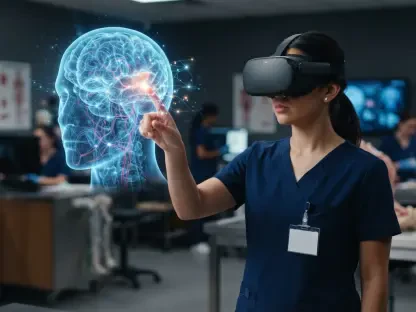

A primary concern for digital health tools in older populations is the risk of cybersickness, though recent data indicates these symptoms decrease over time. As the global population continues to age into the late 2020s, finding efficient and accurate ways to identify early signs of memory loss and cognitive decline has become a major focus for medical researchers and clinicians alike. Traditionally, healthcare providers have relied on paper-and-pencil tests to evaluate mental health, but these manual methods can be limited by human timing errors and a lack of granular, objective data. A recent study has explored a digital alternative known as the Head-Gaze Virtual Reality Trail Making Test. This immersive tool aims to catch the subtle shifts associated with Mild Cognitive Impairment, a condition that often serves as a critical warning sign before the onset of clinical dementia. By integrating immersive technology into routine screenings, researchers hope to provide a more detailed window into the neurocognitive status of seniors without the need for cumbersome equipment or highly specialized training for every single session.
Evaluating a Modern Diagnostic Paradigm
Part 1: Study Design and Participant Methodology
To test the effectiveness of this technology, researchers followed a group of 84 participants between the ages of 60 and 89, ensuring a wide demographic range was represented in the data. Half of the participants had a clinical diagnosis of Mild Cognitive Impairment, while the other half were cognitively healthy, providing a balanced dataset for a rigorous comparison between the two groups. Instead of using a traditional handheld controller, a mouse, or a pen, the participants navigated the virtual environment using a specialized head-gaze system. This allowed them to select targets simply by moving their heads and looking at specific points on the display for a set duration. The study meticulously recorded 26 distinct scores, tracking not only completion times but also specific behavioral markers that are often missed during manual evaluations, such as the exact path taken by the participant’s gaze before a selection was finalized.
This approach was specifically chosen to be more accessible for older adults who might not be familiar with modern video game technology or who might struggle with the manual dexterity required for standard controllers. By removing the need for complex hand-eye coordination, the test ensures that the results reflect cognitive processing speed and executive function rather than physical ability or tech-savviness. The methodology also included a comparative element where all subjects completed the traditional paper-and-pencil version and the Mini-Addenbrooke’s Cognitive Examination to validate the findings. This multi-layered design allowed researchers to see exactly where the digital version excelled or differed from the previous gold standards of care. By isolating the head-gaze mechanic, the team was able to focus on the participant’s ability to shift attention and process visual information in a three-dimensional space, providing a richer data set for analysis.
Part 2: User Experience and Accessibility
A significant part of the study focused on whether seniors could handle a virtual reality environment without physical discomfort or psychological distress, which has long been a barrier to adoption. The results were very encouraging, as every single participant successfully completed the tasks involved in the protocol without requesting to stop. Researchers monitored for cybersickness using standardized scales and found that any initial discomfort tended to fade as the session went on, suggesting a rapid adaptation to the immersive interface. This finding is crucial because it dispels the long-standing myth that older populations are inherently unable to tolerate immersive technology due to sensory issues or age-related sensitivities to motion. The high completion rate among both healthy individuals and those with cognitive impairment highlights the potential for this tool to be used in diverse clinical settings.
This suggests that age and cognitive health are not significant barriers to using immersive health tools in a clinical setting, provided the interface is designed with the user in mind. Because the participants were able to navigate both Part A and Part B of the test without significant side effects, the feasibility of virtual reality for regular clinical screenings has been greatly bolstered. This opens the door for more widespread adoption of digital diagnostics in primary care offices, where quick and comfortable testing is essential for patient compliance and accurate data collection. The positive feedback regarding the head-gaze mechanic also indicated that users felt a sense of agency and ease during the process, which is often lacking in traditional, high-pressure clinical exams. This ease of use is a vital component for ensuring that digital health tools are not only scientifically valid but also practically applicable in the real world.
Measuring Cognitive Health through Immersive Data
Part 3: Performance Differences and Error Analysis
The study revealed clear behavioral differences between the two groups, especially during the more complex portions of the assessment where cognitive load was significantly increased. While participants with Mild Cognitive Impairment performed similarly to the healthy group on simple tasks, they struggled significantly when the tasks required more mental flexibility and set-shifting. In the virtual environment, these individuals were much slower and made more frequent mistakes when alternating between numbers and letters, which is the hallmark of executive dysfunction. The virtual reality system was able to record these errors with high precision, capturing a level of detail that is often lost during a manual exam, such as “near misses” or hesitations that do not result in a formal error but indicate a struggle in the underlying cognitive process.
When compared to the standard paper version of the test, the virtual reality format showed several distinct advantages in terms of diagnostic sensitivity. While both tests were equally good at measuring how long it took a person to finish the task, the digital version was far more sensitive to specific types of errors, such as wrong-target selections and the timing between selections. These error-based metrics provided a clearer picture of an individual’s cognitive state than completion time alone, which can be influenced by general motor speed. Researchers noted that while these digital indicators are promising, they still need to be verified in larger studies to ensure consistent diagnostic accuracy across different neurological conditions. The automated nature of the data collection also removed any potential for observer bias, ensuring that the results were purely based on the participant’s interaction with the environment.
Part 4: Future Applications and Educational Neutrality
One of the most valuable findings was that the virtual test appeared to be less influenced by a person’s level of education than traditional methods typically are. Paper tests can sometimes produce misleading results because people with more formal schooling often perform better regardless of their actual brain health, while those with less education may be unfairly flagged as having impairments. The virtual reality test offered a more level playing field, focusing more on natural processing speed and accuracy in a novel environment rather than learned academic skills or familiar patterns. This neutrality made the tool a potentially more equitable option for diverse populations with varying backgrounds, ensuring that diagnosis is based on current brain function rather than past educational opportunities.
In conclusion, researchers successfully demonstrated that immersive technology offered a viable and robust path forward for neuropsychological assessment in an aging society. They determined that the head-gaze system captured granular data points that previously went unnoticed in traditional clinical settings, allowing for a more nuanced understanding of cognitive health. The medical community began focusing on establishing standardized reference values and conducting larger longitudinal studies to move this technology into mainstream practice. By validating these digital metrics, practitioners ensured that cognitive screenings became more precise, fair, and accessible to the public. Future steps involved integrating these automated tools into primary care workflows to catch early decline more effectively and provide patients with earlier access to specialized care and lifestyle interventions.