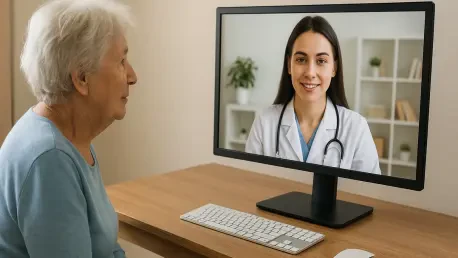

The high cost of long-term nursing home care, often exceeding $100,000 annually per person, highlights the urgent need for scalable home-based interventions that prevent institutionalization. As the population of aging veterans continues to grow, healthcare providers face a significant challenge in delivering intensive geriatric support to individuals living in remote or technologically isolated areas. A groundbreaking study recently published in the Journal of General Internal Medicine offers a compelling solution through a hybrid-virtual care model known as TeleGRACE. This innovative approach addresses the critical gap between traditional in-person home visits and standard telehealth, which many frail seniors struggle to use independently. By integrating a physically present technician with a remote clinical team, the Department of Veterans Affairs has demonstrated a profound ability to keep high-risk seniors in their own residences. This method successfully reduced the risk of long-term nursing home placement by an impressive 80 percent, marking a major shift in modern geriatric strategy during the current 2026 expansion of services.
Bridging the Distance: The Role of Telehealth Technicians
One of the most persistent obstacles in geriatric medicine is the geographical limitation of specialized care, frequently referred to as the windshield time problem. In traditional models, highly trained clinicians spend a substantial portion of their workday traveling to and from patient homes, which limits the number of individuals they can realistically serve in a given week. This inefficiency often restricts programs to a 20-mile radius from the medical center, leaving rural veterans with few options other than institutionalization. TeleGRACE solves this logistical bottleneck by deploying a trained telehealth technician as the primary mobile unit. This technician travels to the patient’s home with the necessary hardware, including tablets and diagnostic cameras, to facilitate a high-fidelity connection. By removing the travel burden from the clinical specialists, the VA has managed to triple its service radius to 60 miles, effectively broadening the reach of expert geriatric care to communities that were previously considered inaccessible due to distance.
Beyond logistics, the hybrid model addresses the digital divide that prevents many seniors from utilizing standard video visits. Recent data indicates that over 80 percent of frail older adults require significant technical assistance to complete a digital health appointment, and more than a quarter cannot navigate the technology even with remote guidance. The TeleGRACE technician serves as the necessary bridge, handling all technical setup and providing the physical hands and eyes required for a detailed medical examination. Once the connection is established, the remote clinical dyad—consisting of a nurse practitioner and a social worker—performs a comprehensive assessment. This evaluation includes a thorough physical exam, a direct review of medication pill bottles, and a screening for geriatric syndromes such as cognitive decline or mobility issues. Using a set of 12 standardized protocols, the team ensures that the quality of the virtual interaction is indistinguishable from an in-person home visit, providing a high level of diagnostic accuracy.
Quantifiable Impact: Analyzing the 80 Percent Reduction Rate
To validate the effectiveness of this hybrid-virtual strategy, researchers at the Richard L. Roudebush VA Medical Center in Indianapolis conducted a meticulous quality improvement evaluation. The study focused on veterans aged 70 and older who were identified as being in the 95th percentile for hospitalization risk, representing the most vulnerable segment of the patient population. Researchers compared 76 patients enrolled in TeleGRACE with a control group of 319 eligible veterans receiving usual care. To ensure the reliability of the findings, the team utilized advanced statistical techniques such as propensity score analysis and inverse probability weighting. These methods allowed the researchers to adjust for baseline health differences and motivation levels, creating a balanced comparison between the two groups. The evaluation period, which spans from early 2026 through late 2028, provides a clear window into how intensive home-based monitoring influences the trajectory of elderly patients who require high-intensity institutional support.
The primary outcome of the analysis was a stark divergence in nursing home placement rates between the intervention and control groups. Only 2.6 percent of veterans in the TeleGRACE program required long-term care placement within one year, whereas 11.3 percent of those in the usual care group were institutionalized. A Kaplan-Meier survival analysis revealed that the protective benefits of the program were not immediate but rather cumulative over time. For the first six months, the rates of home residency were relatively similar across both groups. However, after the six-month threshold, the group receiving traditional care saw a sharp increase in nursing home admissions, while the TeleGRACE group remained remarkably stable. This finding suggests that the regular monthly follow-ups and post-hospitalization check-ins provided by the hybrid team create a lasting safety net. The continuous clinical oversight helps identify and mitigate risks before they escalate into the type of health events that force a transition into a facility.
Practical Interventions: From Digital Screens to Physical Support
The success of the TeleGRACE model is largely attributed to its ability to convert remote assessments into tangible, life-improving interventions. By having a technician physically present in the home, the clinical team can identify subtle environmental hazards that would be invisible during a standard office visit or a basic phone call. Data from the project showed that nearly 79 percent of the veterans in the program received new assistive devices within 90 days of their initial assessment. These interventions included the installation of grab bars, the provision of hospital beds, and the distribution of hearing assistance tools like pocket talkers. In contrast, only about 19 percent of the usual care group received similar equipment during the same timeframe. This discrepancy highlights the critical role of specialized geriatric assessments in identifying the specific physical needs of frail adults. By modifying the home environment to match the functional status, the program directly addresses the most common causes of accidents.
Furthermore, the program functioned as a centralized coordination hub that streamlined access to specialized medical services. TeleGRACE participants were significantly more likely to receive referrals to and attend appointments with podiatrists, physical therapists, occupational therapists, and pharmacists. The clinical team actively assisted veterans in applying for Home Improvements and Structural Alterations grants, which provide funding for essential modifications like wheelchair ramps or walk-in showers. This level of proactive case management ensured that patients were not only identified as needing help but were also successfully connected to the resources required to maintain their independence. The ability of the hybrid team to act as a high-powered coordinator allowed for a more holistic approach to patient health, addressing social determinants of health alongside clinical symptoms. This comprehensive support structure is vital for high-risk seniors who often lack the physical energy to navigate complex healthcare bureaucracies on their own.
Systemic Resilience: Balancing Surveillance and Patient Safety
An interesting finding in the study was the observed increase in emergency department visits among the TeleGRACE cohort compared to the control group. While a rise in emergency care might traditionally be viewed as a negative outcome, the researchers interpreted this trend as evidence of enhanced clinical surveillance rather than a failure of the intervention. When a specialized geriatric team monitors a frail individual through frequent hybrid visits, they are much more likely to detect acute clinical changes, such as the early signs of an infection or a dangerous drug interaction. By directing the patient to the emergency room for immediate stabilization, the team can prevent a more severe crisis that would lead to a permanent loss of functional independence. Importantly, the study found that while emergency visits rose, the overall rates of hospitalization and mortality remained consistent between the two groups. This suggests that the intervention effectively managed acute episodes without increasing total illness burden.
From a systemic perspective, the hybrid-virtual model presents a sustainable solution to the rising costs of elder care. Although a formal cost-benefit analysis was not the primary focus of the Indianapolis study, the economic implications are clear when considering the staffing requirements. Utilizing a telehealth technician for home visits is significantly less expensive than deploying a dual-clinician team of nurse practitioners and social workers. When this lower operational cost is paired with the 80 percent reduction in nursing home placements—which can cost upwards of $8,500 per month—the potential for massive savings becomes evident. As healthcare systems in 2026 search for ways to manage the needs of an aging population, the efficiency of the TeleGRACE model offers a viable path forward. It demonstrates that high-touch care does not necessarily require high-cost delivery methods. By strategically using technology, healthcare organizations can achieve better clinical outcomes while maintaining financial responsibility in a strained environment.
Expanding the Blueprint: Next Steps for Integrated Geriatric Care
The successful evaluation of the TeleGRACE project established a robust proof of concept for the integration of hybrid-virtual visits into standard geriatric practice. This initiative proved that the physical presence of a technician, combined with remote expert oversight, could effectively bridge the gap between high-tech medical solutions and the needs of a low-tech patient population. Moving forward, health systems prioritized the development of specialized training programs for telehealth technicians, ensuring they possessed the specific skills needed to support geriatric examinations. This included training in mobility testing, home safety auditing, and medication reconciliation procedures. By standardizing these roles, organizations were able to replicate the Indianapolis model in diverse geographical settings, including dense urban environments where traffic congestion previously hindered home care. The implementation of this model allowed for a more equitable distribution of geriatric services, ensuring that a patient’s location no longer dictated their access.
In addition to staffing adjustments, the program encouraged a shift in how medical grants and assistive technology were allocated within the healthcare infrastructure. The data gathered from the initial implementation phases convinced policymakers to streamline the approval process for home modifications, recognizing that these physical changes were essential for long-term health stability. Future considerations for the model involved the expansion of this hybrid approach into other high-risk specialties, such as palliative care and chronic disease management. By fostering a culture of proactive surveillance and integrated support, the VA set a new standard for elder care that focused on the dignity of the patient. The transition toward this hybrid framework represented a fundamental change in philosophy, moving away from a reactive medical model and toward a proactive, home-centered ecosystem. As these strategies were adopted more broadly, the focus remained on honoring the preferences of older adults, providing them with necessary tools to age without losing their independence.