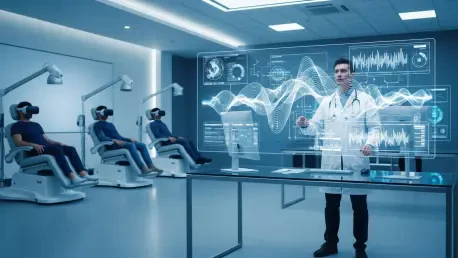

The Department of Veterans Affairs is fundamentally redefining the standard of medical treatment for the nation’s heroes by implementing a massive expansion of virtual reality therapy programs designed to combat chronic pain and mental health conditions. This initiative represents a strategic shift toward a burgeoning field known as immersive healthcare, where the integration of artificial intelligence and spatial computing creates medical applications that transcend the limitations of traditional digital interfaces. By incorporating these advanced tools into the standard of care, the organization aims to solve persistent challenges such as opioid dependency and the limited availability of specialized services in remote areas. This technological evolution is not merely a supplemental offering but a foundational change in how clinical interventions are delivered to a population that often requires intensive, long-term support for complex injuries and psychological trauma.
Enhancing Physical Rehabilitation Through Gamification
In the sphere of physical therapy, the implementation of immersive environments has transformed repetitive and often grueling recovery exercises into engaging, interactive experiences that motivate patients to exceed their previous physical limits. By utilizing clinician-controlled interfaces and specialized headsets, veterans recovering from serious injuries or surgeries can participate in simulations that disguise therapeutic movements as recreational activities. For instance, a patient working on shoulder mobility might be tasked with catching virtual objects in a serene meadow, a process that encourages a significantly higher volume of movement than traditional methods. This gamified approach effectively reduces the conscious perception of fatigue and boredom, allowing veterans to complete their rehabilitation protocols with greater consistency and less psychological resistance than was possible under older, more clinical regimes of care.
The cognitive and emotional dimensions of this technology are further explored through specialized content libraries that address the deep-seated psychological needs of the veteran community. A standout example is a project involving immersive historical footage that assists aging veterans in processing long-standing memories and finding emotional closure regarding their past service. These programs provide a safe, meticulously controlled environment where individuals can confront past traumas as part of a structured therapeutic process guided by medical professionals. By serving as a powerful catalyst for emotional healing, these virtual experiences allow veterans to navigate difficult memories without the overwhelming stress typically associated with traditional talk therapy. The result is a more holistic approach to recovery that treats the physical and psychological components of a veteran’s health as an interconnected whole.
Decentralizing Care for Rural Veterans
A primary focus of the current technological rollout is the decentralization of specialized medical services, effectively moving advanced clinical care from centralized facilities directly into the homes of veterans. Under this progressive model, clinicians are empowered to prescribe virtual reality headsets that are shipped directly to the patient’s residence, facilitating a consistent and convenient treatment schedule. This shift is particularly impactful for those residing in rural or remote regions, where geographical barriers and long travel times often hinder access to consistent therapy. By bringing the capabilities of a high-tech clinic into the living room, the program ensures that every veteran has access to top-tier recovery tools regardless of their proximity to a major medical center, representing a significant leap forward in the evolution of modern telehealth services.
This home-based approach provides a level of interaction and engagement that standard video consultations simply cannot match, as it places the patient in a fully immersive environment rather than behind a flat screen. The immersive nature of the technology allows for a more profound sense of presence, which is vital for maintaining the efficacy of mental health interventions and physical coaching from a distance. As veterans engage with their prescribed programs in the comfort of their own homes, they often report a greater sense of autonomy and privacy, which can lead to better long-term adherence to treatment plans. This expansion into the home environment marks a transition toward a more patient-centric model of healthcare, where the focus is on integrating healing into the daily lives of individuals rather than requiring them to adapt their lives to the constraints of the hospital.
Strategic Partnerships and Healthcare Infrastructure
The broad expansion of these immersive programs is supported by strategic collaborations between the public sector and private technology leaders, combining specialized software with high-performance hardware. These partnerships reflect a growing industry trend of repurposing consumer-grade technology to address specific clinical problems, allowing for a more rapid and cost-effective deployment of advanced medical tools. By leveraging the expertise of software developers who specialize in healthcare-focused spatial computing, the medical community is able to provide a diverse array of therapeutic content that is both scientifically validated and user-friendly. This intersection of commercial innovation and clinical necessity highlights a consensus among healthcare leaders that the future of medicine lies in value-based care, where the ultimate goal is to improve long-term patient outcomes.
To maintain the highest standards of patient privacy, the current deployment is being managed through a cautious, phased approach that prioritizes data security and ethical implementation. In the initial phase of the rollout, the headsets operate as localized devices that do not transmit personal health records or detailed performance data over the internet. Instead, patient progress is tracked and assessed through traditional follow-up appointments and direct communication with healthcare providers. This intentional limitation ensures a controlled and secure environment while the underlying digital infrastructure for the next phase is being perfected. This secondary phase will eventually include integrated medical record synchronization and real-time performance tracking, providing clinicians with even deeper insights into patient recovery while maintaining rigorous security protocols.
Advancing Value-Based Care: A New Therapeutic Standard
The transition toward immersive therapy was once met with skepticism by those who viewed virtual reality primarily as a medium for entertainment, yet steady clinical evidence has since established its legitimacy. Pilot programs conducted in various regional medical centers proved that the technology was not only effective in reducing pain intensity but also highly popular among the veterans who used it. These early successes provided the necessary data to justify a wider expansion, demonstrating that immersive tools could serve as a viable, non-pharmacological alternative to traditional pain management strategies. As the body of research continues to grow, the medical establishment has increasingly recognized that these digital environments provide a unique and powerful way to modulate the brain’s perception of pain and stress, leading to more sustainable health outcomes.
Ultimately, the move toward immersive healthcare established a new benchmark for how the medical community addressed the diverse needs of a specialized patient population. These initiatives focused on empowering veterans with the tools necessary for self-managed recovery while providing clinicians with innovative ways to monitor and encourage progress. Future considerations involved the integration of more advanced biosensors and real-time data analytics to further personalize the therapeutic experience for each individual. By prioritizing holistic healing and accessibility, the program successfully laid the groundwork for a future where high-tech interventions were a standard part of everyday medical practice. This strategic expansion ensured that the latest advancements in spatial computing were utilized to honor the commitment of providing comprehensive, cutting-edge care to those who served.