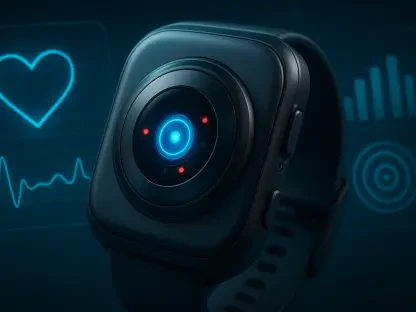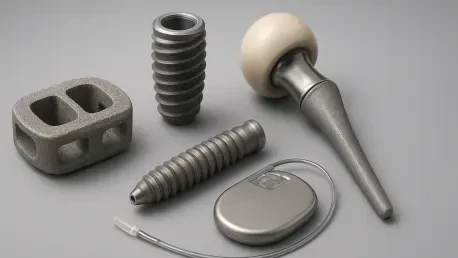

Integrating various bioelectronic sensors into a single communication medium allows for more sophisticated treatment regimens that require less manual oversight from patients. Historically, the pursuit of a fully connected internal medical network was hampered by the physical constraints of radiofrequency technology, which struggles to penetrate biological tissue without significant energy loss. Engineers from Georgia Tech and MIT introduced a paradigm shift with the Subcutaneous Wireless Networked Systems, or SWANS. This framework utilizes the human body itself as a conductive medium for data, effectively turning the skin and underlying tissues into a biological wire. By moving away from high-frequency electromagnetic waves, the system avoids the need for bulky antennas and massive power reserves. This breakthrough solved the persistent problem of device synchronization across different anatomical regions, providing a seamless way for a wearable hub to manage multiple discrete implants without the traditional interference issues.
Rethinking the Architecture of Bioelectronic Networks
The Human Body as a Communication Pathway
The technical core of this innovation lies in human body communication, a method that uses low-frequency electrical pulses to transmit data through tissue. Unlike traditional wireless signals that broadcast in all directions, these pulses are largely contained within the body, which significantly reduces power consumption and enhances data security. Because the signals do not need to fight through the dense interference of external environments, the connection remains stable even as a person moves or changes their immediate surroundings.
Safety is a paramount concern when introducing electrical currents into biological systems, but the SWANS framework operates well below the thresholds of sensory perception. The low-voltage signals are designed to be imperceptible, ensuring that the network does not interfere with natural nerve or muscle function. This creates a reliable and invisible data link that can bridge devices across the entire torso or limbs. By using the body’s natural conductivity, engineers have eliminated the need for complex internal wiring or the high-energy demands of radio waves.
Power Efficiency and Passive Device Design
One of the most significant hurdles in implantable technology is the limited lifespan of internal batteries. To address this, the implants in this new system are constructed from passive electronic components that remain in a dormant state until they receive a specific trigger from the external hub. This design philosophy ensures that the devices consume almost zero power while waiting to perform their function. This dormancy is essential for devices that only need to act periodically, such as drug delivery pumps or periodic sensors.
Researchers estimated that a device triggered once per day could remain operational for a full year without any form of external recharging. By offloading the energy-intensive computational tasks to a wearable hub, the internal nodes remain lightweight and durable. This synergy between a smart external controller and simple internal actuators maximizes the longevity of the entire system. Consequently, the burden of repeated surgeries to replace batteries is effectively eliminated, making long-term bioelectronic therapy a practical reality for a wider patient demographic.
Transforming Patient Outcomes Through Real-Time Coordination
Miniaturization and the End of Invasive Surgery
The implants are remarkably small, measuring less than three millimeters, which allows them to be administered through a standard syringe. This eliminates the need for invasive surgical procedures, as a physician can simply inject the device into the desired location. Such a delivery mechanism significantly lowers the barrier for clinical adoption, as it reduces recovery times and the risks associated with traditional operations. These tiny nodes are capable of sensing localized conditions and responding with targeted therapeutic actions.
Despite their diminutive size, these devices are robust enough to perform complex tasks when coordinated by the central hub. For instance, in a study involving dual-limb motor control, the system successfully synchronized the movement of a front paw with a hind leg by transmitting signals across the body network. This capability demonstrates how a distributed system can restore function by bypassing damaged neural pathways. The flexibility of syringe-delivered implants means that a patient could receive a tailored network of sensors based on their specific health needs.
Future Directions for Automated Health Management
Stakeholders in the biomedical field should now focus on the standardization of these body-centric communication protocols to ensure compatibility between different manufacturers. The next step for clinicians involves designing personalized sensor maps that optimize the placement of these injected nodes for specific chronic conditions like diabetes or paralysis. Integrating advanced machine learning into the wearable hub will allow the system to predict patient needs before they become critical, moving from reactive treatments to proactive health maintenance.
The study of the synchronized body network successfully validated the potential for fully automated healthcare interventions. Engineers demonstrated that the low-power architecture effectively managed complex motor tasks without human interference. The results indicated that the integration of such systems into mainstream medicine simplified treatment for chronic patients. This technology ultimately shifted the focus toward a future where medical devices functioned as a unified, autonomous ecosystem. By prioritizing protocol security and device durability, the research community prepared a path for the next generation of bioelectronic care.