
The traditional landscape of preventative healthcare often feels like a slow-moving marathon characterized by endless waiting lists and invasive diagnostic procedures that discourage many individuals from seeking early intervention. Amidst this backdrop, Midjourney Medical is attempting to pivot the narrative by introducing a revolutionary approach to internal imaging that leverages the same creative disruption seen in its generative AI software. The venture represents a massive leap from digital art to tangible medical hardware, aiming to democratize high-resolution body scans that were once the exclusive domain of high-cost clinical environments. By streamlining the entire diagnostic experience into a mere sixty seconds, the initiative seeks to integrate medical surveillance into the routine of a modern, healthy lifestyle. This shift is not merely about speed; it is about removing the psychological and physical barriers that have historically kept patients away from early detection tools, potentially saving countless lives through the simple act of making a full-body scan as accessible and unthreatening as a routine dental check-up or a visit to a local gym.
Advanced Ultrasonic Hardware and Design
Innovative Technology: The Ultrasound-on-Chip System
The engineering backbone of this new diagnostic tool centers on a sophisticated ultrasound-on-chip architecture that eliminates the need for bulky, traditional imaging components. At the heart of the device is a specialized ring housing approximately 500,000 microscopic sensors that capture data with unprecedented precision. Unlike CT scans or MRIs, which utilize ionizing radiation or powerful magnetic fields, this system relies entirely on high-frequency sound waves to generate a three-dimensional map of the internal organs and skeletal structures. During the scanning process, a patient stands on a specialized platform that is gradually submerged in a fluid medium, ensuring optimal acoustic coupling between the sensors and the body. This immersion allows the vast array of sensors to capture high-fidelity data from every possible angle simultaneously. The resulting data stream is then processed by advanced algorithms to construct a comprehensive internal portrait in less time than it takes to brew a cup of coffee.
User Experience: Transitioning to Wellness Spas
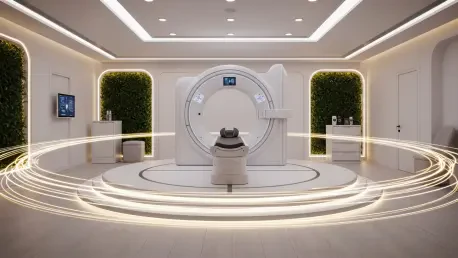
Efficiency serves as the cornerstone of this technological breakthrough, with the system providing levels of anatomical detail comparable to a standard ninety-minute MRI scan in just a fraction of the time. This massive reduction in procedure duration allows the company to rethink the environment in which these scans occur, moving away from sterile hospital basements and toward a concept described as a wellness spa. The goal is to strip away the stress and claustrophobia usually associated with medical imaging, replacing it with a serene, user-focused experience that encourages regular check-ins. To achieve this level of hardware-software synergy, Midjourney recruited a specialized team of former Apple engineers who bring a wealth of experience in high-end consumer electronics. Their expertise in creating seamless user interfaces and robust physical designs is evident in the scanner’s intuitive operation. By treating the patient as a client rather than a clinical subject, the company aims to foster a proactive relationship with health data.
Scaling Global Access and Preventative Care
Initial Launch: The San Francisco Flagship
A clear strategic roadmap guides the rollout of this technology, beginning with the establishment of a flagship facility in San Francisco that is scheduled to open its doors in 2027. This premier location is designed to act as a living laboratory, where the system’s performance can be monitored in real-time while serving its first cohort of users. Beyond providing immediate diagnostic services, this initial site will play a crucial role in gathering the vast datasets required to further train and refine the underlying artificial intelligence. As the system processes more scans, its ability to identify subtle anomalies and early-stage pathologies will theoretically improve, creating a feedback loop of increasing accuracy. This phase is vital for establishing the credibility of the platform before it scales to a broader market. The San Francisco center will also serve as a training ground for technicians, ensuring that the operational standards are perfected before the technology is exported to other major metropolitan areas across the globe.
Worldwide Expansion: Reaching Global Scale
Following the successful launch of the initial flagship, the expansion strategy involves a massive global scaling effort aimed at deploying 50,000 scanners worldwide by 2031. This aggressive growth plan is intended to transition the healthcare industry from a reactive model to a proactive, data-driven paradigm. Currently, most imaging procedures are only ordered after a patient presents with symptoms, which often means that a condition has already progressed to a more dangerous stage. By providing a low-cost, high-speed alternative, Midjourney hopes to encourage people to undergo regular full-body assessments as part of their annual wellness routines. The ability to detect minor physiological changes over time could allow for interventions that are less invasive and more effective. Furthermore, the widespread availability of these scanners could bridge the gap in healthcare access for underserved populations, providing a standardized level of diagnostic quality regardless of geographic location or the availability of specialized radiologists at local hospitals.
Regulatory Hurdles and Potential Impact
Compliance Challenges: Seeking Official Validation
Despite the potential benefits, the company faces a rigorous path toward full integration into the medical mainstream, particularly regarding regulatory oversight and federal validation. Securing approval from the Food and Drug Administration remains a significant hurdle that must be cleared before the scanners can be legally marketed for clinical diagnostic purposes. Without this official certification, the device’s primary utility might be restricted to general wellness monitoring, which could alienate medical professionals who require validated results for treatment planning. The company has made substantial claims about the scanner’s ability to lower global mortality rates and reduce the financial burden on healthcare systems, but these promises hinge on the platform’s performance in controlled clinical trials. The medical community often views rapid technological shifts with skepticism, requiring mountain-high evidence that new tools can match the diagnostic reliability of established methods like PET or MRI before they are adopted on a large scale.
Future Perspectives: Actionable Integration and Care
Looking forward, the transition toward ubiquitous medical imaging required a concerted effort from both technology developers and healthcare policymakers to ensure ethical and effective implementation. As the first scanners entered the pilot phase, stakeholders emphasized the importance of data privacy and the need for clear guidelines on how to manage the influx of incidental findings. Medical professionals suggested that the future of this technology rested on its ability to integrate with existing electronic health records, allowing for a longitudinal view of a patient’s internal health. To maximize the impact of these high-speed scans, healthcare systems focused on developing a new tier of diagnostic counseling to help patients interpret their results without causing unnecessary anxiety. Insurance providers also began exploring reimbursement models that prioritized preventative scanning, recognizing the long-term cost savings associated with early disease detection. Ultimately, the successful deployment of these tools depended on a balanced approach that combined technical innovation with a commitment to patient-centered care and rigorous scientific standards.