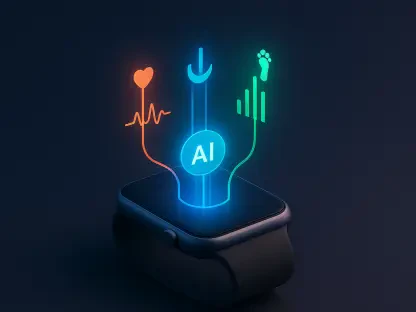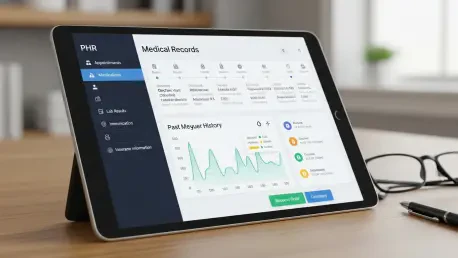

The transition from physical paper charts to digital health portals was intended to simplify the patient experience, but for many individuals, it has only resulted in a fractured landscape of disconnected data points that remain difficult to interpret without professional medical training. OpenAI has addressed this systemic inefficiency by introducing a specialized health feature that allows users to connect their Apple Health data and electronic medical records directly to ChatGPT. This update represents a significant departure from general AI interactions, moving toward a framework of highly personalized assistance rooted in a user’s specific medical history. Currently available to adults in the United States, the functionality aims to bridge the gap between fragmented clinical information and the conversational intelligence of large language models. By synthesizing disparate data into a single dialogue, the platform offers a more holistic approach to personal wellness, transforming how patients engage with their own medical records and health outcomes in their daily lives.
Enhancing the User Experience through Seamless Integration
The Shift: Moving from Dedicated Tabs to Contextual Dialogue
The integration of health data into the main chat interface represents a strategic move away from isolating medical information within separate, siloed app sections. Internal research indicated that most health-related inquiries occur naturally during general daily activities, such as when a user is planning a weekly meal schedule or inquiring about the symptoms of a common cold. By embedding these capabilities into the primary chat, ChatGPT can now draw upon synced medical records to offer proactive, context-aware advice. For instance, if a user asks for restaurant recommendations, the AI can cross-reference their documented dietary restrictions or recent blood pressure trends to suggest options that align with their specific health needs. This level of proactive assistance suggests a future where health management is no longer a separate task but an integrated component of general digital interaction, providing continuous support rather than reactive answers.
Patient Empowerment: Synthesis of Medical History and Timelines
Early adoption of this integrated health tool has demonstrated its potential to synthesize complex medical histories into coherent, understandable timelines for the average user. Many individuals struggle to connect disconnected lab results from multiple specialists or remember the specific details of surgery notes from several years prior. ChatGPT functions as a specialized research assistant in this capacity, identifying long-term patterns and trends that might be overlooked during a standard, time-constrained doctor’s visit. By consolidating these records, the system enables users to visualize their health journey over time, from 2026 to 2028 and beyond. This perspective empowers patients to take a more proactive stance on their wellness, allowing them to enter clinical appointments with a clearer understanding of their health status and more targeted questions for their healthcare providers, ultimately fostering a more collaborative relationship between patients and the medical establishment.
Technical Foundations and Professional Validation
Model Performance: Leveraging Advanced Reasoning for Clinical Accuracy
The technical backbone of this health-focused update rests on the latest iterations of OpenAI’s technology, specifically the GPT-5.5 Instant and GPT-5.6 Sol models. These models have been meticulously fine-tuned for medical reasoning and safety, designed to recognize the nuances of clinical data while identifying scenarios where a user may require urgent medical intervention. While the GPT-5.5 Instant model provides a high standard of accessibility for a general audience, the premium GPT-5.6 Sol variant is engineered to handle complex reasoning across vast arrays of data points. This includes the ability to track laboratory trends over multiple years, providing a detailed view of a patient’s progress or decline that requires sophisticated computational logic. These advancements ensure that the AI is not merely repeating data but is actively analyzing it to provide insights that meet a higher threshold of reliability and technical depth than previously available in general AI systems.
Professional Validation: The HealthBench Professional Standard
To maintain rigorous safety and accuracy standards, OpenAI collaborated with practicing medical doctors to develop an internal evaluation rubric known as HealthBench Professional. This system evaluates the AI across several critical dimensions, including clinical accuracy, safety protocols, and the ability to translate complex medical jargon into plain, accessible English. Internal testing benchmarks suggest that these newer models consistently outperform previous versions, often reaching a level of response quality and reliability comparable to that of human physicians. Beyond providing synthesis, the tool acts as a secondary set of eyes for auditing personal health records, with some users reporting that the AI flagged unexpected entries or clerical errors in their official medical charts. By serving as an intelligent support interface, the platform reduces the time spent on manual data entry and helps patients navigate the inherent complexities of modern clinical data, ensuring a more accurate and transparent understanding of their medical status.
Privacy Protocols and Data Integrity Challenges
Security Measures: Managing Permission and Data Protection
Privacy remains the central pillar of this rollout, with OpenAI establishing strict protocols to ensure that personal health records are never used to train its foundation models or for targeted advertising purposes. The architecture operates on a permission-gated system, meaning the AI must explicitly request consent before accessing any synced health data to personalize a specific response. Users maintain total control over their information, retaining the right to grant permanent access or disconnect their health accounts at any moment. Furthermore, the company has committed to a policy where all synced data is deleted from its servers within 30 days of an account disconnection. This framework is designed to build trust with users who may be hesitant to share sensitive medical information with an AI, providing multiple layers of security that prioritize the individual’s autonomy and the confidentiality of their medical history.
Practical Risks: Addressing Data Quality and Systemic Limitations
While the technological capabilities of these models are substantial, the system is fundamentally a support tool rather than a diagnostic one, and its performance is inherently tied to the quality of the incoming medical data. Medical records are frequently outdated or contain diagnoses and medications that are no longer relevant to a patient’s current physiological state. Consequently, OpenAI advises users to verify all AI-generated insights with qualified healthcare professionals to prevent the adoption of incorrect health strategies. Users must also navigate the nuances of the AI’s “Memory” settings, which are prohibited from creating memories directly from raw medical records but can still retain context from the surrounding conversation. While temporary chat modes offer an additional layer of privacy for sensitive inquiries, users must remain vigilant regarding potential data leakage when utilizing third-party plugins. Balancing convenience with rigorous safety protocols remains the primary challenge as these tools become more prevalent in the healthcare landscape.
Strategic Steps for Future-Proof Health Management
The introduction of integrated health records within the conversational AI ecosystem marked a definitive shift in the relationship between patients and their digital health data. By moving away from static portals and toward an interactive, intelligent interface, individuals gained a more intuitive way to manage chronic conditions and daily wellness. However, the transition emphasized the critical importance of human oversight and data hygiene. Users who successfully navigated this new landscape were those who viewed the AI as a high-level administrative and research assistant rather than a replacement for clinical expertise. They utilized the system to identify clerical errors in their records and to synthesize years of laboratory results into actionable summaries for their physicians, thereby improving the efficiency of their medical appointments.
Moving forward, the focus shifted toward maintaining the integrity of the data being fed into these language models. Regular audits of electronic medical records became a necessary habit for users to ensure the AI was not providing advice based on obsolete information. Additionally, the adoption of privacy-first habits, such as utilizing temporary chat modes for sensitive queries and regularly reviewing permission settings, ensured that personal health data remained protected. The evolution of GPT-5.6 Sol and the HealthBench Professional standards provided a robust foundation for this progress, yet the ultimate responsibility for medical decision-making remained with the patient and their healthcare team. This collaborative model, combining the processing power of AI with the critical thinking of humans, established a new standard for personal health management that favored transparency, accuracy, and proactive engagement.