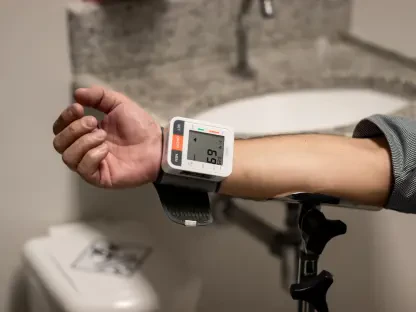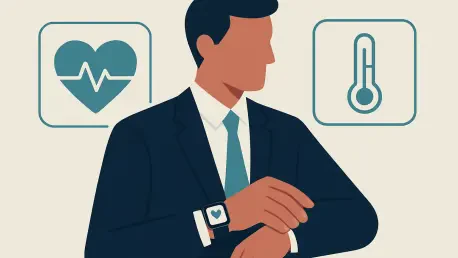

Clinical norms for resting heart rates between sixty and one hundred beats per minute often mask significant personal deviations that signal early infection. For many individuals, a pulse of eighty-five beats per minute is clinically unremarkable, yet for a person with a standard resting baseline of sixty, this elevation represents a major physiological red flag. Modern wearables, such as the latest biometric rings and smartwatches, have transformed these subtle shifts into actionable health intelligence. These devices operate on a scale of precision previously reserved for intensive care units, monitoring cardiovascular and respiratory metrics around the clock. Research from leading institutions has validated that this passive data collection can flag viral presence before the user even feels a slight fatigue. By moving away from intermittent clinic visits, individuals now possess a constant sentinel that identifies the quiet biological preamble to illness, effectively shortening the gap between infection and response.
The Paradigm Shift in Health Monitoring
Transitioning from Reactive to Continuous Data
Traditional healthcare relies on a reactive framework where patients seek professional help only after symptoms become undeniable. This model is built upon point-in-time assessments that capture a momentary snapshot of health, which often fails to account for the rapid progression of most viral pathogens. Wearable technology addresses this structural flaw by providing a twenty-four-seven stream of biometric data that captures the body’s state during rest, activity, and high-stress moments. This high-resolution monitoring converts what was once biological noise into a coherent narrative of physical resilience or decline. By analyzing data continuously, these devices allow for the identification of trends rather than isolated occurrences, offering a much clearer picture of how an individual’s body responds to external threats. This shift from episodic to persistent oversight ensures that the earliest signs of systemic strain are not overlooked during the intervals between annual physical exams.
Furthermore, the transition to continuous data collection facilitates a deeper understanding of how lifestyle factors interact with underlying health conditions. Instead of relying on a patient’s memory during a consultation, physicians can now review weeks of objective data to see how sleep patterns, activity levels, and resting heart rates fluctuate in tandem. This persistent monitoring creates a comprehensive record of the body’s internal environment, making it much easier to spot the moment that environment begins to destabilize. As the technology matures, the focus is moving from simple step counting to the sophisticated analysis of complex physiological signals. This evolution allows for a level of transparency into the human body that was once impossible outside of a hospital setting. By maintaining this constant connection, wearables serve as a vital bridge between daily life and clinical intervention, ensuring that health management is a proactive and ongoing process rather than a crisis-driven response to acute illness.
Defining Individual Health via Personal Baselines
One of the most significant advancements in wearable technology is the departure from universal health averages in favor of personalized baselines. While medical textbooks provide standard ranges for metrics like respiratory rate and blood oxygen, these averages do not account for the vast biological diversity among the population. Machine learning algorithms now ignore these broad population statistics to build a unique profile for each user based on historical data. This shift toward “N-of-1” medicine allows the individual to serve as their own control group, which is far more effective for detecting subtle deviations. When a device knows that a user’s heart rate variability typically peaks at a specific value during deep sleep, it can immediately recognize a twenty percent drop as a potential sign of brewing inflammation. This hyper-personalized approach ensures that alerts are based on meaningful changes relative to the user’s normal state rather than generic benchmarks.
To build these robust baselines, wearables track six primary metrics: resting heart rate, heart rate variability, respiratory rate, skin temperature, blood oxygen, and sleep architecture. Among these, heart rate variability, or HRV, is particularly telling, as it reflects the balance of the autonomic nervous system. A high HRV generally indicates a body that is rested and resilient, while a sharp decline often signals that the sympathetic nervous system is working overtime to combat a hidden stressor or pathogen. By synthesizing these diverse markers, the technology creates a multidimensional map of an individual’s health. This map becomes the standard against which all future data is measured, allowing the device to act as a precision instrument for anomaly detection. As users accumulate months and years of data, the accuracy of these personal baselines continues to improve, making the detection of early illness increasingly reliable and tailored to the unique physiological makeup of every individual.
The Biological Signature of Early Infection
Identifying Immune System Alerts
When a pathogen enters the body, the immune system initiates an inflammatory cascade long before physical symptoms like a cough or fever manifest. This early activation leaves a distinct physiological fingerprint that wearables are uniquely equipped to detect. As the body begins its defense, the resting heart rate often rises to fuel the rapid production and transport of immune cells. Simultaneously, the body’s internal stress response causes heart rate variability to drop as the autonomic nervous system prioritizes survival over standard homeostasis. These subtle shifts represent the body’s internal struggle to maintain balance against a nascent infection. Because these changes occur at the cellular and systemic levels first, they provide a window of opportunity for early intervention that was previously inaccessible to the average person. Identifying this biological preamble allows individuals to take preemptive measures, such as increasing rest or seeking early testing.
Beyond cardiovascular shifts, the body often exhibits changes in respiratory patterns and thermoregulation during the initial stages of an immune response. A slight increase in the number of breaths per minute can indicate that the body is working harder to maintain oxygen levels, even if the user does not feel short of breath. Similarly, minor elevations in skin temperature can signal the beginning of a thermoregulatory shift as the body attempts to create an inhospitable environment for viruses. While any one of these changes might be dismissed as the result of a poor night’s sleep or minor stress, the simultaneous movement of multiple metrics forms a quantifiable signature of physiological strain. AI systems are trained to recognize these specific clusters of signals, differentiating between general fatigue and the early stages of a viral attack. This sophisticated pattern recognition is the cornerstone of how modern wearables can predict illness days before the first visible symptom appears.
The Mechanics of Algorithmic Analysis
The process of detecting illness through a wearable device involves a sophisticated anomaly detection pipeline that mirrors the complexity of financial fraud monitoring. It begins with raw signal collection from optical sensors, which use light to measure blood flow and volume changes at the wrist or finger. This raw data is then put through rigorous noise filtering to remove artifacts caused by movement, ambient light, or improper device fit. Once the signal is cleaned, the system extracts key features such as inter-beat intervals and oxygen saturation levels. These features are then compared against the user’s rolling thirty-day average to determine if current readings fall within a normal range of statistical variance. If the data exceeds these predefined thresholds, the system flags an anomaly, triggering an alert that notifies the user of unexpected physiological strain. This real-time analysis happens entirely in the background, providing constant oversight without any manual input.
To improve accuracy, these algorithms utilize deep learning models that have been trained on vast datasets of both healthy and infected individuals. By learning the common “shapes” of data that precede different types of illness, the AI can distinguish between various forms of physical stress. For example, the biometric pattern following an intense workout looks very different from the pattern that precedes a respiratory infection. An exercise-induced heart rate spike is typically followed by a predictable recovery curve, whereas an infection-related rise remains elevated even during periods of deep rest. The ability of the algorithm to contextualize data within the user’s daily routine is what makes it so powerful. As the software continues to learn from a global network of anonymized data, its predictive capabilities become sharper, allowing for even earlier and more accurate warnings. This mechanical precision turns a simple consumer electronic device into a sophisticated diagnostic tool that operates at the cutting edge of preventive medicine.
Overcoming Challenges and Looking Ahead
Addressing Signal Noise and Technical Barriers
Despite the rapid advancement of wearable technology, several hurdles remain regarding “confounding signals” that can mimic the early signs of illness. Factors such as heavy alcohol consumption, extreme emotional stress, or overtraining can cause physiological shifts that look remarkably similar to a viral response. For instance, a night of drinking can lead to a significant rise in resting heart rate and a dramatic drop in heart rate variability, which might trigger a false positive for an infection. Additionally, consumer-grade sensors can sometimes be affected by external variables like skin tone, device placement, or ambient temperature, which can interfere with the accuracy of optical readings. Because wearables currently lack the full clinical context of a person’s life, they cannot provide a definitive medical diagnosis on their own. They are best viewed as advanced screening tools that highlight the need for further investigation rather than a replacement for professional medical judgment.
To mitigate these issues, developers are focusing on improving the hardware and software integration to filter out non-illness-related stressors more effectively. Newer models are incorporating more diverse sensor arrays to provide a broader context for the data being collected. For example, adding sensors that track movement and sweat can help the algorithm determine if a heart rate spike is due to a sudden sprint to catch a bus or an internal inflammatory response. There is also an ongoing effort to improve the inclusivity of these sensors, ensuring they work with equal precision across all skin tones and body types. By refining the hardware and layering in more environmental data, the technology is becoming better at distinguishing between lifestyle-induced strain and genuine biological threats. As these technical barriers are lowered, the reliability of wearable alerts will continue to grow, making them an even more indispensable part of the modern healthcare ecosystem.
The Evolution Toward Autonomous Health Sentinels
The next generation of wearables is moving toward “multi-sensor fusion,” which combines traditional cardiovascular metrics with new types of biological monitoring. This includes the integration of continuous glucose monitors and sweat-based biomarker analysis directly into standard wearable formats. By tracking chemical changes in the blood and sweat alongside heart and lung function, these devices will be able to distinguish between a metabolic shift and a viral infection with near-clinical accuracy. This holistic view of the body’s chemistry provides a much more detailed picture of health than cardiovascular data alone. Furthermore, the move toward “edge computing” allows this complex data to be processed locally on the device rather than in the cloud. This not only enhances user privacy but also enables real-time analysis that can adapt to the user’s specific environment and activity level instantly, providing immediate feedback that is tailored to the exact moment.
Looking further ahead, these autonomous sentinels will likely become fully integrated into the broader medical infrastructure, automatically sharing relevant data with healthcare providers when an anomaly is detected. This would allow a doctor to reach out to a patient for a preemptive consultation before the patient even realizes they are getting sick. The transition from periodic testing to this model of continuous, proactive monitoring represents a fundamental evolution in how humanity manages health. As sensor technology becomes more discreet and AI becomes more adept at interpreting the nuances of human biology, these devices will cement their role as permanent guardians of personal well-being. This shift promises a future where healthcare is no longer a series of reactive appointments but a seamless, integrated part of daily life. The result will be a society that is much more resilient to disease outbreaks and better equipped to manage individual health on a truly preventive basis.
Strategic Integration of Biometric Intelligence
The broader medical community recognized that the integration of wearable data was no longer optional for comprehensive patient care. Clinicians began utilizing these longitudinal datasets to differentiate between common fatigue and early-stage infections, which significantly reduced the burden on emergency departments during seasonal outbreaks. For the individual, the most important next step involved establishing a consistent wear routine and learning to interpret the nuance of personal biometric trends alongside professional advice. As these devices evolved, the focus shifted from simply collecting numbers to fostering a symbiotic relationship between technology and biology. This era established a standard where prevention was powered by real-time intelligence, ensuring that healthcare remained a continuous journey rather than a series of disconnected reactions to illness. Moving forward, the priority became the refinement of user education to ensure that data-driven alerts led to meaningful lifestyle adjustments and timely medical interventions.