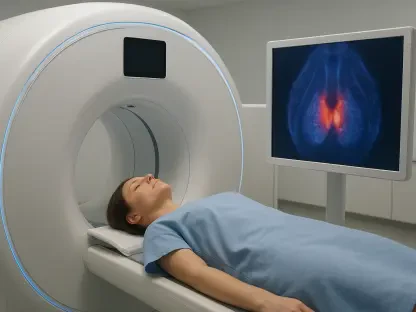

Research indicates a profound disconnect between the actual implementation of medical technology and the depth of patient understanding regarding how these tools influence health outcomes. As hospitals across the United States rapidly integrate sophisticated machine learning algorithms and diagnostic software into daily operations, the average citizen finds themselves standing at a crossroads of innovation and uncertainty. This technological surge is not merely a backend upgrade for hospital servers; it represents a fundamental shift in the delivery of care that touches everything from administrative scheduling to life-altering surgical interventions. A comprehensive survey of over 3,000 U.S. adults conducted recently highlights a complex internal struggle: while the medical establishment views artificial intelligence as a bridge to unprecedented efficiency and precision, the public remains deeply protective of the personal agency and human interaction that have long defined the clinical experience. The data suggests that for most patients, the primary concern is not the efficacy of the tool itself, but rather the potential erosion of the doctor-patient relationship and the lack of transparency regarding when and how these digital assistants are being deployed in their personal health journeys.
The integration of artificial intelligence is currently moving faster than the social and legal frameworks designed to govern it, creating a palpable tension within the American medical landscape. Healthcare providers often tout the benefits of automated systems in reducing physician burnout and minimizing human error during the interpretation of complex medical imaging. However, this optimism is frequently met with skepticism by a public that worries about the clinical environment becoming a cold, algorithmic process. This dynamic underscores an urgent requirement for the medical industry to re-evaluate its communication strategies. There is a pressing need to examine how informed consent is obtained and how much weight a patient’s preference carries when a hospital decides to automate specific aspects of care. Without a clear understanding of public sentiment, the healthcare sector risks a significant backlash that could stall the adoption of genuinely life-saving technologies.
The Demand for Total Transparency
A significant majority of Americans believe it is vital for healthcare providers to disclose when artificial intelligence is being used in their treatment. This sentiment is remarkably consistent across nearly all demographic groups, suggesting that the public views the involvement of algorithms not as a minor technical detail, but as a significant factor that fundamentally changes the nature of their care. For most people, knowing that an algorithm is involved is not just a secondary preference; it is a baseline requirement for maintaining a functional level of trust with their physicians. When a patient enters a clinic, there is an implicit contract of honesty and clarity, and many feel that the unannounced use of AI violates this agreement. This demand for openness reflects a broader societal desire to maintain human oversight in sectors where the consequences of failure are permanent. People want to know that a human being is ultimately responsible for the decisions being made about their bodies.
The call for openness is strongest when the medical stakes are high, such as when machine learning models are utilized for diagnosing complex illnesses or interpreting intricate medical imaging like MRIs and CT scans. Statistics show that more than 80% of adults expect to be notified explicitly in these high-stakes scenarios, where a digital miscalculation could lead to an incorrect prognosis or a missed malignancy. Interestingly, this preference for disclosure extends even to lower-stakes tasks that might seem purely administrative. A majority of the population still favors transparency for processes like AI-generated clinical notes or automated scheduling systems. Even if the technology is only intended to streamline the doctor’s workflow, patients express a desire to be kept in the loop. They view the entire medical encounter as a cohesive experience, and any intervention by an automated system—no matter how small—is seen as a variable that should be disclosed to ensure the patient remains a fully informed participant in their own healthcare journey.
The Gap Between Influence and Reality
There is a noticeable and growing divide between the amount of control Americans feel they have over the use of artificial intelligence in their care and the amount of influence they actually want to possess. Current data suggests that more than half of the population feels they have little to no “say” in whether a healthcare provider utilizes these tools during an appointment or procedure. This perceived lack of agency stands in stark contrast to the large majority of individuals who express a strong desire for more input and oversight. This disconnect reveals a widespread dissatisfaction with current clinical protocols regarding patient consent and the right to refuse automated interventions. While modern medicine has moved toward a model of “shared decision-making” in many areas, the implementation of technology seems to have bypassed this democratic approach, often leaving patients as passive recipients of algorithmic outputs rather than active partners.
This lack of control is felt with varying intensity across different communities, with some demographic groups reporting a much lower sense of agency than others when navigating the modern healthcare system. Despite these variations, the desire for more involvement remains a unifying factor that transcends socioeconomic and cultural boundaries. Very few individuals express satisfaction with the current level of input they are allowed to provide concerning technological adoption. This pervasive sense of being sidelined suggests that the medical industry must fundamentally rethink how it handles patient permissions. Moving forward, the simple notification of technology use will likely be insufficient; instead, providers may need to offer patients a genuine choice in whether they want AI to be part of their diagnostic or treatment process. Restoring this sense of control is essential for preventing a breakdown in the patient-provider relationship and ensuring that technological progress does not come at the expense of patient rights.
Public Awareness and the Literacy Problem
While artificial intelligence is becoming a common and permanent fixture in modern American hospitals, a surprising number of citizens remain unaware of its presence in their own lives. Only a small fraction of the population can say with certainty that their healthcare provider has used machine learning or automated diagnostic tools during their recent treatments. A large portion of the public remains either completely unsure or actively believes that these technologies have not been applied to their care at all, despite the widespread integration of AI in electronic health records and diagnostic software. This points to a significant communication gap where the rapid pace of institutional adoption has far outstripped the public’s awareness of how medical care is actually functioning on a day-to-day basis. This “invisible” integration creates a situation where patients cannot effectively advocate for themselves because they do not even realize a new variable has been introduced into their clinical experience.
Even among the minority of patients who are aware that artificial intelligence was used in their treatment, many admit they do not truly understand how the technology functioned or what specific role it played in their diagnosis. This highlights a critical literacy problem that disclosure alone cannot solve. Simply checking a box on a consent form or placing a sign in a waiting room does not constitute true informed consent if the patient lacks a basic understanding of what the algorithm does. True consent requires a level of medical and technological literacy that is currently missing from the standard patient experience, leaving many people in the dark about the mechanics of their own health outcomes. Bridging this gap will require doctors to act not just as practitioners, but as educators who can explain the strengths and limitations of these tools in plain language. Without this educational component, the use of AI will continue to be viewed with a mix of confusion and suspicion, regardless of how accurate the systems might be.
Demographic Differences in Public Perception
Views on the role of artificial intelligence in medicine are not uniform and often vary significantly based on factors such as race, education level, and age. For instance, white adults tend to place a much higher value on being explicitly informed about AI-driven diagnoses compared to Black or Hispanic adults. These differences are not merely statistical anomalies; they likely reflect deep-seated cultural nuances and varying levels of historical trust in the medical establishment. In many cases, minority communities may view technological intervention through a lens of systemic bias, leading to different expectations regarding transparency and oversight. Understanding these diverse perspectives is crucial for healthcare systems that serve a wide range of populations. A “one size fits all” approach to technology disclosure is unlikely to be effective and may even exacerbate existing disparities if the implementation of AI does not account for the specific concerns of different racial and ethnic groups.
Education and age also play pivotal roles in how these advanced medical tools are perceived and accepted by the public. Individuals with higher levels of formal education are statistically more likely to be aware of the presence of AI in clinical settings, though they often share the general sense of uncertainty regarding the technical details of how these systems operate. Conversely, older Americans represent the group most likely to insist on being told exactly when and where an algorithm is involved in their care. As patients age and their medical needs become more frequent and complex, their demand for human-centric transparency tends to grow rather than diminish. This suggests that the “digital native” comfort with technology does not necessarily translate into the medical sphere, where the stakes are more personal. For the aging population, the presence of a human doctor who can interpret and validate machine-generated data remains a non-negotiable component of quality care, proving that technological trust is not a substitute for human rapport.
Building a Framework for Ethical Integration
As the healthcare industry continues its inevitable push toward total digital integration, it faces a looming ethical challenge regarding the long-term maintenance of patient trust. The public clearly views artificial intelligence as a significant medical intervention rather than an invisible back-office tool. If medical professionals and hospital administrators continue to rely on “behind-the-scenes” automation without explicit acknowledgement and discussion, they risk alienating a patient base that still deeply values a human-centered approach to health and wellness. The risk of the “black box” effect—where decisions are made by opaque systems that neither the doctor nor the patient fully understands—could lead to a crisis of confidence in the medical system. Maintaining trust requires more than just clinical accuracy; it requires a commitment to the ethical principle of autonomy, ensuring that the patient remains the primary decision-maker in their own life.
To ensure a successful transition into this new era of medicine, the healthcare community must move beyond ad hoc implementations and focus on developing standardized disclosure protocols and robust educational frameworks. It is no longer enough for an algorithm to be statistically superior to a human practitioner; the patient must also feel empowered and informed throughout the process. Future considerations must include the development of clear, accessible materials that explain the role of AI in specific procedures and the creation of formal pathways for patients to opt out of automated processes if they so choose. Bridging the current gaps in agency and literacy was a necessary step in the evolution of modern healthcare, and the industry has now reached a point where transparency must be prioritized as highly as technical performance. By fostering an environment of open dialogue and mutual respect, the medical community can integrate artificial intelligence in a way that truly respects the rights and expectations of the American public.