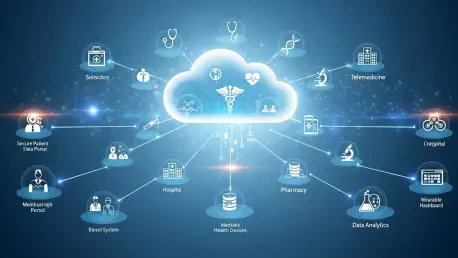

The healthcare industry currently faces a critical turning point as traditional hardware-centric medical devices transition into interconnected, cloud-based ecosystems that defy legacy engineering definitions. For decades, the foundational principles of medical device safety were built upon the “static product” model, where a device was designed, validated, and shipped as a fixed entity that remained unchanged until a major hardware revision. However, the rapid ascent of Software as a Medical Device and cloud-integrated platforms has rendered these traditional frameworks largely obsolete in the face of modern digital complexity. To maintain the highest standards of patient safety without stifling the pace of technological innovation, the medical community must transition away from rigid, release-based compliance and toward a model that recognizes the fluid boundaries and bidirectional data flows inherent in cloud infrastructure. This shift requires a radical redesign of the regulatory and engineering disciplines that govern how life-critical systems are tested and maintained.
Addressing the Breakdown of Static Compliance Models
The foundational assumption of a fixed software version is becoming increasingly incompatible with the dynamic nature of modern cloud environments where updates occur in near-real-time. In these sophisticated systems, a backend algorithm update or a subtle change in server configuration can significantly alter clinical decision pathways or alarm sensitivities without ever modifying the physical hardware at the patient’s bedside. Despite this reality, traditional regulatory models such as 21 CFR Part 820 often still demand extensive, manual re-validation for every iterative update, regardless of its actual risk profile. This mismatch creates a massive compliance bottleneck where the administrative overhead of documentation far outweighs the technical complexity of the change itself. Consequently, manufacturers find themselves trapped between the need to deploy critical security patches or performance improvements and the daunting task of generating mountains of paperwork that may not even address the core risks of a distributed, software-driven system.
To resolve this systemic friction, the industry is moving toward a continuous process where system performance and safety are monitored in real-time rather than validated only at discrete intervals. This evolution involves the implementation of automated testing suites that run continuously within the deployment pipeline, ensuring that every micro-change is verified against the original safety requirements. Instead of a massive validation effort every six months, engineering teams are now adopting a “living” validation state where the compliance posture is updated as frequently as the code itself. This approach not only reduces the risk of human error in documentation but also provides a much more accurate reflection of the system’s current state. By treating validation as an ongoing operational activity rather than a one-time gate, organizations can ensure that their cloud-based ecosystems remain safe, secure, and fully compliant with the latest regulatory expectations while maintaining the agility needed to improve patient outcomes.
Navigating Modern Regulatory Frameworks and Agile Integration
Regulatory bodies have recognized the limitations of legacy models and are responding by introducing more flexible, iterative postures such as the Pre-Determined Change Control Plan. This framework represents a significant shift in how the FDA and other global authorities view software updates, allowing manufacturers to manage post-market changes within a pre-approved scope and methodology. By establishing these boundaries early in the submission process, companies can gain the legal and clinical breathing room necessary to iterate on their algorithms without seeking new clearances for every minor adjustment. However, this flexibility comes with a trade-off: it requires immense strategic foresight and a heavy upfront documentation burden. Engineering teams must anticipate the trajectory of their product’s development years in advance, documenting how they will handle future changes before they even occur. This shift in responsibility necessitates a deep integration between clinical risk management and technical product roadmapping.
Furthermore, a growing consensus among industry leaders suggests that Agile methodologies and international standards like IEC 62304 are not nearly as mutually exclusive as previously thought. For many years, the perceived conflict between iterative development and strict regulatory requirements led to a “waterfall-Agile” hybrid that often combined the worst aspects of both worlds. Success in the current regulated environment depends on baking risk classification, traceability, and automated test coverage directly into every development sprint rather than treating compliance as a final cleanup activity. When risk management is integrated into the daily workflow of the software engineer, the resulting documentation becomes a byproduct of the engineering process rather than a separate, secondary task. This cultural shift allows organizations to meet the core obligations of IEC 62304 while still benefiting from the speed and responsiveness of modern software development practices within a highly regulated cloud environment.
Rethinking CAPA for Distributed Cloud Environments
Corrective and Preventive Action processes are also in dire need of modernization to handle the inherent complexities of distributed, multi-tenant cloud systems. In traditional mechanical or electrical engineering, a defect is often a physical failure that is relatively easy to isolate, such as a fractured component or a short circuit in a specific PCB. In a cloud ecosystem, however, a system failure might stem from a transient API layer glitch, a silent update to a third-party dependency, or a subtle configuration drift between the development and production environments. Current CAPA frameworks, which were designed for physical manufacturing, often lead to a phenomenon known as “compliance theater.” This occurs when organizations generate exhaustive documentation that satisfies an auditor’s checklist but fails to address the underlying technical root causes of a distributed system failure. True safety in the cloud requires moving beyond surface-level documentation toward deeper, data-driven analysis.
Modernizing these investigative processes requires a fundamental shift toward observability and automated logging that can capture the behavior of interconnected components in real-time. Instead of relying on retrospective user reports, which are often incomplete or inaccurate, engineering teams must leverage high-fidelity telemetry to reconstruct the state of the entire ecosystem at the exact moment a failure occurred. This level of transparency allows for a more rigorous application of the “five whys” in a digital context, enabling teams to identify whether a problem originated in the core application code, the cloud provider’s infrastructure, or an external data source. By building these diagnostic capabilities directly into the platform, manufacturers can transition from reactive troubleshooting to a proactive stance. This approach ensures that preventive actions are based on hard data rather than speculation, leading to more robust software and a significantly higher level of protection for the patients who depend on these technologies.
Overcoming Organizational Silos and the Talent Gap
The evolution of Verification and Validation is as much an organizational and cultural challenge as it is a technical one, requiring unprecedented coordination across disparate teams. In many traditional medical device companies, engineering, quality assurance, regulatory affairs, and clinical departments operate as isolated silos with their own distinct languages and risk tolerances. This fragmentation often leads to significant release delays as each department applies its own set of filters and requirements to a single software update. For instance, a cloud engineer might view a database migration as a routine technical task, while a regulatory specialist might see it as a major change requiring an entirely new validation cycle. Bridging these gaps requires a unified approach where all stakeholders are involved from the earliest stages of the product lifecycle, ensuring that regulatory and clinical requirements are translated into actionable technical specifications from the very first day of development.
Compounding this organizational friction is a critical and growing shortage of “hybrid” professionals who possess the rare combination of skills needed for this new era of medical technology. The industry desperately needs engineers who are equally fluent in clinical risk management and modern cloud architecture, including CI/CD pipelines, container orchestration, and API security. Currently, most educational and professional development pipelines produce either traditional biomedical engineers or modern software developers, but rarely individuals who can navigate both worlds with confidence. Bridging this talent gap is essential for developing a workforce capable of managing the complex intersection of 510(k) submissions and continuous deployment strategies. Companies that invest in cross-training their staff and fostering a culture of multidisciplinary collaboration will find themselves at a distinct competitive advantage, as they will be better equipped to handle the unique regulatory and technical hurdles of cloud-based healthcare.
Transforming Compliance Into a Core Engineering Discipline
Ultimately, the future of medical device innovation depends on treating compliance as an integrated engineering discipline rather than a downstream bureaucratic hurdle that must be cleared. The organizations that thrived in this changing landscape were those that moved away from manual, post-hoc documentation and instead built automated traceability and real-time risk management directly into their system architecture. By adopting this holistic approach, companies ensured that every line of code was linked to a specific user requirement and that every test case provided a clear audit trail for regulatory bodies. This transition shifted the role of the quality professional from a final gatekeeper to a strategic partner who helped design the automated systems that maintained safety throughout the product lifecycle. This shift represented a fundamental redesign of how the medical community verified efficacy, ensuring that safety protocols evolved at the same pace as the underlying software technologies.
The transition to cloud-based V&V frameworks successfully prioritized patient safety by replacing static checklists with dynamic, data-driven insights that reflected the true state of the technology. By embracing observability, automated testing, and the FDA’s modern change control pathways, manufacturers were able to respond to clinical needs with greater speed and precision. This evolution effectively removed the artificial barrier between high-velocity software development and the rigorous standards required for life-critical medical devices. Leaders in the field moved beyond the traditional silos of engineering and regulatory affairs, creating a new standard where compliance was viewed as a hallmark of technical excellence. These advancements ensured that the medical device industry remained resilient in the face of rapid digital transformation, providing a robust foundation for the next generation of connected health solutions. Through these actions, the industry successfully navigated the complexities of the digital-first world, ensuring that innovation always served the primary goal of improving human health.