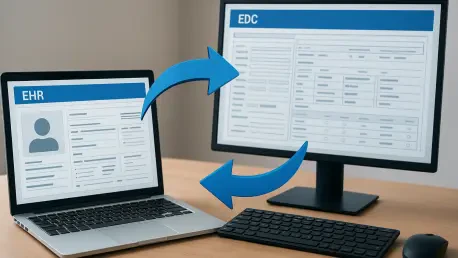

Embedding automated infrastructure into the organizational fabric of a research hospital eliminates the need for difficult mid-study technology transitions. For decades, the clinical research industry has been hindered by a repetitive and inefficient administrative hurdle known as “double entry,” where research teams were required to manually extract patient information from hospital Electronic Health Records and retype it into trial-specific databases. The Mount Sinai Tisch Cancer Center has addressed this systemic bottleneck by implementing a real-time integration through Archer technology. By bridging the gap between Epic systems and clinical trial databases, the center has successfully shifted from labor-intensive manual workflows to an automated digital pipeline. This transition from a theoretical innovation to a routine operational standard within a premier research institution demonstrates a pivotal change in how clinical data is managed and validated.
Institutional Scaling: Moving Beyond Pilot Programs
What sets the Mount Sinai approach apart is the profound institutional commitment to scaling this technology across all facets of its expansive research enterprise. Since the deployment began in 2025, the integration has rapidly moved beyond the typical pilot phase that often stalls technological progress in healthcare settings. It is now active across 16 different disease groups, including high-stakes areas such as myeloid leukemia, lung cancer, and multiple myeloma. This broad application serves as proof that automated data transfer is robust enough to handle the diverse and complex environments inherent in oncology. By applying these digital tools to a wide variety of therapeutic specialties, the institution has demonstrated that EHR-to-EDC connectivity is not a niche solution for simple trials but a foundational utility for the most demanding scientific inquiries currently underway in the medical field today.
Systemic Adoption: Mandatory Protocols for New Research
Furthermore, the center has fundamentally altered its research infrastructure by making this technology a mandatory component of the clinical trial lifecycle. Automated data flow is now integrated into the standard startup process for every new study launched at the institution, ensuring that digital efficiency is baked into the project from its inception. By embedding this requirement into the very fabric of the organization, Mount Sinai ensures that every trial begins with a modern digital infrastructure, which completely removes the need for inefficient retrofitting once a study is already in progress. This systemic adoption reflects a shift in mindset where technology is no longer viewed as an optional add-on but as a core requirement for conducting high-quality research. This approach guarantees that investigators have immediate access to clean data, facilitating faster decision-making.
Efficiency Metrics: The Impact of High Automation
The performance metrics resulting from this integration highlight a radical improvement in research throughput that was previously thought unattainable. Currently, approximately 70 percent of the data required on electronic case report forms is populated automatically through the Archer platform, significantly reducing the manual workload. This automation has directly impacted the daily operations of research staff, with the average time spent on data entry per patient visit dropping from 5.5 minutes to just 2.5 minutes. This represents a reduction of more than 50 percent in administrative labor, allowing for a more streamlined approach to study management. When these time savings are aggregated across hundreds of patients and dozens of trials, the cumulative impact on the speed of research is substantial. This efficiency gain allows the center to handle a higher volume of trials without overextending its existing human resources.
Data Integrity: Achieving Zero-Query Environments
Beyond the sheer speed of data acquisition, the technology has delivered remarkable improvements in data quality, maintaining a 100 percent accuracy rate for all transferred information to date. This high level of precision has led to a re-query rate of zero percent, which is a significant achievement given that manual data entry frequently requires managers to flag discrepancies. In traditional environments, these queries often create a secondary layer of administrative burden that can delay the completion of a trial by weeks or even months as staff work to reconcile conflicting records. By eliminating these errors at the source, the platform removes the friction associated with data cleaning and validation. This ensures that the final datasets are not only completed faster but are also of a higher quality, providing sponsors and regulatory bodies with greater confidence in the study results.
Workforce Impact: Reclaiming the Clinical Research Staff
The qualitative impact on the healthcare workforce is just as profound as the quantitative gains observed in data processing speeds. In a conventional model, highly trained research coordinators and clinicians are often relegated to repetitive clerical tasks that drain human capital and contribute to professional burnout. By automating the “busy work” of transcription, study teams can finally redirect their primary focus toward direct patient care and safety monitoring. This shift allows experts to dedicate their time to the coordination of complex study protocols that require significant human expertise and clinical judgment. When the burden of manual data entry is lifted, the role of the research coordinator evolves from a data processor to a clinical manager. This evolution is essential for maintaining the high standards required in modern clinical trials, where complexity demands undivided attention.
Professional Texture: Changing the Daily Work Experience
Institutional leaders emphasize that this technology facilitates a structural change in the overall texture of the workday for research staff members. In a professional environment characterized by staffing pressures and intense competition for patient enrollment, the ability to reallocate hours from data entry to patient-facing activities provides a critical competitive advantage. Staff members report higher levels of satisfaction when they are able to interact with patients rather than being tethered to a keyboard for hours on end. This improvement in the quality of work life is a vital factor in staff retention and recruitment for top-tier research institutions. By prioritizing the human element of clinical research, Mount Sinai is ensuring that its workforce remains engaged and focused on the scientific mission. This transition highlights how digital transformation can support human talent rather than replacing it.
Precision Management: Selective Data Integration Methods
A key factor in the success of this integration is its focus on selectivity rather than the indiscriminate flow of large data volumes. Rather than overwhelming a trial database with massive “data dumps” that include irrelevant patient information, the system identifies and transfers only the specific data points required for a given study. This targeted approach ensures that the data is consistent, traceable, and ready for immediate use by sponsors and regulatory bodies. Precision in data management is crucial for supporting the rigorous requirements of clinical trial monitoring and ensuring that the final analysis is not cluttered with noise. By maintaining this level of control over the data pipeline, the Archer platform ensures that the integrity of the clinical trial protocol is upheld. This selective process also minimizes the risk of data privacy issues by ensuring that only necessary information is shared.
Advanced Applications: Handling Complex and Cellular Therapies
Mount Sinai is now expanding this sophisticated workflow to include more complex data categories, such as medical histories and efficacy laboratory data. The integration is also being applied to cutting-edge cellular therapies like CAR-T cell therapy, which generate intricate and time-sensitive data points that are notoriously difficult to manage manually. By proving that automated data flow can handle the rigors of these complex trials, the institution is setting a new blueprint for the future of clinical research informatics. This expansion into structurally “messy” data types demonstrates the versatility of the technology and its ability to adapt to the evolving landscape of precision medicine. As trials become more personalized and data-intensive, the ability to automate the collection of diverse datasets will be the distinguishing factor for successful research programs. This progress signifies an integrated ecosystem.
Strategic Takeaways: The Lessons of Implementation
The implementation of real-time EHR-to-EDC technology at Mount Sinai Tisch Cancer Center established a clear case for the digital transformation of clinical trials. By successfully integrating clinical care systems with research databases, the institution validated a model that significantly reduced administrative overhead while enhancing data accuracy. The results suggested that organizations looking to replicate this success needed to prioritize institutional-wide mandates rather than isolated pilot projects. It was observed that the early inclusion of automation in the study startup phase was the most effective way to ensure long-term efficiency. Furthermore, the focus on data selectivity proved to be a critical component in maintaining the quality standards required by regulatory agencies. Leaders in the field recognized that moving away from manual transcription was a strategic necessity for remaining competitive.
Operational Roadmap: Sustaining Integrated Research Systems
Looking back at the transition, it became evident that the success of the initiative depended heavily on the collaboration between clinical informatics teams and research staff. The adoption of the Archer platform demonstrated that technology could be used to bridge the gap between healthcare delivery and scientific discovery. Organizations were encouraged to invest in interoperable systems that prioritized the seamless movement of data across disparate platforms. This approach not only streamlined the research process but also provided a foundation for more patient-centric trials by allowing staff to focus on clinical outcomes. The lessons learned from the Mount Sinai experience provided a comprehensive roadmap for other institutions aiming to modernize their research infrastructure. Ultimately, the shift toward automated data integration represented a fundamental change in the methodology of clinical inquiry.