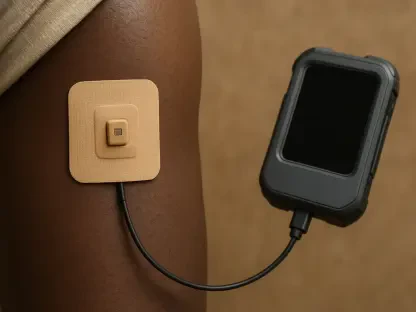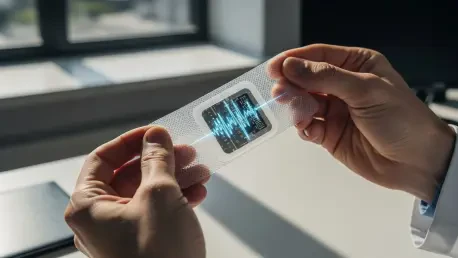

The landscape of modern medicine is witnessing a monumental transition where the ability to monitor physiological signals in real time is becoming a necessity for emergency response. Imagine a scenario where a patient experiencing a sudden cardiac event receives a diagnosis and a treatment plan within milliseconds, long before an ambulance can even be dispatched to their location. This vision is rapidly becoming a reality through the development of a groundbreaking flexible AI skin patch designed by researchers at the University of Chicago Pritzker School of Molecular Engineering in collaboration with Argonne National Laboratory. Unlike traditional wearable devices that merely collect data for remote processing, this innovative platform integrates artificial intelligence directly into a biocompatible substrate. By performing high-speed computations locally, the device eliminates the lag associated with cloud-based analysis, providing a seamless bridge between digital intelligence and human biology. This advancement marks a departure from passive tracking toward proactive, autonomous health management.
Building upon this technological foundation, the device utilizes organic electrochemical transistors printed onto elastic, skin-like materials to achieve its remarkable processing power. Conventional semiconductor components often struggle with the physical demands of human movement, but these specialized transistors thrive in a flexible environment. Instead of relying solely on standard electrical currents, they utilize ions moving through a gel electrolyte layer, a mechanism that closely mimics the way the human brain processes information. This unique architecture allows the hardware to retain stored numerical values, granting the circuit essential memory functions without the need for bulky external storage. By embedding these capabilities directly into the material, the research team has created a “neuromorphic” system that can learn and adapt to the specific physiological patterns of the wearer. Such a localized approach ensures that sensitive medical data remains secure while providing the instantaneous feedback required for life-critical diagnostics and interventions.
Neuromorphic Engineering and High-Density Fabrication
The core of this innovation lies in the sophisticated manufacturing process required to pack ten thousand transistors into a single square centimeter of flexible material. Standard chip fabrication typically involves high heat and harsh chemicals that would easily destroy the delicate elastic substrates needed for wearable electronics. To bypass these limitations, the engineering team developed a specialized polymer gel that responds to ultraviolet light. When exposed to specific wavelengths, this material hardens into precise, microscopic structures, allowing for the high-density integration of electronic components at room temperature. This breakthrough in material science ensures that the patch remains incredibly thin and lightweight while maintaining the computational density of a sophisticated computer processor. By utilizing these organic materials, the researchers have managed to bridge the gap between rigid, high-performance silicon chips and the soft, pliable nature of human skin, creating a truly integrated interface.
Furthermore, the transition to ion-based signaling represents a significant shift in how we approach wearable hardware design. Traditional electronics are often binary and rigid, whereas these organic electrochemical transistors offer a more fluid and continuous way of handling data. The movement of ions through the gel layer provides a natural way to implement neural network architectures, which are exceptionally good at pattern recognition and anomaly detection. This means the patch does not just record a heartbeat; it understands the rhythm and can distinguish between a harmless skip and a life-threatening arrhythmia. Because the processing occurs at the physical site of the sensor, the power consumption is drastically reduced compared to wireless transmission methods. This efficiency is vital for long-term monitoring, as it allows the device to function for extended periods without requiring frequent recharging or large, cumbersome batteries that would interfere with the user’s comfort and mobility.
Clinical Performance and Mechanical Durability
The practical utility of the patch was rigorously tested through its ability to assist in treating ventricular fibrillation, a critical cardiac condition characterized by rapid and erratic electrical activity. During clinical demonstrations, the researchers utilized cardiac mapping data from a donor heart to see if the AI patch could accurately locate the source of abnormal electrical wavefronts. The results were nothing short of extraordinary, as the device identified these positions with 99.6 percent accuracy in real time. This level of precision is essential for medical professionals who must act within seconds to stabilize a patient. By providing an immediate and highly accurate map of the heart’s electrical state, the patch acts as a sophisticated diagnostic tool that can be worn during daily activities, offering a level of protection that was previously only available in a highly controlled hospital setting with expensive, stationary equipment.
Beyond its diagnostic accuracy, the patch demonstrates remarkable mechanical resilience, which is a prerequisite for any device intended for long-term wear. Human skin is constantly stretching, folding, and twisting, movements that would typically cause traditional electronics to crack or lose signal quality. However, this AI skin patch was engineered to maintain its full functionality even when stretched to 150 percent of its original length. This durability ensures that the high-density transistor array remains intact and the AI algorithms continue to process data accurately, regardless of the wearer’s physical activity. Whether a patient is resting or engaging in vigorous exercise, the sensor maintains a consistent and reliable connection to the body. This ability to conform to moving tissue without compromising data integrity is what separates this technology from previous iterations of flexible electronics, paving the way for its use in a wide variety of medical and athletic applications.
Strategic Implementation and Future Medical Horizons
The successful integration of local AI processing into a biocompatible form factor represents a significant paradigm shift from passive data collection to active, “smart” diagnostics. The strategic goal is to move beyond the current landscape of wearable gadgets that require user intervention to interpret data. Instead, the research points toward a future where these patches act as personal, instantaneous doctors that reside on the skin or are even implanted within the body. By sensing, analyzing, and responding to health data in real time, these systems can provide a safety net for individuals with chronic conditions or those in high-risk environments. The immediate next steps involve expanding the platform to include additional sensors for blood chemistry, oxygen levels, and stress hormones. This multi-modal approach will allow the AI to build a comprehensive picture of the user’s health, leading to more nuanced and personalized medical advice that evolves with the individual’s specific biological needs.
Looking ahead from 2026 to 2028, the focus will likely shift toward the full-scale commercialization and regulatory approval of these devices for clinical use. Healthcare providers should begin preparing for a transition where continuous, decentralized monitoring becomes a standard component of patient care. The integration of wireless communication will also be a priority, not for the primary processing, but for long-term data logging and physician updates. For researchers and developers, the priority remains the refinement of the polymer gel substrates to ensure they are compatible with an even wider range of fabrication techniques. As these patches become more ubiquitous, the emphasis must remain on maintaining the privacy and security of the processed data. Ultimately, the transition to local, AI-driven health monitoring will empower individuals to take control of their own well-being, reducing the burden on emergency services and fundamentally changing the way we interact with medical technology on a daily basis.