
The home health care sector has long struggled under the weight of administrative overhead, often requiring clinicians to spend more time on keyboards than at the bedside of their patients. As the demand for aging-in-place services accelerates, the limitations of traditional electronic health records have become a primary driver of staff burnout and operational inefficiency. Enzo Health recently introduced an AI-native EHR platform specifically engineered to address these structural deficits by embedding intelligence into every facet of the clinical workflow. Unlike previous iterations of software that simply digitized paper forms, this system reimagines data entry as a conversational and automated process. By leveraging advanced medical models and real-time processing, the platform allows visiting nurses and therapists to capture patient encounters with minimal manual input. This shift marks a significant departure from the legacy systems that have dominated the industry for years, offering a more intuitive environment for practitioners.
Optimizing Clinical Workflows and Organizational Performance
Traditional documentation methods in home health often result in a “pajama time” phenomenon, where clinicians complete several hours of data entry late at night after their physical visits are finished. Enzo Health aims to eliminate this burden through the implementation of ambient listening technologies that securely record and transcribe patient interactions into structured medical notes. This functionality does not merely provide a transcript; it intelligently maps the conversation to specific regulatory requirements such as the Outcome and Assessment Information Set. By automatically populating these complex forms, the platform ensures that the data is both comprehensive and accurate, reducing the likelihood of human error during transcription. Furthermore, the system is designed to alert the clinician to missing information during the visit, rather than requiring a follow-up. This proactive approach enhances the quality of care by allowing the provider to remain fully present.
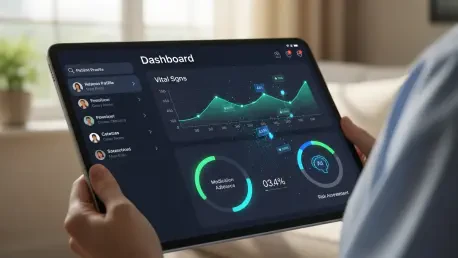
The underlying architecture of this EHR is built on an AI-native foundation, which distinguishes it from older platforms that have merely integrated third-party plugins or basic automation tools. This holistic design allows for deeper data synthesis, where the platform can analyze a patient’s longitudinal history against real-time inputs to identify health risks before they escalate. For instance, if a physical therapist notes subtle changes in a patient’s mobility while the system simultaneously flags a medication interaction, the software can trigger an immediate alert for the supervising physician. This level of synchronization was previously unattainable in fragmented legacy environments. By utilizing sophisticated vector databases and customized machine learning pipelines, Enzo Health provides a level of contextual awareness that mirrors the expertise of a clinical coordinator. The result is a more responsive care model that prioritizes patient safety and streamlines communication.
Home health agencies that adopted this AI-native technology positioned themselves at the forefront of a necessary industry evolution that prioritized clinician well-being and patient outcomes. The transition required leadership teams to reevaluate their digital infrastructure and invest in platforms that offered more than just data storage. Moving forward, the integration of such systems became a prerequisite for maintaining competitiveness in a labor-strapped market where talent gravitated toward organizations with superior tools. Stakeholders recognized that the path to sustainable growth involved reducing the friction between technology and care delivery. For agencies looking to replicate these results, the priority shifted toward conducting thorough audits of existing workflows to identify where automation could most effectively reduce manual labor. Implementing a phased rollout allowed staff to acclimate to the new paradigm without disrupting operations. This strategic pivot ensured technology served as a force multiplier.