
Every second counts when a toddler swallows a high-powered magnet or a lithium-ion battery in a popular e-bike begins to overheat while charging in a crowded apartment complex. For decades, the United States Consumer Product Safety Commission (CPSC) relied on a fragmented network of hospital reports that often took weeks or months to reach federal investigators, leaving thousands of consumers vulnerable to known hazards that had not yet been officially identified. This systemic delay often meant that by the time a recall was issued, the product in question had already caused preventable tragedies across multiple states. To address these dangerous gaps in oversight, the agency is now implementing the National Electronic Injury Surveillance System Modernization, or NEISS-R, a digital transformation designed to replace manual data entry with high-speed, automated reporting. This shift represents one of the most significant changes in federal consumer protection history today.
The Evolution of Injury Surveillance
The Transition: Moving toward Real-Time Injury Detection
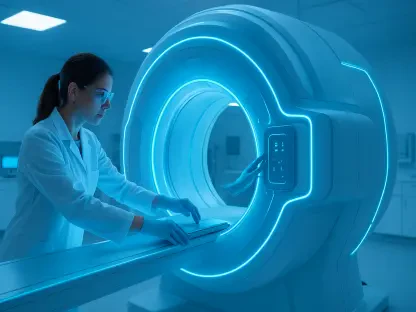
The original framework established in the early 1970s functioned through a dedicated team of onsite hospital employees who would manually sift through emergency department logs to identify incidents involving specific consumer goods. While this methodology provided a baseline for safety standards, it was inherently limited by human error and the physical constraints of reviewing paper or siloed digital records at individual facilities. As consumer products became more complex and the speed of global commerce accelerated, the traditional NEISS model struggled to keep pace with the rapid emergence of new hazards. The transition to NEISS-R leverages modern electronic health records to automatically pull relevant data points without requiring constant manual intervention from hospital staff. This modernization allows the CPSC to expand its reach from a select group of sentinel hospitals to a much broader national network, ensuring that rare but severe injury patterns are detected.
The Technical Core: Partnering with Health Information Exchanges
To facilitate this massive technical migration, the commission has partnered with Konza Health, a specialized third-party contractor that manages health information exchanges and data interoperability across various medical systems. Konza acts as the critical technical intermediary, deploying sophisticated algorithms to scan hospital databases for keywords and diagnostic codes associated with product-related injuries. By centralizing the data extraction process, the agency hopes to eliminate the inconsistencies that often plagued manual reporting, where different hospitals might categorize the same injury type in wildly different ways. However, the introduction of a private contractor into the flow of sensitive patient information has introduced new layers of complexity regarding the security of the information chain. Critics argue that while efficiency is a noble goal, the involvement of non-governmental entities in handling medical records could create points of failure.
Legal and Ethical Challenges of Data Collection
The HIPAA DilemmDefining the Scope of Public Health
The rollout of NEISS-R has ignited a fierce debate within the legal community regarding the boundaries of the Health Insurance Portability and Accountability Act and the specific exemptions granted for public health activities. The CPSC asserts that its mission to track and prevent consumer injuries falls squarely within these exemptions, meaning that hospitals should be able to share data without obtaining explicit consent from every patient who enters the emergency room. Conversely, many healthcare providers have expressed hesitation, citing a lack of clear guidance on whether their participation in this new automated system is truly mandatory or merely a voluntary collaboration. This ambiguity has led to a cautious response from several major hospital networks, which fear that oversharing sensitive information could expose them to significant liability or erode the trust they have built with their patients. The tension between federal data needs and medical privacy is significant.
The Privacy Risk: Managing the Threat of Re-Identification
Beyond the immediate legal concerns, the sheer volume of data being harvested through automated feeds raises profound ethical questions about data minimization and the long-term storage of personal health details. Privacy advocates emphasize that even when data is ostensibly de-identified, the combination of specific injury types, geographic locations, and timestamps could potentially allow sophisticated actors to re-identify individuals through data matching techniques. There is a growing worry that the CPSC might be collecting more information than is strictly necessary to identify a faulty toaster or a dangerous toy, creating a massive digital repository that could become an attractive target for cybercriminals. If a breach were to occur within the NEISS-R infrastructure, the consequences for patients could be devastating, involving the exposure of sensitive medical histories that were never intended for federal eyes. Ensuring that the system adheres to strict protocols is vital.
Future Implications and Public Trust
The Speed of Safety: Transforming Regulatory Response Times
The potential for NEISS-R to revolutionize product safety is undeniable, as it offers the possibility of identifying a cluster of injuries and issuing a national recall in a fraction of the time it previously took to even begin an investigation. In the current fast-moving marketplace, where a trending product can sell millions of units and cause widespread harm within a single month, the ability to act on real-time data is a vital tool for preventing mass-scale tragedies. By integrating these automated feeds into the broader regulatory framework, the commission can move from a reactive posture to a more proactive stance, anticipating hazards before they escalate into national crises. This digital integration also allows for a more nuanced understanding of how products interact with different demographics, helping the agency tailor its safety warnings to the specific populations most at risk. The success of this initiative will ultimately depend on finding a sustainable balance.
The Strategic Outcome: Establishing a Balanced Safety Model
The implementation of NEISS-R during the 2026 to 2028 period established a new benchmark for how federal agencies could leverage high-tech solutions to address public safety challenges in an increasingly digital world. Moving forward, the CPSC demonstrated that it was possible to refine data extraction processes to ensure that only relevant injury information reached federal databases, thereby reducing the risk of over-collection. Hospitals and technical partners collaborated to develop more robust encryption standards and transparent auditing procedures that verified the integrity of every record transmitted. These actions provided a clear pathway for other regulatory bodies to modernize their surveillance systems without compromising the ethical standards of patient care. By prioritizing both technological agility and the rigorous protection of individual identities, the agency proved that a balanced approach was the most effective way to safeguard the American public.