
Even when individuals understand the risks of improper drug storage, shifting entrenched domestic habits like monitoring expiration dates remains a difficult behavioral challenge. The accumulation of expired, damaged, or unused pharmaceutical products in private residences has grown into a significant global issue, intersecting public health risks with environmental degradation. Current estimates indicate that approximately 63.8 percent of all medications purchased for domestic use are eventually left unused, creating a silent surplus that often sits forgotten in bathroom cabinets or kitchen drawers. This stockpiling is far from a benign domestic quirk; it leads to an increased prevalence of accidental poisonings among children and the elderly, while the consumption of sub-potent, expired drugs for self-medication poses a threat to individual recovery. Furthermore, the improper disposal of these chemicals—often flushed down drains or thrown into general household waste—results in the persistent contamination of local water systems and soil environments.
Technical Viability: Assessing User Experience and System Reliability
Usability Metrics: Part 1. Software Performance and Acceptability
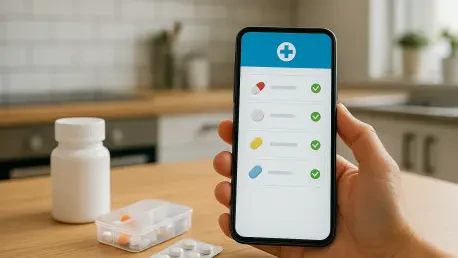
To address these pharmaceutical challenges, the “Kelola Obatku” platform was developed as a comprehensive Android-based management tool designed to move beyond static health information toward active household oversight. During the initial evaluation phase, the application achieved an eligibility rating of over 80 percent, which comfortably exceeded the standard industry benchmarks for acceptable software usability. Participants in the pilot study noted that the platform was remarkably intuitive, allowing them to integrate medication tracking into their daily routines without significant technical hurdles. The system’s internal consistency was also rated exceptionally high, suggesting that the underlying architecture was robust enough to handle the complex data requirements of domestic medicine management. This high level of initial acceptance is critical, as the success of any mobile health intervention depends heavily on the user’s willingness to engage with the software repeatedly over an extended period.
Usability Metrics: Part 2. Interface Consistency and User Retention
Despite the overall positive reception, the evaluation also highlighted specific areas where the digital experience required further refinement to ensure long-term retention. Some users pointed out minor inconsistencies in the interface design, which occasionally led to confusion when navigating between advanced features. These critiques underscore a vital lesson for developers of health technology: while core functionality and reliability are the foundation of a tool, the visual “polish” and aesthetic consistency are what truly drive sustained user engagement. For a medication management app to become a permanent fixture in the household, it must feel as seamless and professional as the most popular social or financial applications. Consequently, future updates focused on streamlining the user interface and harmonizing the visual elements across different modules. These technical improvements were deemed essential for transforming the app from a temporary study tool into a lasting digital habit for diverse users.
Functional Design: Part 1. Core Management and Tracking Tools
The functional core of the application was built around eight essential features that addressed the entire lifecycle of domestic medications. At the most basic level, the drug search tool provided users with accurate identification of various medications, while the stock tracking feature allowed for real-time monitoring of quantities on hand. Automated medication reminders were perhaps the most praised component, as they directly tackled the issue of non-adherence by providing timely alerts for prescribed schedules. By digitizing the inventory process, the app removed the cognitive load associated with manually checking expiration dates or remembering dosage requirements. This transition from manual oversight to automated management transformed a traditionally error-prone chore into a streamlined digital workflow. Users reported that having a centralized database of their home pharmacy significantly reduced the anxiety of managing multiple prescriptions, particularly in households where several members required different medications.
Functional Design: Part 2. Connecting Homes with Professional Care
Beyond simple inventory management, the platform aimed to bridge the communication gap between the domestic environment and professional healthcare providers. It featured a direct digital link for pharmacist consultations, allowing users to ask specific questions about drug interactions or storage requirements without having to visit a physical clinic. Additionally, the inclusion of verified educational content helped users understand the “why” behind proper storage and disposal, turning the app into a portable health literacy resource. Family profiles further enhanced this connectivity by allowing a single primary caregiver to oversee the pharmaceutical needs of children and elderly relatives within a single interface. This holistic approach ensured that medication management was not treated as an isolated task but as a collaborative effort supported by professional expertise. By integrating these external resources into the daily user experience, the tool successfully extended the reach of pharmaceutical care into the home.
Health Literacy: Bridging Knowledge and Behavioral Gaps
Behavioral Evolution: Part 1. Knowledge Gains and Attitude Shifts
The primary objective of the research was to measure how digital interventions could influence the hierarchy of human behavior, specifically focusing on knowledge, attitudes, and practices. The results in the knowledge domain were particularly striking, as every participant in the intervention group reached a “good” knowledge classification by the completion of the study. This indicated that the app served as an incredibly effective educational delivery system, simplifying complex pharmaceutical concepts into actionable information. Attitudes toward medication safety also underwent a significant positive shift, with participants reporting a newfound appreciation for the dangers of improper drug storage and the importance of timely disposal. This psychological shift is a necessary precursor to long-term habit change, as individuals are more likely to adopt new behaviors when they fundamentally understand the benefits. The digital format allowed for constant reinforcement of these concepts, which proved far more effective than traditional one-off seminars.
Behavioral Evolution: Part 2. Addressing the Habit Persistence Challenge
While knowledge and attitudes improved rapidly, actual physical practices proved much more resistant to immediate change. Despite being better informed and having more positive attitudes, some participants struggled to consistently implement the physical tasks of disposing of old medications or auditing their supply cabinets. This phenomenon highlights a common challenge in behavioral psychology: knowing what is right does not always translate into immediate action, especially when dealing with decades-old household routines. The study concluded that a three-month intervention period was likely insufficient to fully rewrite the deeply ingrained habits that define domestic life. To see a permanent shift in how medications are physically handled, digital tools must be supported by long-term engagement and perhaps even physical incentives or community-level collection programs. The gap between “knowing” and “doing” remains the final frontier for mHealth solutions, requiring persistent interaction to bridge the divide between literacy and habit.
Inclusion Strategies: Part 1. Socioeconomic Neutrality in mHealth
One of the most promising findings of the 2026 research was the inclusive nature of the digital intervention across different demographic segments. The gains in pharmaceutical knowledge and the positive shifts in attitude were observed regardless of the participants’ age, gender, education level, or income. This demographic neutrality suggests that mobile health tools can serve as a powerful equalizer in public health, providing high-quality guidance to diverse populations as long as they have access to basic smartphone technology. In an era where healthcare disparities are often exacerbated by geography or socioeconomic status, the “Kelola Obatku” trial demonstrated that a well-designed app could provide specialized pharmaceutical oversight to anyone. This scalability is a key advantage over traditional, labor-intensive health programs that often fail to reach marginalized or remote communities. The digital approach democratized access to pharmacist-verified information, making safe medication management a reality for a much broader audience.
Inclusion Strategies: Part 2. Family Dynamics as a Catalyst for Change
Although the app was effective across all groups, family size emerged as a unique and significant factor influencing the intensity of the results. Specifically, larger households showed a more pronounced improvement in their attitudes toward medication management than smaller ones or individuals living alone. This correlation was linked to the increased complexity and higher stakes involved in managing prescriptions for a wide range of family members, including vulnerable groups like children and the elderly. In these larger family units, the risk of a medication error is mathematically higher, and the burden on the primary caregiver is more significant. Consequently, the motivation to adopt a structured management tool was much stronger among these users, as the app provided a tangible solution to a pressing daily problem. This insight suggests that future public health campaigns should specifically target caregivers in multi-generational households, as they are the most likely to become early adopters and champions of digital health technology.
Economic Impact: Evaluating Waste Reduction and Future Scales
Financial Efficiency: Part 1. Quantifying the Value of Medication Waste
Beyond the obvious safety benefits, the study sought to quantify the economic advantages of improved domestic medicine management. Within the intervention group, there was a dramatic and statistically significant reduction in the monetary value of wasted medicine per household. The costs associated with damaged medications dropped from an average of over 12,000 IDR to just 1,300 IDR, while the value of expired drugs saw a similar decline. These figures represent more than just minor savings; they indicate a fundamental shift in how resources are utilized within the home. When extrapolated to a national level, the reduction of pharmaceutical waste through digital tracking could save millions in healthcare spending and consumer out-of-pocket costs. This economic incentive provides a compelling argument for government agencies and insurance providers to support the development and distribution of medication management apps. Financial efficiency became a powerful byproduct of better health literacy, proving that safety and cost-effectiveness often go hand in hand.
Financial Efficiency: Part 2. Confidence and Resource Optimization
An unexpected but fascinating trend observed during the study was a slight increase in the value of “remaining” but usable medicines within the intervention group. Rather than indicating more waste, the researchers hypothesized that this reflected a greater sense of confidence among users in storing and managing their current supplies safely. Because they had a digital system tracking the viability and expiration of their medications, users were less likely to discard perfectly good drugs out of a vague sense of uncertainty. This optimization of current resources meant that households were getting the full value out of their pharmaceutical purchases rather than prematurely throwing them away. The app functioned as a decision-support tool, helping families distinguish between what was truly hazardous and what remained safe for future use. This nuanced approach to waste reduction helped stabilize household healthcare budgets and ensured that viable treatments remained available when needed, further emphasizing the practical utility of the digital management model.
Future Directions: Integrating Pharmacists and Digital Tools
The implementation of the digital tracking platform offered a scalable, low-cost strategy for promoting rational drug use across diverse populations. Stakeholders recognized that for digital health interventions to reach their full potential, developers needed to prioritize seamless user interfaces and long-term engagement strategies. Public health agencies moved toward supporting hybrid models where mobile applications complemented existing community outreach programs, ensuring that the technology served as a continuous bridge between the pharmacy and the home. Policymakers utilized the data generated by these trials to refine household medication regulations and improve waste collection infrastructure. By expanding the observation period in subsequent studies, researchers better captured the long-term behavioral shifts necessary for sustainable medicine management. Ultimately, the transition to digital tracking facilitated a more informed and safer domestic environment, showing that the integration of professional guidance and user-friendly technology was the most effective path forward for community health.