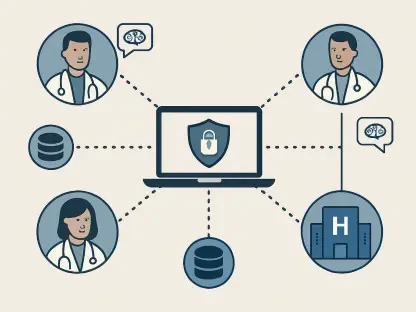

Modern medical breakthroughs increasingly rely on the analysis of massive datasets, yet the deeply personal nature of health records creates a persistent friction between the pursuit of scientific progress and the fundamental right to individual privacy. Researchers at the Berlin Institute of Health recently conducted a comprehensive study to address this dilemma, specifically focusing on the efficacy of anonymization and synthetic data generation in the context of medication safety records. This investigation was not merely an academic exercise but a critical evaluation of whether clinical conclusions remain robust when the underlying data is altered to protect patient identities. By simulating real-world research scenarios, the team sought to determine if the very tools meant to safeguard confidentiality might inadvertently obscure the statistical signals necessary for identifying rare drug reactions or emerging health trends. The findings provide a vital roadmap for institutions navigating the complex landscape of data-driven medicine today while trying to maintain the public trust essential for long-term clinical cooperation.
Balancing Confidentiality With Scientific Utility
The Significance: High-Resolution Medical Data
Health claims data serves as an invaluable repository of information, tracking everything from specific prescriptions to long-term treatment outcomes across diverse populations. This granularity is what allows epidemiologists to detect subtle patterns, such as a rare adverse reaction to a common medication that might only appear once in every ten thousand patients. However, the same level of detail that makes this data scientifically useful also makes it inherently dangerous from a privacy perspective. If a dataset contains enough specific variables, like birth dates, zip codes, and unique combinations of medical procedures, it becomes possible for motivated actors to cross-reference this information with public records to identify specific individuals. The central conflict lies in the fact that the most valuable insights often reside in the outliers—the very data points that are easiest to trace back to a person. Consequently, researchers must find a way to blur the lines of identity without washing away the crucial statistical anomalies that define medical discovery.
The Challenge: Preserving Technical Utility
Navigating the technical landscape of data protection requires a sophisticated understanding of how privacy-preserving technologies impact the utility of information. To explore these boundaries, the research team utilized advanced modeling software to simulate varying levels of data exposure based on the perceived trustworthiness of the recipients. This approach recognizes that data shared within a secure hospital network requires different safeguards than data released into a public repository for global collaboration. By applying different mathematical transformations to the datasets, the researchers were able to quantify the exact point where a privacy measure begins to degrade the accuracy of clinical findings. These simulations highlighted the extreme difficulty of managing high-dimensional data, where dozens of variables interact in complex ways. The goal was to establish a framework that allows for the maximum possible data utility while ensuring that the probability of re-identification remains below a strictly defined threshold for various use cases.
Assessing Protective Methods
Anonymization: Environmental Security Factors
The effectiveness of traditional anonymization techniques is largely determined by the security of the environment in which the data is processed. When data is shared within a trusted zone, where participants are bound by legal contracts and technical barriers, anonymization can be applied with a lighter touch, preserving most of the original nuances. However, the study revealed that when data is intended for wider or less controlled distribution, the level of distortion required to ensure privacy becomes prohibitive. In these scenarios, researchers often have to aggregate data or remove specific variables entirely, which can lead to increased uncertainty and less precise statistical results compared to using the original, raw records. This creates a significant hurdle for open science initiatives that aim to democratize medical research by making data accessible to a broader audience. While anonymization remains a reliable pillar of data protection, its reliance on the context of the user highlights a lack of portability that restricts its use in global research projects.
Synthetic Generation: Managing Statistical Shifts
Synthetic data generation emerged as a promising alternative, utilizing machine learning algorithms to create entirely artificial datasets that mirror the statistical properties of real patient records. At first glance, these synthetic versions appeared to be nearly indistinguishable from the actual data, passing most standard validation tests with high scores. Despite this initial success, a more rigorous analysis uncovered subtle but significant discrepancies in how synthetic models calculated risk estimates for specific medical conditions. These shifts are particularly concerning because even a minor deviation in a risk ratio could lead a researcher to conclude that a drug is safe when it actually poses a danger, or vice-versa. The study demonstrated that while synthetic data is excellent at capturing broad population trends, it struggles to perfectly replicate the intricate relationships between multiple variables found in complex medical histories. These small inaccuracies could have profound implications for public health policy if decisions are based solely on simulated or generated information.
The Path Toward Safer Medical Discovery
Practical Implementation: Multi-Tiered Workflows
Rather than viewing protected data as a direct replacement for original records, the research suggests integrating these privacy-preserving formats into a multi-tiered research workflow. Anonymized and synthetic datasets are exceptionally well-suited for the early phases of scientific inquiry, such as conducting feasibility studies or testing the logic of new analytical scripts. By using these versions, institutions can collaborate across borders and share insights without the legal and ethical burdens of transferring sensitive personal information. This collaborative approach accelerates the preliminary stages of research, allowing teams to refine their hypotheses and develop robust methodologies before ever touching the most sensitive data. This tiering ensures that the privacy risk is only taken when it is absolutely necessary for the final, high-precision analysis. Moreover, this strategy encourages a culture of privacy by design, where data scientists are trained to work with the least sensitive data possible until the ultimate validation stage is reached in a controlled environment.
Future Directions: Secure Scientific Discovery
To move forward, the medical community adopted a hybrid model that prioritized both data integrity and patient confidentiality through rigorous validation protocols. Moving into the current phase of digital healthcare, organizations invested in standardized tools that could automatically evaluate the trade-offs between privacy and utility for specific research questions. It was essential that any final decision regarding drug safety or clinical guidelines underwent a final check against the original data in a highly secure, audited environment. This dual-track system allowed for the rapid exploration of ideas while maintaining the gold standard of scientific accuracy. Furthermore, fostering greater transparency about how data was modified and the limitations of synthetic models helped build public trust in medical institutions. Researchers also recognized the need for ongoing education regarding the nuances of these technologies to prevent the misinterpretation of results. By treating data privacy as an evolving technical discipline, the healthcare sector improved its ability to deliver discoveries without compromising patient trust.