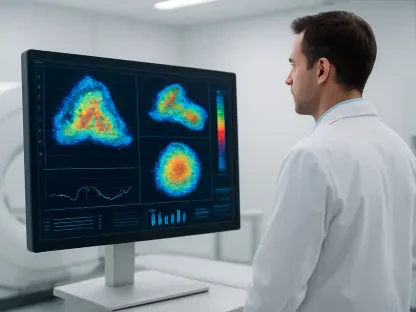

The traditional landscape of oncology is witnessing a monumental shift as clinicians move away from invasive surgical procedures toward a more streamlined, patient-centric diagnostic framework. This evolution is driven by the emergence of liquid biopsies, which allow medical professionals to identify circulating tumor DNA (ctDNA) through a standard blood draw rather than a traumatic tissue extraction. For many patients, the prospect of a less painful and more personalized approach to cancer care represents a profound improvement in quality of life during a period of extreme physical and emotional vulnerability. By capturing genetic material that cancer cells release into the bloodstream, researchers are opening a window into the molecular heart of a malignancy without the risks inherent to the operating room. This technological leap does not merely offer convenience; it provides a continuous, real-time method for monitoring the disease as it evolves within the body, ensuring that treatment remains aligned with the tumor’s specific biology.
Biological Foundations: The Mechanics of Liquid Biopsies
A liquid biopsy functions as a non-invasive alternative to the traditional surgical biopsy, which historically required physically removing a piece of cancerous tissue for pathological examination. When cancer cells within a primary tumor or a metastatic site expire, they shed fragments of their cellular material, including DNA, into the systemic circulation. By isolating these genetic shards from a simple blood sample, scientists can reconstruct a molecular snapshot of the disease, revealing the specific mutations that drive its growth. This methodology bypasses many of the surgical risks associated with traditional biopsies, such as infection or prolonged recovery times, while providing a wealth of information about the tumor’s genetic makeup. Because blood circulates throughout the entire body, these tests may also capture DNA from multiple tumor sites simultaneously, offering a more comprehensive view of the cancer’s systemic presence than a localized tissue sample might provide.
However, the primary technical hurdle remains the extreme scarcity of tumor material in the bloodstream, a phenomenon often described as searching for a needle in a haystack. In a typical blood sample, billions of healthy red blood cells coexist with only a handful of circulating tumor cells, making detection a significant engineering challenge. Currently, these tests are most reliable in patients with a high tumor burden, where the cancer is advanced enough to shed significant amounts of DNA. To make this technology viable for earlier stages of the disease, researchers are refining the sensitivity of their sequencing tools to identify faint disease signals long before physical symptoms appear. The goal is to develop assays capable of detecting these markers during routine physicals, potentially identifying malignancies in their infancy. This shift from monitoring advanced disease to early detection is the current focus of multi-disciplinary teams working to increase the signal-to-noise ratio in genetic sequencing.
Technical Precision: Bridging Engineering and Clinical Care
This diagnostic evolution is being propelled by a deep collaboration between clinical researchers and biomedical engineers, who are applying technical principles to solve biological puzzles. By refining the machinery and algorithms used to amplify biological data, experts are working to ensure that even the smallest fragments of tumor DNA can be isolated and analyzed with high fidelity. This engineering-centric approach is vital for addressing the issue of false negatives, where a patient might receive a clean bill of health despite the presence of a hidden malignancy. By improving the precision of these digital assays, the research teams aim to create a diagnostic standard that provides reliable results even when the overall tumor burden is relatively low. This integration of technology and medicine allows for a level of data analysis that was previously impossible, turning a simple blood draw into a rich source of actionable information for oncologists and their patients.
The ultimate ambition of this technological progress is the advancement of precision oncology, a model where treatment is tailored specifically to an individual’s unique genetic profile. Because no two cancers are identical, every tumor possesses a distinct set of mutations that dictate its response to various therapeutic interventions. Liquid biopsies allow doctors to identify these specific markers and select targeted therapies that attack the cancer cells while sparing the surrounding healthy tissue. This real-time monitoring capability enables physicians to observe how a tumor’s DNA levels fluctuate during the course of treatment, allowing for immediate adjustments if the disease begins to show signs of resistance. By moving away from the broad-spectrum approach of traditional chemotherapy, clinicians can provide more effective care with fewer side effects. This method ensures that the therapy remains as dynamic as the disease itself, providing a responsive framework for managing long-term patient health.
Implementation Realities: Navigating Practical and Clinical Barriers
Beyond the obvious benefits of patient convenience, liquid biopsies solve critical logistical problems for those with tumors located in inaccessible regions of the body. In many cases involving specific types of lung, head, or neck cancers, a tumor may be positioned in a way that makes a traditional needle biopsy too dangerous or physically impossible. Furthermore, even when a surgical biopsy is performed, the tissue sample retrieved is sometimes of such poor quality that it cannot be successfully sequenced for genetic mutations. For these “un-biopsable” cases, a blood test provides a vital lifeline, ensuring that every patient has access to the high standard of care associated with modern genetic medicine. By offering an alternative when traditional methods fail, liquid biopsies help to democratize access to advanced diagnostics, ensuring that a patient’s treatment options are not limited by the anatomical location of their disease or the risks of surgery.
The transition toward a healthcare model rooted in sophisticated data analysis rather than invasive incisions marked a new era in the history of medical science. Experts recognized that while the total elimination of surgical biopsies remained a distant objective, the clinical utility of blood-based testing became an indispensable component of the diagnostic toolkit. Practical steps were taken to integrate these assays into standard clinical workflows, particularly for monitoring patients who were in remission or undergoing active therapy. Future considerations shifted toward the expansion of these tests to include a wider range of cancers, such as ovarian and gastrointestinal malignancies, where early detection remained challenging. By focusing on the continuous refinement of sequencing sensitivity, the medical community established a foundation for a future where cancer management focused on prevention and early intervention. The success of these early implementations proved that the genetic code of a disease could be cracked with precision and compassion through the power of a simple blood draw.