
The official designation of the HCPCS code G0680 by the Centers for Medicare and Medicaid Services fundamentally alters the financial trajectory of medical artificial intelligence by establishing a dedicated reimbursement pathway for the detection and quantification of coronary artery calcification through CT-based algorithms. For years, the integration of sophisticated software into the diagnostic process was viewed largely as an administrative or technical overhead, a tool that might improve accuracy but offered no direct mechanism for cost recovery. This regulatory milestone, codified within the recent revisions to the Outpatient Prospective Payment System, represents a departure from that restrictive era. By recognizing the analysis of cardiac and aortic valve calcification as a distinct medical service, the federal government has provided the institutional validation necessary for hospitals to treat AI not merely as a supportive feature, but as a primary diagnostic asset that contributes directly to the bottom line of the facility.
The Financial Mechanics of Opportunistic Screening
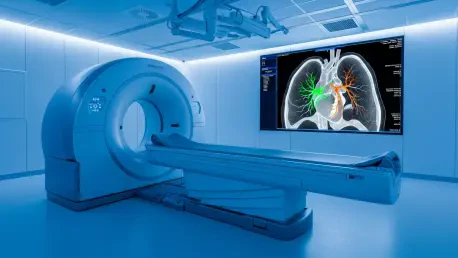
The introduction of this specific billing code provides a robust economic framework for a clinical strategy known as opportunistic analysis, which involves extracting secondary health insights from imaging data originally intended for other purposes. For instance, a chest CT scan performed for routine lung cancer screening can now be utilized to evaluate cardiovascular risks without necessitating additional radiation exposure or separate patient appointments. Previously, the clinical utility of such multi-purpose data usage was well-documented, but the lack of a dedicated reimbursement structure meant that the time and computational resources required for these secondary analyses were often uncompensated. The current regulatory environment changes this dynamic by allowing healthcare providers to bill for these automated assessments as standalone procedures. This shift ensures that every pixel of data generated during a primary scan can be leveraged to maximize patient care while simultaneously creating a new revenue stream for radiology departments across the nation.
Building on this foundation, the market for medical AI software has moved toward more comprehensive, all-in-one diagnostic models that provide a clear return on investment for healthcare administrators. Companies like Coreline Soft have positioned themselves at the forefront of this trend by developing platforms that simultaneously analyze risks for lung cancer, chronic obstructive pulmonary disease, and cardiovascular disease from a single imaging dataset. The ability to bill for these services individually through the G0680 code addresses the most persistent hurdle to technology adoption: the difficulty of presenting a sustainable financial justification for high-tech software. By decoupling the AI analysis from the primary radiologic interpretation, the system allows hospitals to justify the procurement of advanced analytical tools. This economic clarity encourages broader implementation, ensuring that state-of-the-art diagnostic capabilities are no longer reserved for elite research institutions but are available to community hospitals.
Technological Integration and Operational Efficiency
The practical application of these new reimbursement standards relies heavily on the seamless integration of software into existing clinical environments through what is known as zero-click workflows. Through strategic partnerships with Picture Archiving and Communication System specialists like Infinitt North America, AI developers have managed to automate the delivery of results directly into the radiologist’s native workspace. This elimination of manual intervention is critical because it prevents the new diagnostic services from becoming a burden on already overextended medical staff. When a CT scan is completed, the AI automatically identifies and quantifies calcification, presenting the findings alongside the primary images for the physician to review and sign off on. This streamlined process ensures that the transition to a more complex billing and diagnostic environment does not sacrifice the efficiency of the department, making it possible to provide high-volume cardiovascular screenings as a standard part of thoracic imaging.
As the industry moved toward a standardized model of reimbursement, the focus shifted from simple technological novelty to the creation of a sustainable medical infrastructure. Healthcare leaders determined that the most effective way to improve patient outcomes was to incentivize the early detection of silent conditions, such as coronary artery disease, before they escalated into acute cardiac events. The adoption of G0680 provided the necessary data to show that proactive screening could reduce long-term costs by facilitating earlier medical interventions and more accurate patient risk stratification. Facilities that implemented these automated workflows reported a significant increase in the sensitivity of their diagnostic programs, which led to improved follow-up rates and better management of chronic conditions. This transition demonstrated that when financial incentives aligned with clinical best practices, the healthcare system could successfully evolve to meet the demands of a modern population while maintaining the highest standards of professional care.