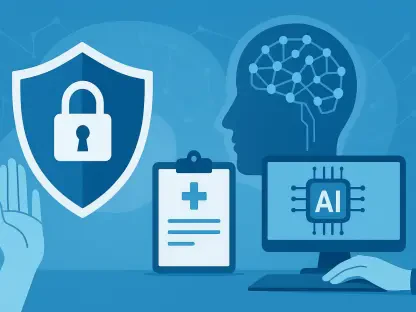

Interoperability is an intentional design choice rather than a byproduct of digitizing records, requiring uniform protocols and governed structures. The current landscape of public health has undergone a massive digital shift, yet the transition from simply storing electronic records to utilizing them effectively remains a complex hurdle. For too long, the industry focused on the technical act of digitization without establishing the connective tissue needed to make that data useful across different jurisdictions. This has resulted in isolated islands of information that cannot communicate during times of critical need, such as a localized disease outbreak or a national health emergency. Moving beyond these fragments requires a fundamental rethink of how systems are built from the ground up. The focus must now pivot toward creating AI-ready platforms that treat data not just as a static resource, but as a living asset that can be transformed into actionable intelligence through automated, integrated structures.
From Data Silos to Intelligent Integration
Automating the Foundation of Public Health
Artificial Intelligence is most valuable when it serves as a fundamental layer of infrastructure rather than a collection of flashy features. By integrating AI into the core plumbing of health systems, organizations can finally begin to automate the tedious and error-prone work of data integration and organization. This shift involves moving away from manual entry and toward autonomous systems that can categorize unstructured fields, summarize lengthy clinical documents, and identify inconsistencies in real-time. For many years, public health professionals were bogged down by the clerical burden of cleaning datasets, often spending more time formatting spreadsheets than analyzing the actual threats to community health. The implementation of automated pipelines ensures that data flows seamlessly from the point of care to the analytical dashboard without requiring human intervention at every step, thereby creating a more responsive and agile public health environment.
This foundational automation allows the public health workforce to move away from administrative tasks and focus on high-level analysis and direct community intervention. When the underlying architecture handles the heavy lifting of data standardization, epidemiologists can dedicate their expertise to interpreting trends and designing effective prevention strategies. This is not merely about efficiency; it is about the speed of the response. In a world where a virus can cross borders in hours, a health system that takes days to reconcile different data formats is inherently flawed. By establishing AI as the bedrock of the infrastructure, public health agencies can ensure that their technical resources are aligned with their mission to save lives. The transition to this model requires a departure from legacy thinking, where software was seen as a passive tool, moving instead toward a reality where intelligent systems act as active participants in the maintenance of public safety.
Practical Applications of AI Infrastructure
Several emerging tools demonstrate how AI can bridge the gap between isolated datasets and unified networks. For instance, MetaMation uses enterprise-level platforms to handle complex entity extraction, turning disorganized spreadsheets and handwritten notes into a searchable and well-governed network of information. This technology allows for the rapid identification of patterns that would be invisible to the human eye, such as small clusters of rare symptoms across a vast geographic area. Similarly, tools like GENEVIC ensure what is known as verified AI by cross-checking generative outputs against peer-reviewed genetic databases. This verification process is critical in maintaining the accuracy of health information, as it prevents the hallucinations that often plague generic AI models. By grounding artificial intelligence in established scientific evidence, these tools provide a level of reliability that is essential for making clinical or policy-related decisions.
On a national scale, the CDC has already demonstrated the tangible benefits of this transition by implementing an internal chatbot that redirected over 41,000 staff hours in the current cycle. This was achieved by automating the summarization of grant reports and administrative coding, tasks that previously consumed a significant portion of the agency’s human resources. This efficiency gain is not just a statistical victory; it represents a fundamental change in how the agency operates, allowing more focus on direct public health threats. Furthermore, these practical applications provide a blueprint for local and state health departments to follow. By adopting similar enterprise-level platforms, smaller agencies can overcome their specific resource constraints and gain access to the same level of analytical power as their national counterparts. This democratization of technology is vital for ensuring that every community, regardless of its size, is protected by a modern health infrastructure.
Strategic Frameworks for Modernization
Maintaining Trust and Human Oversight
As public health moves toward agentic AI—systems capable of responsive automation and autonomous task execution—the need for human oversight remains paramount. The consensus among experts is that while AI can significantly speed up evidence gathering and data synthesis, the moral weight of public health decisions must always rest with human leaders. Strategies for modernization prioritize strengthening governance and trust by establishing clear, non-negotiable rules for data usage and algorithmic transparency. This human-in-the-loop approach ensures that technology serves as an assistant rather than a replacement for professional judgment. When a system suggests a quarantine or a mass vaccination campaign, the rationale behind that suggestion must be explainable and subject to rigorous human review. Maintaining this balance is the only way to ensure that the adoption of advanced technology does not come at the expense of the ethical standards that define the profession.
Establishing a culture of transparency is essential for maintaining public confidence in how sensitive health information is being handled. Privacy remains a major concern, and as systems become more integrated, the risk of data exposure or misuse must be mitigated through robust encryption and strict access controls. Public health agencies are tasked with convincing the citizenry that their data is being used for the greater good while being protected by the highest security standards. This involves not only technical safeguards but also proactive communication about how AI models are trained and what steps are taken to prevent the amplification of existing biases. By being open about the limitations and the capabilities of these systems, agencies can build a foundation of trust that is necessary for the long-term success of digital modernization efforts. Ultimately, the goal is to create a system that is as ethical as it is technically proficient.
The Path Toward Operational Maturity
The public health sector transitioned out of its initial data collection phase and successfully entered a sophisticated data utilization phase. This shift was marked by the widespread recognition that interoperability was an intentional choice that required uniform protocols and governed structures across all levels of government. Agencies that prioritized operational efficiency and robust infrastructure over technical novelty found themselves better equipped to handle the complexities of modern health crises. By focusing on the quality of the data and the transparency of the workflows, these organizations created a more resilient system that was capable of adapting to new threats as they emerged. The ultimate achievement was the creation of a future where clean data and transparent workflows allowed AI to power faster, more effective public health responses. This was not a sudden evolution but a series of deliberate steps toward a more integrated and intelligent national health network.
The final transition toward operational maturity involved the institutionalization of these advanced systems into every facet of public health work. Leaders moved away from viewing AI as an experimental additive and instead treated it as a core component of the institutional memory and operational capacity. This maturation allowed for a more equitable distribution of health resources, as the systems could identify underserved populations with unprecedented precision. The focus then shifted toward the continuous refinement of these models to ensure they remained aligned with the changing needs of society. By establishing a permanent digital architecture, the public health sector ensured that the lessons learned during previous crises were never lost. This journey toward a smarter infrastructure ultimately proved that when technology is guided by clear strategic goals and a commitment to the public good, it can create a safer and healthier world for everyone.