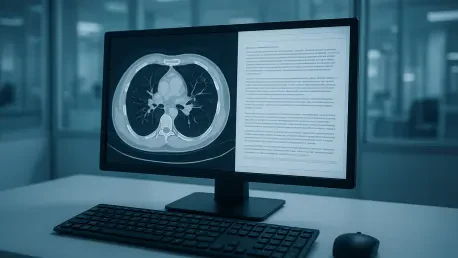

Building on its existing enterprise-grade operating system, Aidoc’s new investigational tool integrates generative AI directly into the workflows used by medical professionals. This represents a fundamental shift in diagnostic radiology by moving beyond simple flagging of abnormalities toward generating comprehensive clinical narratives. By automatically drafting high-quality reports for four life-threatening conditions, the technology aims to alleviate the burden on radiologists. This investigational tool provides immediate assistance in an environment where every second counts. The recognition from the FDA highlights the potential for large language models to provide standardized, high-speed documentation that aligns with professional clinical standards. This shift from image detection to narrative creation signifies a new phase in clinical decision support systems. Furthermore, the Breakthrough Device Designation underscores the clinical urgency for tools that can mitigate the effects of an increasingly strained global healthcare infrastructure.
Healthcare Infrastructure: Addressing the Growing Radiology Crisis
The primary catalyst for this technological advancement is the widening gap between the massive volume of medical imaging and the limited number of radiologists available to interpret these complex scans. Recent data shows that turnaround times for outpatient imaging have increased significantly over the last few years, with the most severe delays occurring between 2026 and 2028. These bottlenecks have created a ripple effect throughout the entire healthcare infrastructure, leading to physician burnout and delayed patient treatments. In many urban medical centers, the sheer volume of data often outpaces the cognitive bandwidth of human reviewers. First Read seeks to address these systemic failures by automating the initial drafting process, which allows for faster clinical decisions and better patient throughput. By reducing the time spent on routine documentation, the system ensures that critical findings are prioritized and communicated to the care team without the traditional delays associated with manual reporting.
Beyond the general statistics of radiology delays, the impact is felt most acutely within Emergency Departments where patients often wait for several hours just for preliminary results. When a patient arrives with symptoms of a life-threatening condition, the delay in receiving a radiologist’s report can lead to prolonged hospital stays and increased risks of adverse outcomes. The implementation of automated drafting tools provides a crucial buffer in these high-pressure environments, offering a preliminary narrative that clinicians can verify instantly. This proactive approach changes the dynamic of the department from a reactive waiting game to a streamlined diagnostic pipeline. Furthermore, as healthcare systems move toward integrated care models, the ability to rapidly generate accurate reports becomes a competitive advantage for hospitals seeking to improve patient satisfaction and reduce operational costs. The automation of the descriptive portion of the report ensures that the primary clinical focus remains on the most complex aspects of the patient’s condition.
Clinical Operations: Workflow Integration and Safety Standards
First Read is built upon Aidoc’s proven clinical AI architecture, inheriting the reliability and security protocols of the company’s previously cleared triage applications. Central to the success of this tool is the aiOS, an enterprise-grade operating system designed specifically for medical environments to embed AI directly into existing imaging and Electronic Medical Record workflows. This integration is crucial because it allows radiologists to access sophisticated AI assistance without the need to switch between different software programs or hardware interfaces. By creating a unified environment, the platform effectively reduces the digital friction that often plagues modern healthcare professionals. The system operates in the background, analyzing images as they are captured and preparing drafts that are ready for review by the time the radiologist opens the case. This seamless background processing ensures that the technology supports the clinician’s existing habits rather than forcing them to adopt a new, disruptive method of working.
By handling the heavy operational burden of drafting repetitive reports, the technology enables clinicians to redirect their mental energy toward high-level interpretation and direct patient care. The reduction of click fatigue is more than a matter of convenience; it is a vital strategy for maintaining diagnostic accuracy and preventing errors caused by cognitive exhaustion. In a typical workday, a radiologist might interact with thousands of images, and the cumulative stress of documenting each finding can lead to mental fatigue. First Read mitigates this risk by providing a structured starting point, which the physician then refines and approves. This shift allows the medical professional to act as an editor and final decision-maker rather than a data entry clerk. Consequently, the hospital sees an improvement in both the speed and the quality of the diagnostic process. This technological foundation serves as a scalable template for future AI deployments, ensuring that new diagnostic capabilities can be added without increasing digital complexity.
Governance and Oversight: Maintaining the Human-in-the-Loop Model
Despite the impressive speed and fluency of generative AI, Aidoc emphasizes a strict human-in-the-loop model to maintain the highest safety and clinical governance standards. Because every sentence in a radiology report carries significant clinical weight and legal implications, the AI is designed to provide only the initial draft. The final review, modification, and ultimate approval remain strictly within the purview of the qualified radiologist. This approach is specifically designed to mitigate risks such as automation bias, where a user might over-rely on the machine’s output without critical evaluation. By keeping the physician central to the process, the technology acts as a high-performing assistant that enhances human capability rather than attempting to replace it. Medical experts have noted that this balance of sophisticated automation and rigorous clinical oversight is essential for creating sustainable and reliable workflows in modern hospitals. The goal is to create a symbiotic relationship where the AI handles the routine while the human handles the nuance.
Ensuring clinical safety also involves a deep commitment to transparency and the explainability of the AI’s findings. The system does not just provide a text report; it links the generated findings to specific regions of the imaging data, allowing the radiologist to quickly verify the accuracy of the draft. This level of traceability is vital for building trust between the clinician and the technology. In an era where data privacy and medical ethics are under constant scrutiny, implementing robust governance frameworks ensures that AI tools are used responsibly. The Breakthrough Device Designation from the FDA reflects a rigorous assessment of these safety protocols, acknowledging that the technology provides a substantial improvement over the current standard of care. By standardizing the language used in reports, the AI also helps to reduce ambiguity in communication between different medical departments. This clarity is essential for surgeons and attending physicians who rely on the radiologist’s report to plan subsequent treatments and interventions.
Future Paradigms: Scalability and Strategic Implementation
The FDA’s recognition of First Read followed a period of rapid growth and significant financial backing for the company, including a substantial Series E funding round that raised 150 million dollars. The platform is already utilized in nearly 2,000 hospitals worldwide, having analyzed over 120 million cases to date, providing a massive dataset for continuous refinement and learning. This development signals a new era where AI transitions from simply identifying urgent cases to actively describing and contextualizing clinical findings. By combining generative capabilities with a validated clinical foundation, the company is positioning itself to solve the global workforce shortages that threaten the stability of the healthcare system. The expansion of these tools from 2026 to 2030 is expected to redefine the boundaries of what is possible in digital health. As more institutions adopt these enterprise-grade operating systems, the role of the radiologist will continue to evolve, focusing more on complex problem-solving while the AI manages the influx of routine diagnostic tasks.
Health systems that successfully integrated these advanced drafting tools transformed the radiology report into a high-velocity asset for patient care. Rather than viewing artificial intelligence as a distant prospect, administrators moved to adopt these systems to secure their clinical operations against labor shortages. The strategic shift toward generative documentation allowed medical centers to reclaim thousands of hours of clinical time, which clinicians reinvested into specialized diagnostics and multidisciplinary care. By focusing on actionable insights, the industry moved away from the traditional bottlenecks that once defined the diagnostic process. Stakeholders focused on developing clear implementation roadmaps that prioritized human oversight and rigorous validation. This transition proved that the combination of generative AI and existing operating systems provided the most effective path forward. Ultimately, the adoption of these tools established a blueprint for how technology and human expertise converged to improve outcomes and stabilized the global medical landscape.