
Sophisticated algorithms identify subtle patterns in medical datasets that often escape the human eye due to fatigue or cognitive bias during manual clinical assessments. This capability has redefined the baseline for accuracy in modern hospitals, shifting the emphasis from managing advanced illnesses to catching physiological changes before they manifest as symptomatic conditions. In the current landscape of healthcare, the sheer volume of information generated by high-resolution imaging and genomic sequencing has surpassed the capacity of even the most diligent medical teams to analyze in real-time. By leveraging these predictive models, healthcare providers are now able to navigate complex diagnostic landscapes with a level of confidence that was unattainable just a short time ago. This transition represents a fundamental change in the clinical philosophy, where the objective is no longer merely to treat a disease but to intercept its progression through the intelligent application of high-velocity data processing and pattern recognition. The integration of these systems ensures that the diagnostic process is as exhaustive as it is rapid, effectively eliminating the delays that once plagued patient intake and triage. As hospitals continue to adopt these technologies, the focus shifts toward a holistic view of patient health, where data points from various sources are synthesized to provide a comprehensive outlook on long-term wellness and disease prevention.
The Evolution: From Manual Review to Algorithmic Precision
Historically, the diagnostic process was heavily reliant on the subjective interpretation of medical professionals and the mechanical output of traditional imaging devices. While radiologists and pathologists have long been the bedrock of clinical detection, the human element introduced a variable level of consistency that could be affected by long shifts and the sheer density of information presented in modern scans. In the past, a single MRI or CT scan could produce hundreds of slices that required meticulous individual review, creating a significant bottleneck in high-pressure clinical environments. These manual processes, although grounded in extensive training, were inherently limited by the speed at which a human brain can process high-fidelity visual data. Furthermore, the scarcity of specialists in remote or underserved areas often meant that patients faced lengthy wait times for critical interpretations, potentially allowing conditions to worsen before a definitive diagnosis could be reached. This reliance on a purely human-centric model created a glass ceiling for diagnostic throughput, making it difficult for the healthcare system to keep pace with the increasing demands of a growing population.
The introduction of artificial intelligence has effectively shattered this ceiling by providing a scalable solution that complements human expertise. Rather than replacing the clinician, these algorithmic tools act as a powerful force multiplier that can scan thousands of images or data points in seconds to identify what the industry calls hidden defects. These are minute irregularities, such as early-stage micro-calcifications or subtle shifts in blood flow, which are frequently precursors to more serious health events. By flagging these anomalies for immediate human review, the technology ensures that specialists can focus their cognitive efforts on the most complex and high-risk cases, while routine screenings are handled with a new level of mechanical reliability. This collaborative diagnostic era has fostered a environment where technology handles the heavy lifting of data processing, allowing physicians to devote more time to patient interaction and personalized care planning. The result is a more resilient healthcare infrastructure that can maintain high standards of accuracy regardless of the volume of patients entering the system, bridging the gap between historical limitations and current clinical demands.
Technical Foundations: The Architecture of Predictive Models
At the heart of this diagnostic revolution lies a sophisticated framework of machine learning and deep learning architectures that are designed to evolve alongside the medical field. These systems do not remain static after their initial deployment; instead, they are characterized by a constant learning cycle that utilizes vast lakes of electronic health records, genetic profiles, and historical laboratory results to refine their predictive accuracy. By analyzing data from 2026 to 2028, these models will continue to ingest more diverse patient information, allowing them to account for a wider range of demographic variables and rare clinical presentations. The strength of these systems is their ability to perform multi-dimensional analysis, looking at the relationship between seemingly unrelated data points—such as a specific protein level in a blood test and a minor variation in a cardiac rhythm—to predict a patient’s risk profile with surgical precision. This data-driven approach moves the industry away from one-size-fits-all diagnostic protocols toward a more nuanced understanding of individual biology, where the predictive model can anticipate how a patient might respond to specific environmental or physiological stressors.
Deep learning, a subset of these technologies, has proven particularly transformative in the realm of medical imaging through the use of complex neural networks. These networks are trained on millions of validated clinical examples, allowing them to develop a specialized vocabulary of visual patterns that indicate the presence of disease. In practice, this means that a neural network can identify the earliest markers of lung cancer or detect micro-fractures in bone density scans that would be nearly impossible for a human to see without substantial magnification and time. These systems operate as an advanced decision-support tool, providing a second layer of verification that significantly reduces the incidence of false negatives. Because these models are trained on diverse datasets from various global institutions, they are also less susceptible to the regional biases that might affect a locally trained physician. The precision offered by these neural networks ensures that every patient receives a diagnostic evaluation that is informed by the collective knowledge of the global medical community, synthesized into a single, high-performance tool that operates with relentless consistency.
Clinical Outcomes: Early Detection and Workflow Efficiency
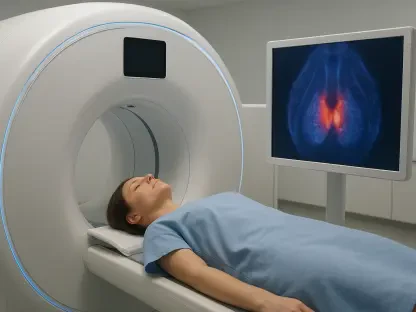
The practical application of predictive diagnostics is perhaps most visible in the streamlined workflows of modern radiology and oncology departments. By automating the initial screening of routine scans, AI systems have significantly reduced the administrative and cognitive burden on medical staff, allowing for a much faster turnaround on diagnostic reports. In oncology, where the window for effective intervention can be incredibly narrow, the ability to identify malignant growths in their infancy is the single most important factor in improving patient survival rates. AI-driven systems can highlight high-risk areas in a scan within moments of the image being captured, enabling immediate follow-up and faster initiation of treatment protocols. This speed does not come at the expense of accuracy; on the contrary, the dual-review process—where the algorithm provides a preliminary analysis followed by a physician’s confirmation—has led to a measurable decrease in diagnostic errors. This efficiency ensures that the most critical patients are moved to the front of the queue, optimizing the use of hospital resources and specialized medical equipment during peak hours.
Beyond the immediate benefits of faster imaging, the shift toward a proactive healthcare model is fundamentally changing the economics of medical care. By utilizing longitudinal patient data—information collected over an extended period—AI systems can identify trends that suggest a future decline in health, such as a slow but steady increase in arterial stiffness or a gradual shift in metabolic markers. This allows providers to implement preventive measures, such as lifestyle interventions or targeted pharmaceutical therapies, before a patient ever reaches a state of crisis. From a systemic perspective, this approach is far more cost-effective than the traditional model of treating chronic conditions once they have reached an advanced stage. Avoiding emergency room visits and long-term hospitalizations not only saves money for the healthcare system but also preserves the quality of life for the patient. The proactive management of health through predictive diagnostics is transitioning the industry from a reactive “sick care” system into a genuine healthcare system that prioritizes the maintenance of wellness and the early interception of potential threats.
Global Impact: Expanding Reach and Addressing Systemic Risks
The democratization of high-quality healthcare is being accelerated by the integration of AI with wearable technology and remote monitoring systems. These devices provide a continuous stream of real-time data, including heart rate variability, blood oxygen saturation, and even glucose levels, which are fed directly into predictive algorithms for analysis. This constant sentinel approach is particularly beneficial for patients in rural or underserved areas who may not have easy access to a major medical center for regular checkups. When the system detects an irregularity that exceeds a specific threshold, it can automatically trigger a remote consultation or alert a local healthcare provider, ensuring that the patient receives attention before a minor issue becomes a major emergency. This technology effectively extends the reach of the hospital into the patient’s home, providing a level of oversight that was previously impossible. By bridging the geographical gap, predictive diagnostics are helping to reduce health disparities and ensure that life-saving technology is available to populations regardless of their proximity to an urban core.
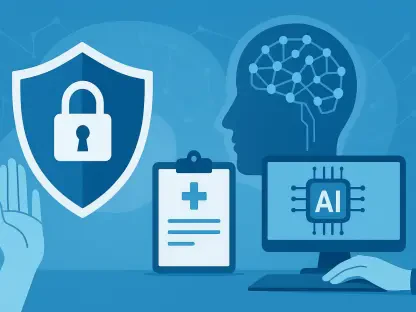
However, the widespread adoption of these powerful diagnostic tools is not without its significant challenges, particularly regarding data privacy and algorithmic bias. As the industry relies more heavily on massive datasets to train these models, ensuring the security of sensitive patient information has become a top priority for regulators and technology developers alike. There is also the critical issue of ensuring that AI models are trained on representative datasets that include individuals from all ethnic, genetic, and socioeconomic backgrounds. If an algorithm is trained primarily on a single demographic, its diagnostic accuracy for underrepresented groups may suffer, leading to inequitable health outcomes. To mitigate these risks, the industry is moving toward more transparent “explainable AI” models that allow clinicians to understand the reasoning behind a specific prediction. Maintaining rigorous human oversight remains a fundamental safeguard, as the final clinical decision often involves complex ethical and personal considerations that an algorithm cannot fully interpret. Navigating these hurdles requires a coordinated effort between tech developers, healthcare providers, and policy makers to create a framework that maximizes the benefits of AI while protecting the rights and safety of every patient.
Strategic Evolution: Integrating Multimodal Systems and Robotics
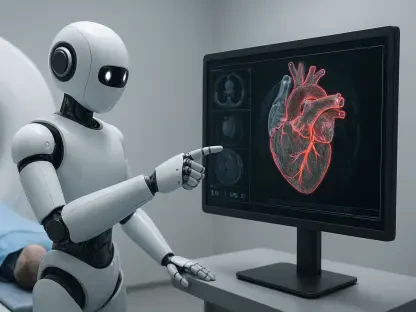
The trajectory of medical diagnostics is moving toward the realization of multimodal AI, a system that can synthesize diverse types of information—ranging from high-resolution imaging and genetic sequences to real-time clinical observations—into a single, unified view of patient health. This level of technological maturity is expected to drive the widespread adoption of personalized medicine, where every treatment plan is tailored to the unique biological and lifestyle profile of the individual. Instead of relying on general statistics, doctors can use predictive models to determine exactly how a specific patient will respond to a particular medication or surgical procedure. This shift toward precision medicine is further enhanced by the integration of AI-powered robotics in the operating room. These robotic systems provide real-time diagnostic feedback during surgery, helping surgeons identify the precise margins of a tumor or detect hidden vascular structures that might be compromised. This physical integration of intelligence into the act of healing represents the next frontier of the medical revolution, where every aspect of care is guided by data-driven insights.
The implementation of these advanced diagnostic frameworks required a significant reorganization of medical training and institutional infrastructure. Health organizations focused on developing a workforce that was as proficient in data interpretation as it was in traditional clinical practice. By establishing clear protocols for the integration of algorithmic findings into daily workflows, hospitals successfully reduced the friction associated with new technology adoption. The transition favored institutions that prioritized the continuous updating of their data systems, ensuring that their predictive models remained accurate in the face of evolving pathogens and changing patient demographics. Leaders in the field emphasized the importance of cross-disciplinary collaboration, bringing together data scientists, ethicists, and clinicians to refine the tools used in patient care. Ultimately, the industry moved toward a standard of care that treated predictive diagnostics not as a luxury, but as a foundational requirement for modern practice. These strategic steps ensured that the healthcare system remained prepared for future challenges, providing a blueprint for how technology and human expertise could be woven together to improve global health outcomes.